VW's small EV boom reportedly costs €1 billion, and it's still worth it
Almost 150,000 orders show Europe wants affordable EVs. The reported €1 billion margin hit is the toll VW must pay now to avoid losing the segment to rivals.
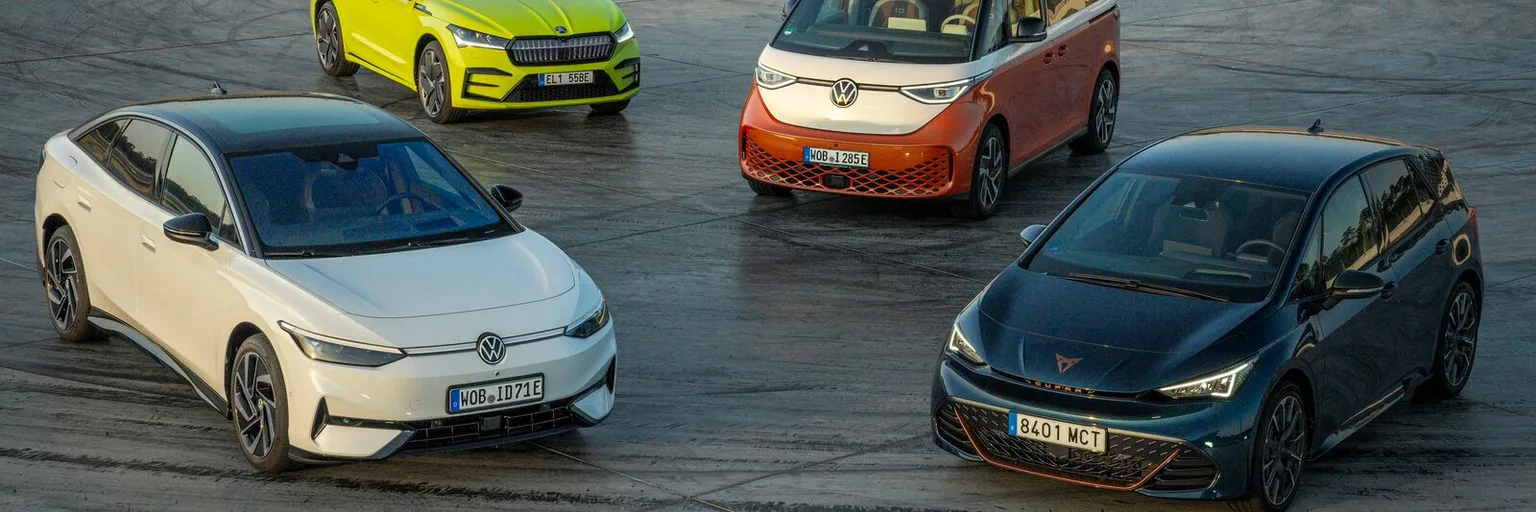
Photo: Volkswagen / sala de prensa (uso editorial)
What kind of success makes a carmaker's finance chief wince? Apparently the kind where customers wait most of a year to get your cheapest electric car. Volkswagen is living that paradox right now, and we think it is the best problem the company could have.
Here is the short version. At the Paris Motor Show in mid-October, VW brand chief Thomas Schäfer put orders for the ID.Polo, Škoda Epiq and Cupra Raval at almost 150,000, a figure the Volkswagen Group also touts for the four-model family, which also includes the ID. Cross. The catch, as Elektroauto-News reports, is that one executive puts the cost of this EV demand for VW at around one billion euros this year alone, and another top manager warns it will dilute the margin further.
Demand is real, and it isn't a subsidy mirage
It would be easy to wave this away as a fuel-price blip. The reporting does tie the surge to higher pump prices after the Iran war and a new German EV incentive. But the entry price matters too. The ID.Polo Trend starts at €24,995 with a 37 kWh LFP battery and 323 km of WLTP range, according to Vision Mobility. The launch price list began at €33,795. Orders climbed from over 70,000 in July to almost 150,000 in October, and cheaper entry versions have become orderable along the way. Sales chief Martin Sander named fuel prices and a broader choice of entry models as the main reasons for the shift.
That second reason is the one we'd bet on. People weren't refusing EVs; they were refusing pricey EVs. Our reading: price was the bottleneck, and VW has now loosened it.
Margin pain is the entry fee, not a verdict
Now the uncomfortable part. VW's finance chief expects only a 1% operating return this year after a profit warning in September. Insiders say the ID.Polo missed its target cost by about €1,000 per car. The battery is seen as the central problem: the small cars still carry expensive NMC cells, and the cheaper LFP packs VW wants for them are expected in sufficient volumes from 2027. VW only expects combustion and electric cars to reach comparable cost levels around 2030.
So yes, every extra small EV sold today dents profit. But look at the alternative. Rejecting orders hands the segment to Chinese brands, which already held 12.6% of Europe's EV market from January to July, per Dataforce figures cited by Trending Topics. VW's own share of that market has fallen from just under 14% in 2021 to below 8%. Protecting margin by rationing supply would be a slow way to lose.
We'd go further: we think shared engineering is the main reason this isn't worse. VW says the four models share more than 80% of their parts and that joint development and production in Martorell saves €600 million. That is the template for making cheap EVs survivable.
The real risk is execution, not appetite
Don't mistake orders for revenue. About one in five of the Group's deliveries in Europe is fully electric, versus roughly 40% of the order book, and waits of ten to twelve months for custom-configured cars give customers time to drift away. Meanwhile VW is cutting 50,000 jobs and reviewing alternative uses for four German plants, so cost discipline will be tested on every line.
The danger, in our view, isn't that small EVs lose money; it's that VW keeps losing money on them well past 2027. Three things matter: getting LFP cells in volume on schedule, hitting the cost target on the next batch, and delivering fast enough that orders don't evaporate. Rivals aren't waiting.
Our verdict
Cheap EVs are a strategic risk only if you treat them as a profit line. They are better seen as a market-share toll. Pay it now, fix the battery bill by 2027, and VW keeps a place in the segment that will probably decide the next decade. Refuse to pay, and demand goes to someone else. If we had to advise VW: build every car you can, and be honest with investors that thin margins are the price of admission.
No topics yet: start the first one.
More stories
GM's LMR reset is the right call, but only cheaper sticker prices will prove it
GM's simpler fourth-generation EV platform and LMR cells make sense after weak electric truck sales, but the real test is whether savings reach buyers.
Softening the 2035 combustion ban is realism, but the whiplash has a price
Europe is right to bend its 2035 target to market reality, but changing the rules again and again punishes the carmakers and buyers who bet early on electrification.
Europe's EV boom is VW's life raft, not its strategy
Volkswagen's electric sales are growing in Europe, but China and the US are sinking the group. One recovering market can't be a global plan.
Michigan's Gotion fiasco proves subsidies can't replace a plan
Michigan moved to claw back millions from a failed battery plant. The lesson isn't that incentives are bad, but that cash can't stand in for stable policy and local buy-in.