GM's LMR reset is the right call, but only cheaper sticker prices will prove it
GM's simpler fourth-generation EV platform and LMR cells make sense after weak electric truck sales, but the real test is whether savings reach buyers.
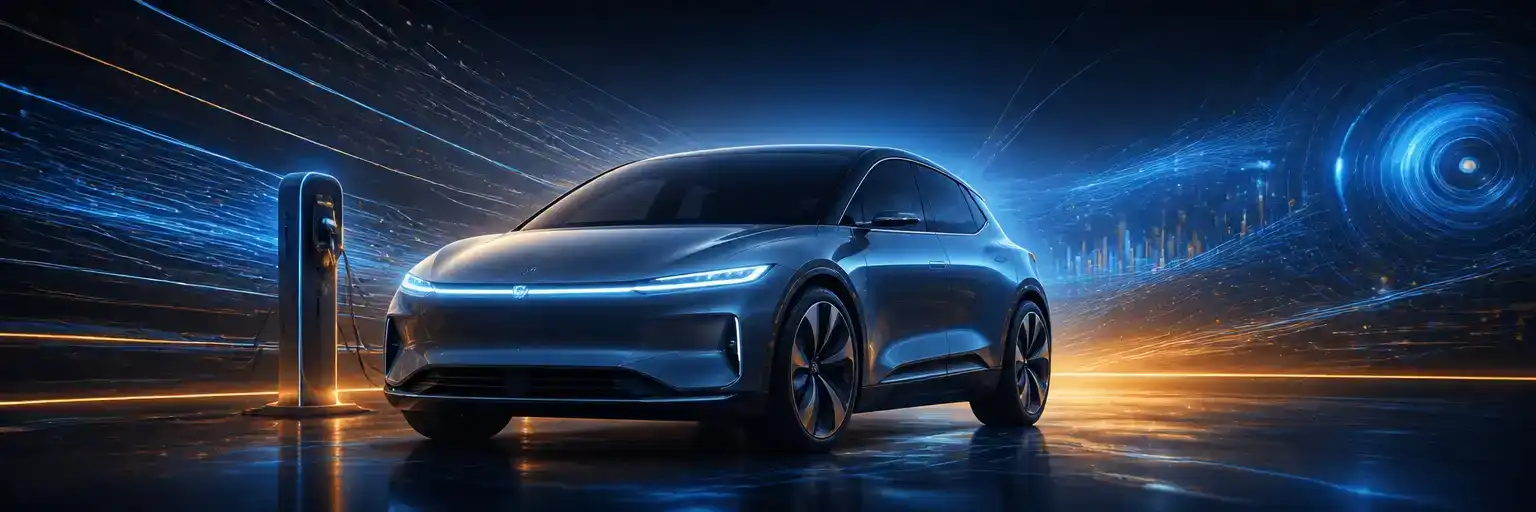
AI-generated image
Is the best EV news of the week a platform with no price, no launch date and no named models? Possibly, and that says a lot about where General Motors is right now. After electric trucks that, as The Drive puts it, haven't sold like GM hoped, the company is going back to the drawing board with cost as the organizing principle. We think that's the right move. But a cheaper battery is a press-release virtue until it shows up on a window sticker.
At its GM Forward event in New York, GM unveiled a fourth-generation EV platform. As InsideEVs reports, GM claims 15% less vehicle mass, 20% greater efficiency, 20% less battery capacity overall and 25% better aerodynamics. The centerpiece is lithium manganese rich (LMR) chemistry in prismatic cells, which GM says is 33% more energy-dense than lithium iron phosphate (LFP) at a comparable price. GM did not give a firm timeline or name the nameplates, and a spokesperson said the highest-volume segments mean crossover SUVs.
The truck was the wrong first bet, and GM seems to know it
GM Senior VP of Vehicle Products Jaclyn McQuaid told The Drive that "what you have to remember about General Motors is we know trucks." Fair enough. But knowing trucks isn't the same as knowing that buyers will pay truck money for an electric one. Bloomberg's coverage frames the new platform as GM pushing ahead even as its EV sales have slid, and we read that as the context that matters.
The new platform's target is crossovers, the segment where range and price matter more than towing bravado. In our view, that's the quiet admission: the mainstream EV buyer was never going to be won with the biggest, most expensive battery pack. Building around less battery for the same range is a more honest strategy than building around a bigger number.
The cost math is real, but it's still GM's math
The strongest argument is simple. GM's director of global EV architecture, Zach Walker, told InsideEVs that equivalent or more range from 20% less battery matters because the battery is a dominant cost in the system's bill of materials. We agree with the logic: shrinking the most expensive component, trimming 40% of the parts in each drive unit and cutting wiring by 30% all push in the same direction.
Still, these are company claims about early work, not production vehicles. CarBuzz notes that it's too early for GM to specify sticker prices, and that LMR may not deliver the longest range, though GM pitches an exceptional range-to-cost ratio. GM also calls this the world's first production LMR battery, which in our view makes manufacturing at Ultium Cells in Spring Hill, Tennessee, the place where promises get tested. Cheaper cells are one thing; yield, durability and supply are another.
Savings only count if they leave the factory
Here's where we'd press GM. Lower costs can end up as lower prices, or as fatter margins on vehicles that still sell slowly. The company's own tone, with President Mark Reuss saying GM will be there "when the U.S. market is ready for EVs in large numbers," sounds to us more like patience than a price war. Ford, meanwhile, has a rival blank-slate platform and, per InsideEVs, a $30,000 pickup called the Fathom that is supposed to hit production late next year. That gives buyers a concrete benchmark GM hasn't matched with a number.
The faster development pitch, halving a roughly five-year cycle, is nice, but it's the least important part for shoppers. The computing upgrade, which debuts on the 2028 Cadillac Escalade IQ before reaching the fourth-gen EVs, is also more about GM's software ambitions than about affordability.
Our verdict
GM's reset is smarter than the hype around it suggests: focus on crossovers, shrink the battery, simplify the hardware. If it works, it could make GM's EVs far more competitive. But we'd judge it by one metric only: the price of the first crossover built on this platform compared with today's equivalent. Until GM names that number, readers should treat the LMR story as a promising engineering plan, not a buying reason.
No topics yet: start the first one.
More stories
Softening the 2035 combustion ban is realism, but the whiplash has a price
Europe is right to bend its 2035 target to market reality, but changing the rules again and again punishes the carmakers and buyers who bet early on electrification.
Europe's EV boom is VW's life raft, not its strategy
Volkswagen's electric sales are growing in Europe, but China and the US are sinking the group. One recovering market can't be a global plan.
Michigan's Gotion fiasco proves subsidies can't replace a plan
Michigan moved to claw back millions from a failed battery plant. The lesson isn't that incentives are bad, but that cash can't stand in for stable policy and local buy-in.

Tesla’s Innovation Ranking Fall Is a Warning, Not a Verdict
Tesla is still a technology force, but its slide from sixth to 11th shows that past breakthroughs are no substitute for a faster, broader product cycle.