Range Rover Electric doesn't need to be efficient, but it can't dodge the math
Land Rover says building the world's most efficient EV was never the goal for its first electric Range Rover. Refreshing, but buyers will still check range and charging costs.
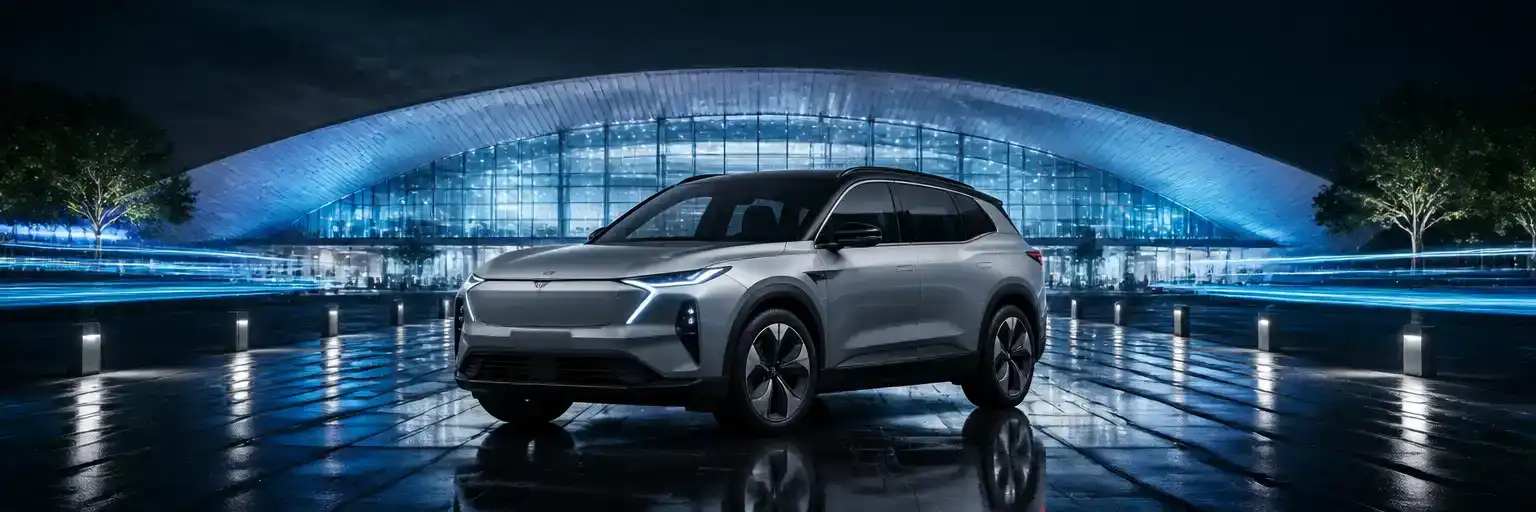
AI-generated image
What if the most honest sentence in electric-car marketing this year came from a company that sells six-figure SUVs? Land Rover, speaking on the first drive of the Range Rover Electric, essentially says it wasn't trying to build the world's most efficient EV. Welt put that confession in its headline. We applaud the candor. We just don't think it gets the car off the hook.
Honesty beats the efficiency arms race
For a few years now, every EV launch has opened with the same ritual: miles per kWh, drag coefficient, a tiny frontal area. A Range Rover can't win that contest, and pretending otherwise would be absurd. This is a big, tall, heavy luxury SUV that also has to go off-road, which is the brand's whole identity. The reviews we have seen headline exactly that. Forbes calls it an EV built to go anywhere, and Top Gear's verdict is that the Electric is now the Range Rover to have.
So the admission isn't a confession of failure. It's a statement of priorities: refinement, capability and presence first, kilowatt-hours second. That's coherent. In our view, it's far better than a brand wrapping a big luxury SUV in efficiency slogans it can't back up.
It also fits the car's backstory. CarsGuide notes the electric version arrived four years after the current Range Rover went on sale, in part because the platform's outdated 400-volt electrics had to be reconfigured into 800-volt hardware. A company that took that long was, we suspect, optimizing for something other than a lab-bench efficiency number.
Range is the answer, but the number depends on who you ask
Not chasing best-in-class efficiency has a consequence: you may pay for it in battery or in charging stops. Forbes cites a 372-mile WLTP range and 22-minute rapid charging. Another outlet, EV Shifters, talks about 333 miles of real-world range and 350 kW charging. We wouldn't over-read the gap, since the two figures measure different things and come from undated pages. But it illustrates the problem. Buyers in the US will see EPA-style numbers, buyers in Europe will see WLTP, and we'd expect the honest answer to land somewhere below the brochure.
That's fine for a car like this. Plenty of owners will probably cover most miles near home. But a luxury buyer isn't paying for "fine." The Range Rover has always sold the feeling that nothing is a compromise. A car whose maker says plainly that efficiency wasn't the headline target invites the customer to ask what, exactly, they're paying for at the pump, or rather at the charger.
The real bill arrives at the fast charger
Here's where the candor gets expensive. The less efficient an EV is, the more energy it needs per mile, so the price of that energy matters more, not less. The only price data we have is European, so treat it as an illustration. According to auto motor und sport via web.de, VAU-MAX puts fast chargers at roughly €0.60 to €0.90 per kWh depending on provider, tariff and country. The same piece, citing WDR, describes a North Rhine-Westphalia case where one public charger cost more than €1.00 per kWh with one card and €0.55 with another.
Do the thinking yourself: a heavy SUV on a road trip, charging on a bad tariff, can cost a surprising amount. Those numbers say nothing about the Range Rover's actual consumption, which our sources don't give, so we won't pretend to compute a cost per mile. But the logic is plain. The more energy-hungry the car, the more the tariff becomes part of the purchase decision.
On price, Car Magazine mentions a £154k price tag for the UK. We don't have a US figure in our material, so check the configurator before assuming anything. Fleet News sums up the mood neatly: expensive, but the luxury speaks for itself. We think that's right for a certain buyer, and it's the buyer who can install a home charger and rarely sees a public one.
Our verdict
Land Rover is right not to turn efficiency into the whole pitch, and it deserves credit for saying so. A Range Rover Electric that is composed and capable off-road is exactly the product this brand should build. Where we'd push back is on the idea that candor settles the argument. It doesn't. It simply moves the question from the engineers to the customer.
If you're shopping for one, our advice is simple. Ask for the real-world range in your climate and on your highway, not the headline figure. Price your charging before you sign: home access, a good fast-charging subscription, and the corridors you actually drive. If that math works, enjoy the car. If it doesn't, no amount of leather will fix it.
No topics yet: start the first one.
More stories
The 4% global EV number is an average of three different stories
Europe up, North America down, China shifting to exports: the headline growth figure hides a split market, and reading it as stagnation misses where EVs are really heading.

The Polestar 2 is gone, and its successor needs more than good looks
Around 200,000 units later, the Polestar 2 bows out. Its 800V successor can't coast on design: it has to earn its place on charging, software and day-to-day ownership.
The Li Auto Li 6 looks like a TGV, but Europe will buy on price and service
Li Auto's first European EV has a shape nobody else sells, but quirky styling gets a test drive, not a signature. Price, charging and service decide the rest.
Xpeng L05: judge Europe's next family SUV by value, not by passport
The L05 is cheap in China and probably won't be in Germany. The gap between those two prices, not the flag on the grille, is what European brands should worry about.