India's E100 push is fuel policy dressed up as driver choice
India has amended its motor vehicle rules for 100% ethanol cars, and the Supreme Court is already asking where the fuel will come from. The risk lands on drivers.
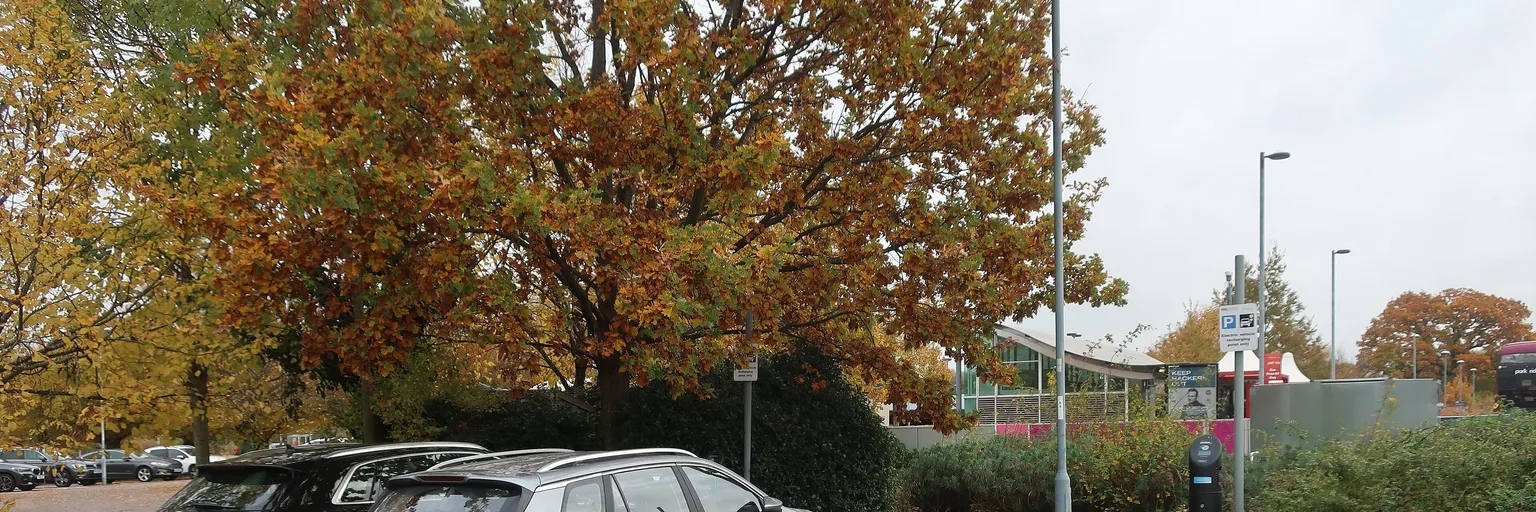
Photo: Ganesh Dhamodkar / Wikimedia Commons (CC BY 1.0)
Can you call something a consumer choice if the consumer can't be sure the fuel will be there? That is the uncomfortable question hanging over India's new rules for cars that run on 100% ethanol. Approving a vehicle is easy. Guaranteeing a fuel network is the hard part.
Here is what happened. According to reports on the October 26 notification, India's Ministry of Road Transport and Highways amended the Central Motor Vehicles Rules, 1989, explicitly adding E100 alongside E85 in the emission certification provisions for flex-fuel vehicles. The Supreme Court then weighed in.
The court was hearing petitions about ethanol allocation for the Ethanol Supply Year 2025-26. As Business Standard reports, it asked the Centre how it would ensure adequate ethanol supplies for E100 vehicles, stressing farmers' interests and environmental concerns. The Economic Times adds that the government acknowledged large-scale manufacturing changes would be necessary.
A rulebook is not a fuel network
Amending certification rules tells manufacturers what they are allowed to build. It says nothing about whether a driver in a small town can fill up on a Tuesday evening. The Supreme Court's question, which Deccan Herald describes as how fuel supply will be managed for 100% ethanol-run vehicles, is the right one. In our view it should have been answered before the notification, not after.
The government's own acknowledgment that manufacturing would need large-scale changes is telling. This isn't a software update or a new trim level. We'd expect it to touch engines, fuel systems and materials built for a very different fuel. Our reading: the rule creates a category before the industry, the pumps and the supply chain are ready to populate it.
The court is pointing at a trade-off, not just a gap
The most interesting detail is that the question came up in a case about ethanol allocation, not in a car case. That tells us ethanol is already a contested resource, with farmers' interests squarely in the frame.
So E100 is not a neutral menu option. Every liter pulled toward a fully ethanol car is a liter not going elsewhere. That is a policy trade-off, and it belongs in a national debate about farm incomes and environmental impact, the very themes the court flagged. Presenting it as something a buyer simply selects at the showroom hides that.
Who pays if it goes wrong
Here is the part we worry about. If a driver buys an E100 car and supply is patchy, the driver carries the risk: detours, price swings, a car that is less useful than advertised. Nothing in the coverage we have seen tells us how buyers would be protected, what happens on resale, or how prices would be set. We can't claim those protections don't exist, but we can say they haven't surfaced, and that silence matters.
To be fair, there is a case for the policy. A clear legal pathway probably gives carmakers a signal to invest, and flexibility, with E85 already in the rules, is a sensible hedge. We'd even say the flex-fuel framing is the smart version of this idea: cars that can use ethanol when it is available, and something else when it is not.
Our verdict
Treat E100 as an industrial and agricultural program first and a consumer product second. Our recommendation to policymakers: publish a supply roadmap, a retail rollout plan and buyer protections before pushing models to market. Our advice to drivers: don't treat the approval as a promise of fuel. Until pumps, prices and guarantees are visible, a vehicle that can run on E100 is not the same as a vehicle you can safely rely on. The Supreme Court asked the right question. The answer is still missing.
No topics yet: start the first one.
More stories
An all-EV Car of the Year shortlist with no Chinese cars: a milestone with a blind spot
Seven electric finalists show that mainstream EVs have won over the jury, but a shortlist with no Chinese brand says more about Europe's awards than about the cars.
The E-208 GTi proves a small EV can wear the badge. The price tag is the real test
Peugeot's electric hot hatch answers the sacrilege crowd on power and fun. Whether enthusiasts will pay £34,995 for it is a different question.
A mid-engine GR Yaris is the MR2 revival we wanted, if the price is right
Toyota's racing mule now looks like a proper mid-engine coupe. The spirit of the MR2 is back; whether enthusiasts can afford it is the real question.
UK car tax keeps moving, and that's a bigger problem than the rate
April 2027's VED rise is a routine inflation uprating, but with eVED arriving in 2028, buyers choosing between EVs and petrol need stable rules more than a low rate.