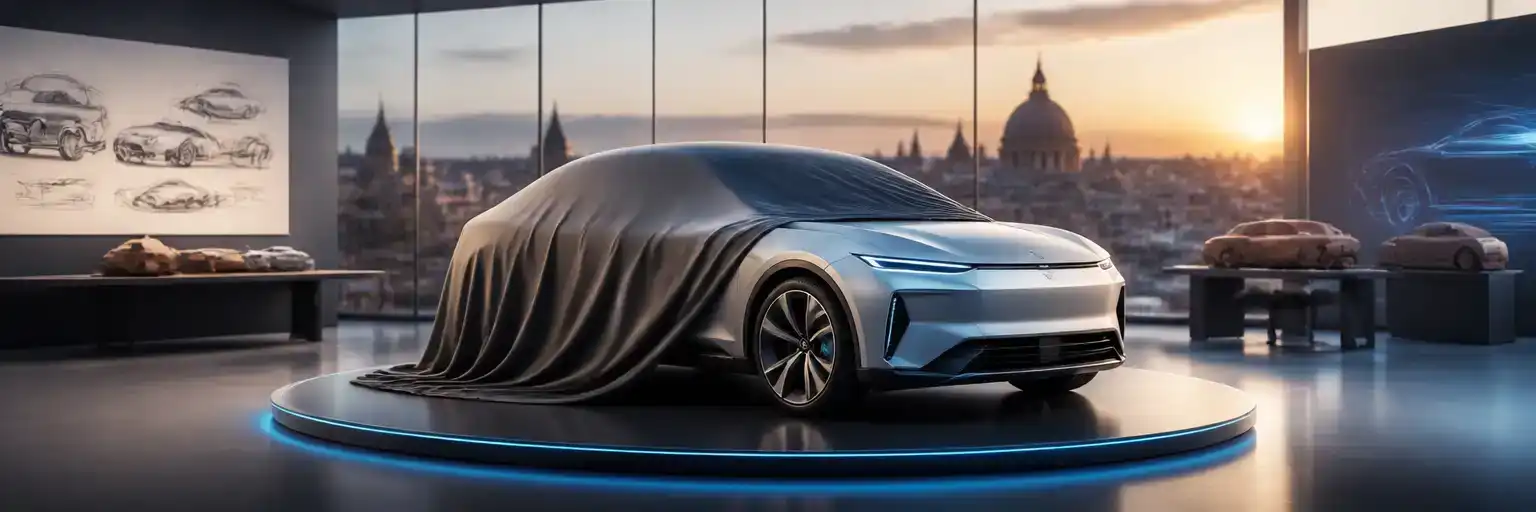
The Li Auto Li 6 looks like a TGV, but Europe will buy on price and service
Li Auto's first European EV has a shape nobody else sells, but quirky styling gets a test drive, not a signature. Price, charging and service decide the rest.
AI-generated image
Can a car win Europe by looking like a high-speed train? Li Auto is about to find out. French outlet Frandroid calls the Li 6 "neither really an SUV nor really a minivan" and "probably one of the most original electric cars on the market" (our translation from the French). We agree it's distinctive. We just don't think distinctive is what will decide its fate.
Originality gets you the test drive, not the sale
Here is what we know. Frandroid has already driven the Li 6, and Li Auto's own site presents it as the first model from the brand to be introduced to European audiences. The European Li 6 is the version of the i6 sold in China. CnEVPost reports that it was originally scheduled to go on sale in the fourth quarter of this year. Other outlets now point to the first quarter of 2027, with Norway and the Netherlands first.
Those two markets are telling. They aren't a design showcase. We think they are places where buyers already know electric cars well and compare them coldly. In our view, a TGV silhouette will earn Li Auto attention in a showroom or a social feed, and then a spreadsheet takes over.
The price question is the whole story, and it is still open
In China, the i6 launched in September 2025 at 249,800 CNY (about $37,200), rising to 277,800 CNY for the dual-motor all-wheel-drive version. That is a useful anchor, but it is not a European price. We have no confirmed euro figure for the Li 6, and the one number floating around comes from an undated database page, so we wouldn't lean on it.
What the spec sheet suggests is a car built to be competitive on paper. Le Tech says the European Li 6 claims a 96 kWh battery and 640/560 km WLTP figures. Another page mentions 500 kW charging next to a CLTC range, which is a Chinese test cycle, so we'd wait for confirmed European numbers. Our view is simple: impressive peak figures don't matter if the car lands at a price that makes buyers hesitate next to established rivals. A newcomer from China doesn't just have to be as good. It probably has to be obviously better value, because it has no local reputation to fall back on.
Service and charging are where a new brand wins or dies
Li Auto's own pitch is a "premium" all-electric five-seat SUV. Premium is a promise about how you're treated after the sale: where it gets repaired, how long parts take, what happens to resale value. The documentation gives no detail on a European dealer or service network, and that silence matters. A brand starting in two markets will probably have a thin footprint for a while. Buyers in the rest of Europe will watch to see whether it is real before they commit. French timing, for example, remains unannounced.
Charging is the other half. Fast charging only pays off on a network that works, and that is not something a manufacturer controls alone. We'd read the Li 6's claimed numbers as a promise to be tested on real European chargers, not as proof of anything yet.
There is one thing worth noting in Li Auto's favor. It plans to adapt the hardware and software for local markets, and the Li 6 reportedly supports eight European languages with navigation. That's the unglamorous work that tends to separate brands that stay from brands that visit. Extended-range models are also planned for Europe, which would be a sensible way to widen the audience beyond the strictest EV buyers.
Our verdict
Treat the Li 6 as a serious test of whether a quirky Chinese EV can build trust in Europe, not as a design curiosity. Its shape is a real asset, because it is memorable in a market full of near-identical crossovers. But memorable is not the same as bought. If you're in Norway or the Netherlands, wait for the euro price, the warranty terms and a clear picture of servicing before you get excited about the looks. If Li Auto gets those three right, the TGV styling becomes a bonus that people talk about. If it doesn't, it becomes a footnote to a car that was interesting and didn't sell.
No topics yet: start the first one.
More stories
Xpeng L05: judge Europe's next family SUV by value, not by passport
The L05 is cheap in China and probably won't be in Germany. The gap between those two prices, not the flag on the grille, is what European brands should worry about.
Europe's Car of the Year shortlist is all-electric, and that's half the story
Seven electric finalists is a milestone, but a shortlist with no Chinese cars and no hybrids suggests the jury is describing a market that buyers no longer live in.
The EU battery passport is dull paperwork that could fix used EVs
From February 18, 2027, EV batteries in the EU get a QR-linked digital record. Whether used-car buyers benefit depends on open, standardized, enforced data.
Geely's Europe-first EV is the right bet, but only if Europe writes the brief
Geely will unveil a car designed in Milan for European drivers in 2027. It's an admission that adapted Chinese models fall short, and a test of whether "local" means more than a studio address.