Chinese brands passing Japan in Europe is no blip: buyers now shop by value
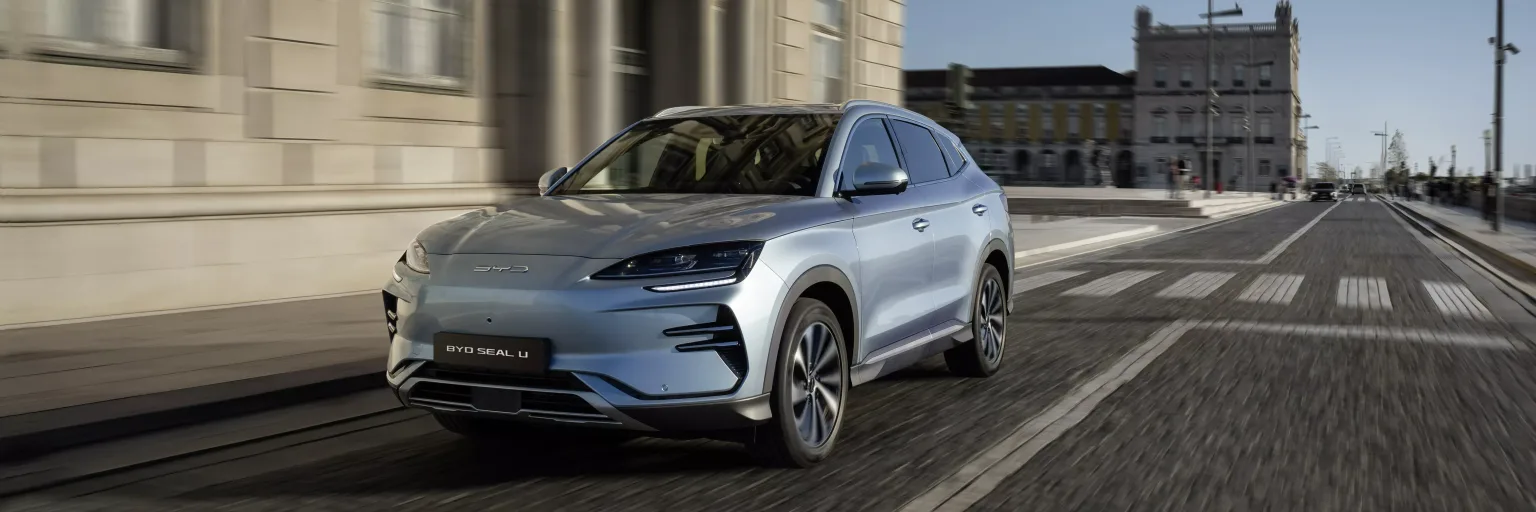
Chinese brands took 12.7% of Europe's market against Japan's 11.9% in a quarter. The real story is that origin has stopped being a reason to buy or to avoid a car.
AI-generated image
What does it say about a market when a brand that has sold cars there since 1963 gets passed by newcomers who were barely visible five years ago? That is Europe's situation today. Chinese brands have overtaken Japanese ones in quarterly new-car sales, and we think it is the clearest sign yet that the old pecking order in Europe no longer holds.
What happened, briefly
According to Dataforce figures reported by BigGo Finance, Chinese-brand registrations in Europe roughly doubled year on year in September, reaching 12.7% of total sales. Japanese makers, Toyota and Nissan among them, were at 11.9%. Bloomberg also frames it as the first time Chinese brands have beaten Japanese rivals over a full quarter.
A caveat on the "first time" claim: other trackers cut the data differently. One July analysis already put Chinese models at 10.7% of the market for April to June. Share figures vary by dataset, so we would not hang the argument on a single decimal. The direction is the same everywhere.
The gap is small. The slope is not
The margin is under one percentage point, and it would be easy to shrug at that. But the same report notes that Chinese brands held barely more than 1% of Europe five years ago. Toyota has sold cars on the continent since 1963, and Nissan has built cars in Sunderland since 1986. Decades of roots matched by a few years of aggressive expansion.
That is why we read this as structural. A blip is a one-month spike driven by a single launch or a registration quirk. This looks like a multi-month climb in a market that, in January, was shrinking overall while Chinese brands grew 80%, according to Le Journal Auto's reading of ACEA data. Growing against a falling market usually means taking share from someone, not riding a wave.
There is one honest asterisk. The BigGo report notes signs that some import volumes were pulled forward because the EU is weighing curbs on Chinese-made hybrids. Part of September's strength could be buyers and importers beating a deadline. We would expect a softer month or two to follow. We would not expect the trend to reverse.
Japan didn't lose on quality. It lost on price and tempo
We have no evidence that Japanese cars got worse, and we are not claiming it. Our view is that Japan's makers were out-paced on two fronts: price and speed of product launches.
Start with price. Le Journal Auto puts Chinese cars at 20 to 30% cheaper than European equivalents with comparable equipment, citing a BYD Atto 3 at around €33,000 against more than €40,000 for a comparable Volkswagen ID.3. Those are the outlet's figures, and they compare against a European rival rather than a Japanese one. Still, the logic probably carries over: if equipment and price both favor the newcomer, a famous badge has to justify a premium.
Then tempo. BigGo says BYD, Chery and others expanded in Europe through hybrid lineups rather than pure battery-electric cars, a shift that followed the EU's extra tariffs on Chinese-made battery-electric vehicles, and it credits hybrids for the upset. At the Paris Motor Show, BYD showed a compact plug-in hybrid, the Dolphin G DM-i, developed for European consumers. That looks like a company designing for Europe, not just exporting to it.
Buyers now judge the badge by the price tag
The most telling evidence comes from France, not from the headline number. JournalAuto data shows Jaecoo, a Chery-group brand launched this year, registering 2,575 cars in September for a 1.6% share, with just two models. Some 75% of its registrations since launch went to private buyers. Its sister brand Omoda, positioned higher up the range, sells about ten times less. The outlet's conclusion, which we share: a product pitched at the right price finds customers fast.
A study from the Observatoire Cetelem, cited by Arval's mobility observatory, says preference for national brands fades once the price gap gets wide enough. That is the whole story in one sentence. In our view, brand loyalty was never about geography. It was a proxy for trust and value, and once a newcomer offers both, the proxy stops working.
Not every Chinese brand benefits, to be fair. Geely's French launch leans heavily on demonstration vehicles, two in three registrations according to JournalAuto, which is a weaker signal than real private demand. And the cheap-car halo isn't universal: Arval's data shows brands such as Aiways, Seres and DFSK losing volume in France. Value wins. Origin alone doesn't.
What comes next: Europe is being built around them
The EU is moving to tilt the field, with possible hybrid import restrictions and talk of tying incentives to European production. Chinese makers are answering by localizing. Chery is preparing to build cars in Barcelona, BYD is finishing a plant in Hungary, and Leapmotor has begun producing its B10 in Zaragoza with Stellantis. Arval's report adds that thirteen factory projects are reportedly under study.
In our view, that is what makes this durable. Tariffs punish importers, not residents. Once the cars are made in Europe, the policy argument against them gets much harder.
Our verdict
Japanese makers should stop treating this as a statistical curiosity. Their long European history is an asset, but we doubt it still buys a price premium or forgives a slow product cycle. For buyers, the practical advice is simple: cross-shop. Compare equipment, price and, for now, warranty and service networks, not flags. Whoever wins that comparison in 2027 may not be the brand you assumed.
No topics yet: start the first one.
More stories
BYD's European factories are the real answer to EU tariffs, and a local fight
Tariffs and hybrid quotas are pushing BYD to build in Europe. Buyers and workers may gain, but the trade war now moves inside EU borders.
Audi's Georgia plant is a tariff hedge, not a victory lap
Audi's $4 billion US factory answers tariffs and politics first. It only becomes good news for American buyers if it brings lower prices and SUVs built for them.
Stellantis' 24 full hybrids are pragmatic, but also a late admission
Stellantis' pivot to 24 full hybrids by 2030 shows realism after years of zigzagging on EVs, but it risks arriving late. Buyers should wait for real efficiency numbers.
Volvo's plants building Geely cars is smart, but only if Sweden stays visible
Letting Geely's premium brands use Volvo's European factories from 2028 should cut costs and dodge tariffs, but it makes brand discipline Volvo's most urgent job.