An all-EV Car of the Year shortlist with no Chinese cars: a milestone with a blind spot
Seven electric finalists show that mainstream EVs have won over the jury, but a shortlist with no Chinese brand says more about Europe's awards than about the cars.
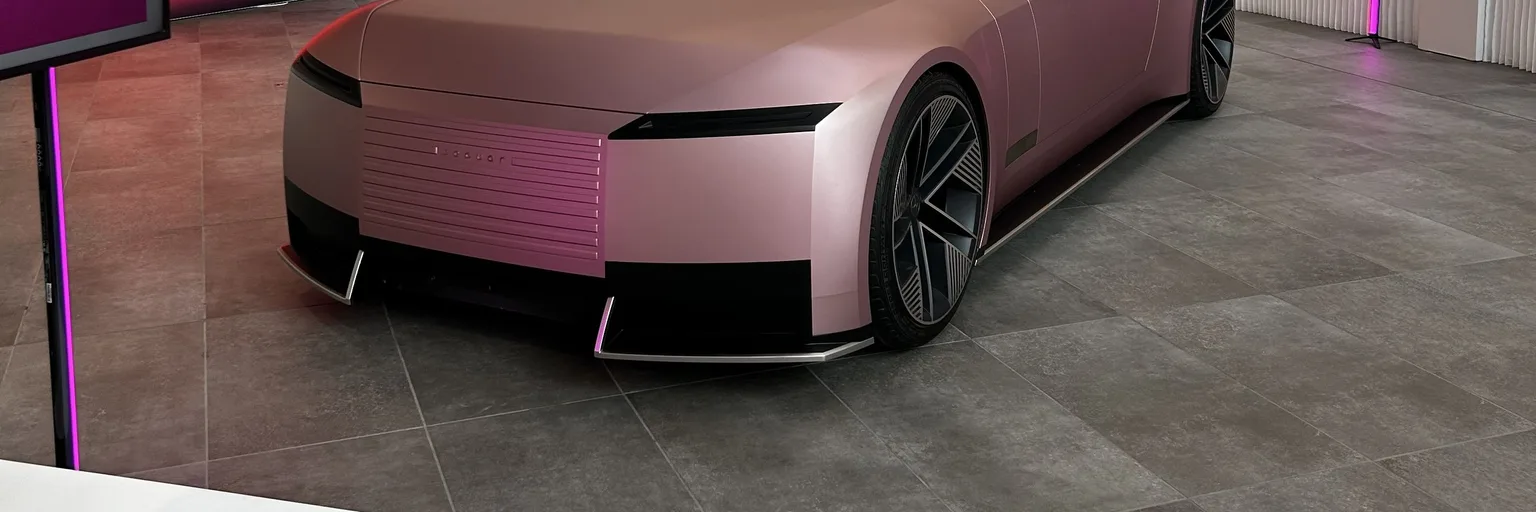
AI-generated image
Is it good news that every finalist for Europe's most prestigious car award runs on electrons, or a sign that the award is looking at one half of the market? Both, in our view. The second half of that answer is the more interesting one.
The facts first. As Il Sole 24 Ore reports, the seven finalists for Car of the Year 2027 are the BMW iX3, Cupra Raval, Hyundai Ioniq 3, Kia EV2, Renault Twingo, Volkswagen ID.Polo and Volvo EX60. All are electric, none is Chinese, and hybrids are out as well. Per the organizers, voting closes on December 29, 2026, and the winner will be announced on January 8, 2027, on the first day of the Brussels Motor Show.
The jury has stopped treating cheap EVs as a compromise
Look at the names, not just the powertrain. The Twingo, an electric city car, is on the list, and so are models like the ID.Polo, Raval, EV2 and Ioniq 3 whose names suggest the jury is paying attention to cars aimed at ordinary buyers, not only to the BMW iX3 and Volvo EX60 end of the market. In our reading, that is a shift from the days when an electric finalist was expected to be a showpiece.
The jury, made up of 65 European journalists from 25 countries, is at least willing to put a car an ordinary household might actually buy in the final. El Confidencial puts the new Twingo at a starting price of 19,490 euros. We think that is the real story: the electric car is no longer a statement, it is becoming the default answer for a small car.
The "first time ever" label also deserves a little caution. A shortlist is not a sales chart. It tells us what a panel of journalists considers best, not what buyers are signing for. But when every one of the finalists plugs in, the debate over whether a combustion-engine alternative can still compete for this title looks much weaker than it did a few years ago.
No Chinese finalist is a blind spot, not a verdict
Now the uncomfortable part. Chinese brands are a constant presence in the European conversation about EVs, yet none made the final seven. We can't tell from the documentation why. We don't know which Chinese models were submitted, or how they scored. So we will not pretend to know the jury's reasoning.
What we can say is that the absence is striking. A prize that claims to pick the best car in Europe ends up with a field made up only of established brands. El Confidencial cites designer and critic Adrian Clarke, who argues that heritage and brand DNA are an edge that newer makers, Chinese ones above all, lack. The Twingo, a descendant of the 1992 original, is a good example of that logic. It is a fair point about emotion and design. It is not proof that the cars are worse.
Our reading, and it is an opinion, is that the jury rewards what it knows: familiar badges, European design studios, models that arrive with a story. That is not a scandal. But an award that wants to stay relevant has to be able to say why a strong Chinese entry lost, rather than leaving readers to wonder whether it was ever on the table.
Who wins and what to watch
In our view, the early winners are the carmakers that got compelling electric cars to market in time. Renault says it is the sixth consecutive year in which one of its models has reached the final, which looks like a strong signal that its strategy of characterful electric cars is paying off with critics.
The loser, for now, is the idea that the awards reflect the whole market. Our recommendation: treat the winner announced in January as a good guide to the jury's favorite among the electric cars it considered, not as a verdict on every EV you can buy. And if you are shopping, don't ignore the brands that didn't make the list.
Next year's shortlist will be the real test. If it is all-electric again and still has no Chinese entry, that will probably stop looking like a coincidence and start looking like a pattern.
No topics yet: start the first one.
More stories
The E-208 GTi proves a small EV can wear the badge. The price tag is the real test
Peugeot's electric hot hatch answers the sacrilege crowd on power and fun. Whether enthusiasts will pay £34,995 for it is a different question.
A mid-engine GR Yaris is the MR2 revival we wanted, if the price is right
Toyota's racing mule now looks like a proper mid-engine coupe. The spirit of the MR2 is back; whether enthusiasts can afford it is the real question.
UK car tax keeps moving, and that's a bigger problem than the rate
April 2027's VED rise is a routine inflation uprating, but with eVED arriving in 2028, buyers choosing between EVs and petrol need stable rules more than a low rate.
Jaguar wants you to hate the Type 01. That's only smart if it delivers
Jaguar is deliberately courting division with the Type 01. It's a bold strategy, but it only works if the car and a price of about $130,000 justify the fight.