BMW i3 50 is the first real Model 3 rival, but price will decide it
The Neue Klasse sedan out-ranges the Model 3 and drives like a 3 Series should, but a US price BMW hasn't set and its software will decide whether it wins.
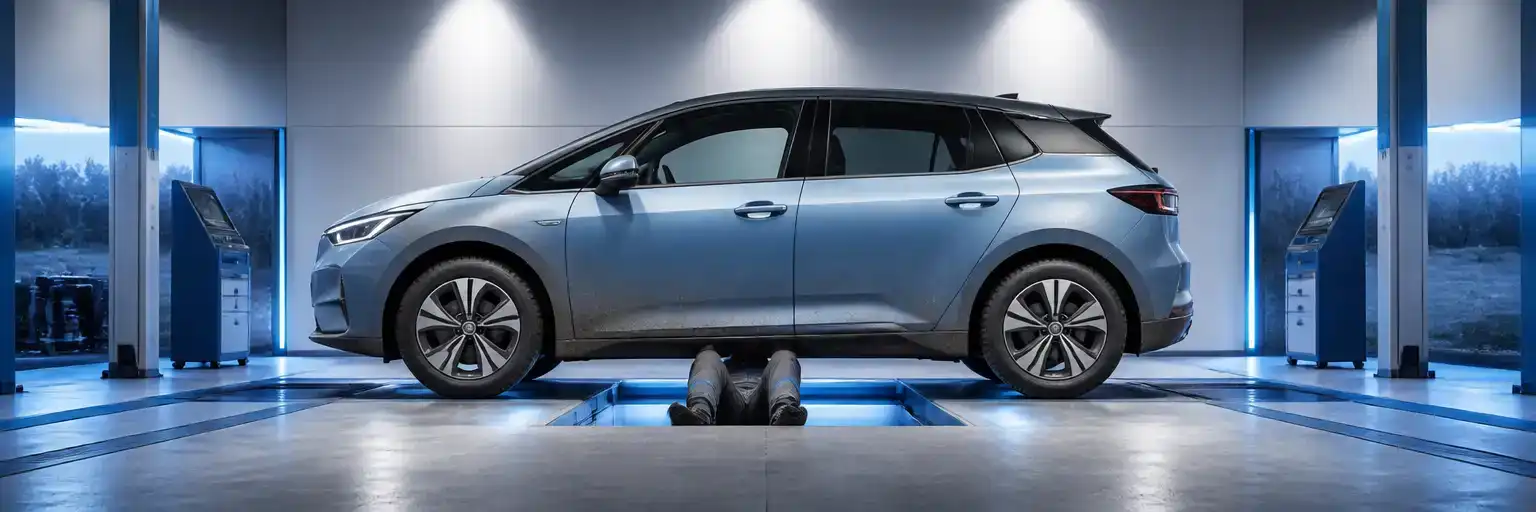
AI-generated image
For years, "Model 3 rival" has been a polite way of saying "nice try." Plenty of electric sedans arrived with good numbers on paper, and the Tesla still sold as if nobody else had shown up. So when the first drive reports for the BMW i3 50 landed this week, the useful question wasn't whether it's good. It was whether it's good in the specific ways that move Model 3 buyers.
Our answer: yes on the car, not yet on the deal.
The hardware is the strongest case against Tesla
The i3 follows the iX3 in BMW's Neue Klasse family, and it essentially replaces the old i4. Auto Express tested the UK version. The i3 50 xDrive has a 112 kWh battery, 462 bhp, a 0-62 mph time of 4.7 seconds and up to 566 miles of range. That is 100 miles more than the Model 3 Long Range, according to the outlet, which calls it the longest-range EV on sale in the UK. Charging peaks at 400 kW, with 10-80 percent in 21 minutes.
Those are UK figures, and US numbers are likely to differ. The U.S. launch is planned for 2027, and one preview says final EPA range and MSRP are still pending. It cites an estimated range of up to 440 miles. Even with that haircut, we think a range gap over the Model 3 is plausible.
The reviewers' real-world numbers are more telling than the headline ones. Auto Express saw 4.7 miles per kWh on the motorway, but a mixed drive averaged 3.7 miles per kWh, for a predicted 414 miles. We think that's the honest number to keep in your head. It's still excellent, and it's the figure that matters if you drive it like a normal person.
The less obvious weapon is that it drives like a BMW. Auto Express says it "drives just as a 3 Series should," with natural steering weight and a well-handled chassis despite weighing 2,205 kg, some 345 kg more than the 3 Series. Tesla's pitch has always been efficiency and tech. BMW is going after the buyers who also care about how a car feels when the road gets interesting.
The compromises are real, and the Model 3 isn't standing still
This isn't a flawless sedan. Auto Express flags limited rear foot space and a 420-liter boot, 30 liters smaller than the 3 Series. A Touring version is expected next year to ease the practicality complaint. The weight will also trouble anyone who expected a featherweight, and BMW's own pitch leans on dynamics rather than acceleration. The 4.7-second sprint, the outlet notes, isn't as stomach-churning as some rivals'.
None of that sinks the car. A sedan this good at the things sedan buyers say they want will find an audience. But "better car" has lost to "Tesla" before, and we'd be careful about assuming this time is different.
Price and software are where this fight is actually won
In the UK, the base i3 40 xDrive starts at £47,975, and the 50 xDrive costs £5,500 more. In our view, the lesson there is that the extra range comes at a premium BMW expects you to pay, and the Model 3 has made its name on being the car you can afford.
The US picture is murkier. One undated site lists an i3 starting at $52,900 against a Model 3 Long Range at $47,740, but BMW's U.S. pricing is still pending according to other previews, so we wouldn't treat that gap as settled. Our prediction, and it's only that, is that the i3 will be priced above the Model 3 in the US. The 50 will likely be pricier still. Whether buyers accept that depends on whether they feel they're getting a more complete car or just a more expensive one.
Software is the second swing factor. BMW's Heart of Joy system ties the powertrain, brakes, infotainment, automatic lights and autonomous driving features into one tech stack, and the car has a 17.9-inch touchscreen in the Panoramic iDrive layout. Auto Express says it takes a while to sort out your preferences but is outstanding once you're acquainted. We'd note the caveat: a learning curve is a risk in a segment where simplicity has been the Model 3's selling point. And none of the reviews we've seen says how BMW's software updates or driver assistance will fare against Tesla's in daily use, so that remains the big unknown.
Our verdict
The i3 50 xDrive is the first electric sedan we'd tell a Model 3 shopper to wait for. It out-ranges the Tesla on the numbers reported so far, charges quickly, and apparently retains the 3 Series' character. If you're a driver rather than an appliance buyer, hold off on the Model 3 until the US pricing and EPA ratings are out.
If you care mostly about cost per mile and a lean, easy interface, don't assume the BMW wins by default. The car is ready to compete. What's left is the sticker and the software, and those two will decide whether the i3 becomes a genuine alternative or just a very good car that Tesla quietly outsells.
No topics yet: start the first one.
More stories
Used Chinese EVs at 40% off are a real loophole, not a free lunch
French buyers are exploiting a gap in EU tariffs to import near-new BYD and Xiaomi EVs. The discount is real, but the paperwork and the unknowns may eat the savings.

Stellantis' LFP switch is the right fix for cheap EVs, just late
Moving European EVs to cheaper LFP cells in 2027 attacks the real cost problem, but the timing and the unquantified trade-offs deserve skepticism.
The UK's per-mile EV tax is fairer than a flat fee, if it gets three things right
Britain's pay-per-mile EV tax could become a template for other countries, but it only works if privacy is airtight, the price per mile is transparent and early adopters aren't punished.
The used-EV reliability scare is running out of evidence
A UK analysis of 47.4 million inspections suggests high-mileage EVs fail less often than petrol cars. The mileage fear looks like the wrong number to worry about.