Ford's "no more boring cars" pledge is easy. Quality and price are the real test
Jim Farley wants 5 million sales a year by 2032 and fewer dull products. Styling alone won't get Ford there: reliability and sticker prices will decide whether the plan works.
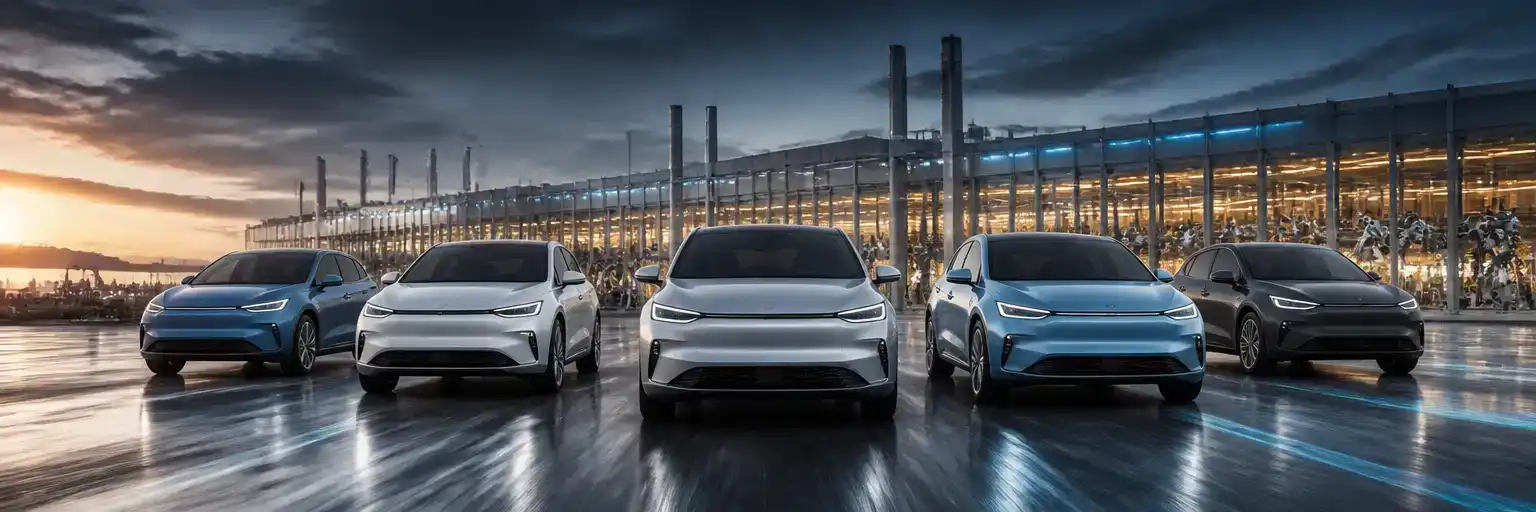
AI-generated image
Who ever asked a carmaker for boring cars? Nobody, and that is exactly why Ford's latest promise is the least interesting part of its plan. Saying you will build exciting vehicles costs nothing. Building them well, and selling them at a price people can actually pay, is where automakers usually stumble.
Here is what we know. According to The Wall Street Journal, CEO Jim Farley told workers at a Thursday town hall that Ford is aiming for a sales increase of roughly 20% over its current volume by 2032, citing people familiar with the comments. Other outlets summarizing the report put that at about 5 million cars a year. The WSJ frames it as a move away from models Farley has deemed "boring."
The product details are thin, but one stands out. As Quartz relays from the WSJ, Ford plans to bring out five new models priced under $40,000 by the end of the decade, including an electric pickup. Everything else in the pitch is adjectives.
Excitement is the cheap half of the plan
We think the "no boring cars" line is mostly a morale slogan, and not a bad one. A town hall is an internal audience, and telling employees the company will stop making forgettable products is good theater. But a 20% volume jump is not a design problem. It means convincing roughly one in five more buyers than today to pick a Ford, and those buyers will compare price, warranty and reliability long before they compare creases in the sheet metal.
There is also a quiet admission buried in the phrase. If the company is discontinuing "boring" models, then some of today's lineup is not pulling its weight. Fewer products usually means less volume in the short term, so the 20% has to come from newer, better-selling vehicles replacing weaker ones. That is plausible. It is also a big bet, and a 2032 target gives Ford six years of room to be judged on promises rather than results.
Quality is the credibility test Ford has already failed once
Ford itself has handed us the yardstick. In an exclusive interview with USA Today, Farley outlined the changes he made to workplace culture and other processes after the 2023 pickup disaster, as the paper puts it. That is a rare level of candor for a CEO, and we give him credit for it.
But candor is not a fix. The Detroit Free Press reported this month that Ford faces F-150 production woes and a risky vehicle launch ahead. We don't have the details, so we won't speculate on how serious they are. What we can say is that an automaker promising a flood of new, more daring products while its best-known pickup is still giving it production headaches has a sequencing problem. We think exciting launches are exactly the moments when quality tends to slip, because new tooling, new suppliers and new software often arrive at once.
In our view, the plan succeeds or fails on whether Ford can launch several new models without a repeat of that disaster. One bad launch undoes a lot of "exciting" marketing.
Under $40,000 is the number to watch
The price promise is the most useful thing in the story, and also the most slippery. "Affordable" means very different things depending on who is buying, and $40,000 is a ceiling, not a typical transaction price. Five models under that line, including an electric pickup, would be a meaningful shift if the cheaper trims are real and not just a teaser figure on a poster. We have seen that trick too often in this industry to take it on faith.
The electric pickup is where the argument gets sharpest. We suspect electric trucks have a reputation problem on price, and a sub-$40,000 version would need to be a genuinely good truck, not a stripped-down compromise. If Ford pulls that off, it changes the conversation about what an affordable EV looks like in the US. If it doesn't, the headline becomes a footnote.
Our verdict
Treat the 5 million target as an ambition, not a commitment, until Ford shows it in product rather than in a town hall report. We would not judge this plan by how bold the next concept looks. We would judge it by two boring metrics: how clean the next launches are, and how many of those under-$40,000 models actually reach showrooms at that price.
If both come through, Ford will have earned the right to talk about exciting cars. If not, "no more boring cars" will age into the kind of slogan that gets quoted back at a company for years.
No topics yet: start the first one.
More stories
VW's paused ID.Golf is survival mode, not a strategy
Pausing development of the electric Golf to save money isn't a pivot. It's a carmaker freezing its most hoped-for affordable EV to fix the books, and buyers should take note.

Audi's 87% profit drop shows the luxury badge is no shield
Audi kept just 13.2% of last year's Q3 profit. The cause isn't only tariffs or China: a premium brand without a US plant and with models in transition is exposed.
Audi's petrol-engine EV patents are a quiet range extender admission
Two Audi patents put a combustion engine inside an electric car. It's a pragmatic idea, but only if the industry stops pretending an EREV is just an EV with a long range.
VW's €5.8 billion loss is mostly a bill, but the EV margin is the real problem
Volkswagen's Q3 loss is inflated by one-off charges, yet the CFO's admission that EVs earn less than combustion cars is the line that matters most.