Europe Needs More Than Charging Points to Win the EV Race
Europe’s charging network is expanding rapidly, but the real test is whether deployment also builds a resilient, competitive industry behind the hardware.
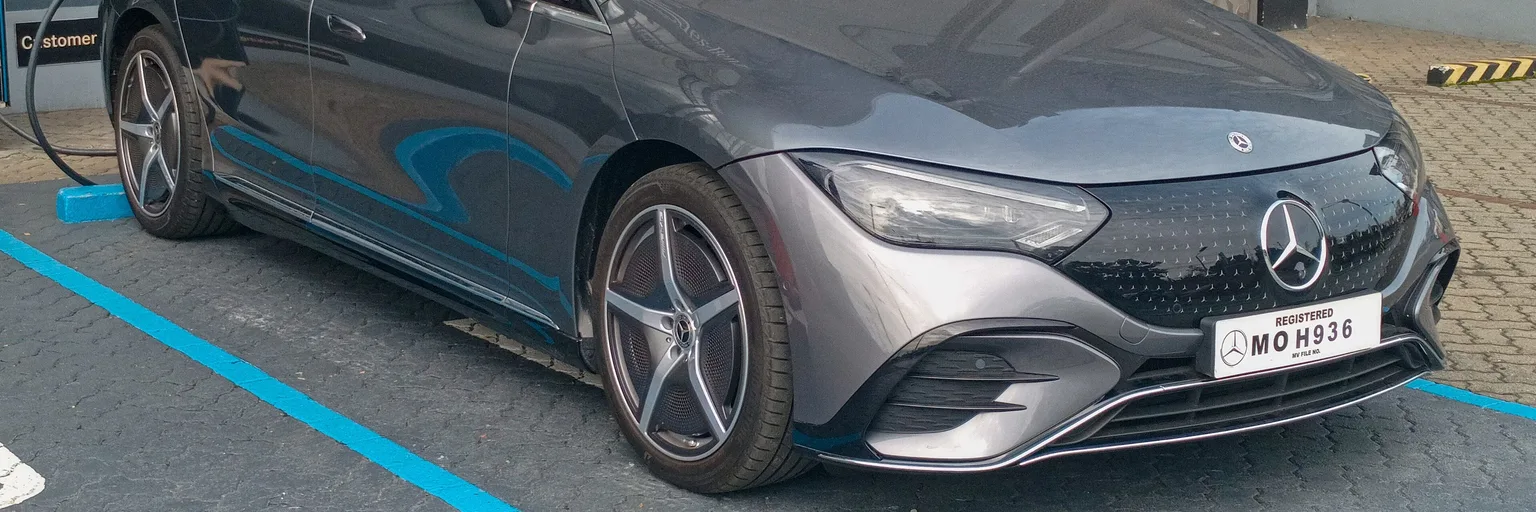
Photo: Cayambe / Wikimedia Commons (CC BY-SA 4.0)
Europe’s charging boom looks like an obvious success—until we ask what success is supposed to mean. Public charging infrastructure grew from around 250,000 points in 2020 to more than 1,000,000 in 2024, according to the World Economic Forum. That is a powerful deployment story. In our view, it is not enough to prove that Europe is building a durable charging industry.
The more important question is whether a larger network also creates lasting capability in the companies that design, manufacture, maintain and improve charging systems. The EU is debating local-content requirements that could encourage foreign manufacturers to produce more in Europe and rely on European suppliers, as Reuters reports. That debate points in the right direction, but rules alone will not create a competitive industrial base.
A million charging points is not the same as industrial strength
The number of installed chargers is politically attractive because it is easy to count, map and announce. A healthy equipment sector is less visible. It depends on sustained orders, engineering expertise, supplier relationships, margins and the ability to improve products after they are installed.
That is why we should be careful about treating deployment figures as a complete scorecard. A network can expand quickly while the companies behind it remain vulnerable. If public procurement focuses narrowly on the lowest upfront price, manufacturers may face pressure from larger or lower-cost competitors. That is a hypothesis about how procurement can work—not a documented description of every current contract—but it is precisely the risk policymakers should examine.
Charging is also not a single, simple product category. A review of charging services in the academic literature identifies multiple actors, types and functions across the market, according to ScienceDirect’s review. That complexity matters. A charging network is an ongoing technical service, not merely a collection of metal cabinets placed beside a road.
China shows why infrastructure and industry belong in the same conversation
China is well positioned in charging infrastructure and has large-scale support programs, according to a comparison from Fraunhofer ISI. That fact does not prove that every Chinese system or policy should be copied. It does show why infrastructure cannot be separated entirely from industrial strategy.
Our view is that deployment and manufacturing can reinforce each other. More infrastructure can create demand; demand can help suppliers gain scale; scale can support lower prices and faster product development. The reverse is also possible: if deployment is treated as the only goal, policymakers may measure success in connection points while overlooking whether the surrounding industrial capabilities are becoming stronger or weaker.
Germany’s electric-vehicle incentive illustrates the broader tension. A new program for electric vehicles and plug-in hybrids was introduced on January 1, 2026, and its design prompted criticism because Chinese automakers could benefit. Tagesschau reported that the subsidy supports climate goals while also benefiting Chinese manufacturers. That is a concrete example of climate policy and industrial policy pulling in different directions. Charging policy deserves the same scrutiny.
Local-content rules are useful only if Europe can scale
Local-content requirements could encourage production and supplier relationships within Europe. In our view, they are useful only if they help create genuine capability rather than a thin layer of local assembly. Protection by itself does not guarantee competitive prices, reliable products or technological leadership.
A stronger definition of European charging hardware would focus on the capabilities that matter over the equipment’s useful life: repairability, interoperability, upgradeability and durable technical support. Those are recommendations, not requirements documented in the sources, but they offer a better policy lens than counting installations alone.
Europe also needs to avoid turning industrial resilience into an excuse for slow deployment. Drivers, operators and cities need a growing network. The answer is not to reject foreign competition or wait for every component to be produced domestically. It is to make public purchasing more sophisticated than a simple lowest-price contest and to evaluate the long-term performance of the systems being bought.
Europe should stop measuring success by plugs alone
The most impressive charging statistic may also be the least informative. A million public points says a great deal about physical expansion, but much less about who controls the technology, who can service it and who can improve it.
Our recommendation is straightforward: Europe should track industrial capability alongside deployment. That means asking whether public policy is creating durable suppliers, technical expertise and competitive products—not merely whether another installation has been completed. The documentation does not establish that Europe is currently losing control of charging hardware, nor does it prove a cost advantage for Chinese equipment. It does establish a fast-growing European network, China’s strong charging position and an emerging debate over local production.
That is enough to justify a sharper strategy. Europe should welcome competition where it improves prices and deployment, but it should not confuse more charging points with complete industrial success. The winning policy will connect the physical network to the companies and skills needed to keep it reliable, upgradeable and competitive.
No topics yet: start the first one.
More stories
The Hyundai IONIQ 3 Gets the Hardest EV Equation Right
Nearly 500 km of claimed range in a compact body is compelling, but Hyundai’s new electric hatchback will only matter if its Spanish price matches its everyday mission.

Mercedes' EV Backlog: A Triumph of Product, A Test of Production
Mercedes-Benz's six-month order backlog for electric vehicles confirms robust consumer appetite in the premium segment, yet it exposes the industry's ongoing challenge to scale component supply and manufacturing to meet rising demand.
Lucid's French Gambit: Can Ultra-Luxury Trump Tesla in Europe?
Lucid's official arrival in France with its high-end Air and Gravity EVs sets the stage for a compelling showdown, but its ultra-luxury strategy must differentiate beyond mere specs to truly succeed against established electric giants.

Fiat's €15,000 EV: The Urban Disruptor Europe Needs?
Fiat's bold move to launch a sub-€15,000 electric city car, the Pandina, alongside Stellantis siblings, could fundamentally reshape the European EV landscape and challenge assumptions about electric vehicle accessibility.