The Hyundai IONIQ 3 Gets the Hardest EV Equation Right
Nearly 500 km of claimed range in a compact body is compelling, but Hyundai’s new electric hatchback will only matter if its Spanish price matches its everyday mission.
Photo: Hyundai / sala de prensa (uso editorial)
Range anxiety is starting to look like yesterday’s excuse—but price anxiety is taking its place. The Hyundai IONIQ 3 arrives with up to 497 km of claimed range in a compact body, exactly the kind of combination that could make electric driving feel normal rather than aspirational. The uncomfortable question is whether Hyundai has priced it like an everyday car.
The case for the IONIQ 3 is straightforward. Hyundai offers a 42.2 kWh battery with up to 344 km of range and a 61 kWh version with up to 497 km, according to its Spanish model page. The car was already on sale in Spain by Sept. 10, 2026, but the market has also delivered a warning: the latest published Spanish pricing points to a starting price of €39,390 before discounts.
That is not the affordable-EV breakthrough many buyers were expecting. It may still be a convincing car, but the argument has shifted from “this is a cheap electric car” to “this is a well-sized electric car that tries to justify its premium.”
The IONIQ 3’s real innovation is restraint
The electric-car market has spent years rewarding excess: bigger batteries, taller bodies, more power and increasingly elaborate interiors. The IONIQ 3 moves in the opposite direction. Its compact dimensions—around 4.16 meters long and 1.8 meters wide—are far more relevant to European streets and parking spaces than another oversized electric SUV.
That restraint matters because efficiency is not only about battery capacity. A smaller, more aerodynamic car needs less energy to move, and Hyundai says the IONIQ 3 has a drag coefficient of 0.263. The long-range version’s 61 kWh battery reaching nearly 500 km on the WLTP cycle is therefore more persuasive than a large vehicle achieving a similar figure through sheer battery mass.
We think this is the right product philosophy. A compact EV that can handle commuting, errands and occasional long-distance travel is more useful to most households than a heavy vehicle designed around journeys they rarely make. The IONIQ 3 does not need to dominate every category. It needs to be easy to live with.
Nearly 500 km is useful—but it is not a promise of 500 km everywhere
The headline range is strong, but buyers should read it as a planning advantage, not a guarantee. The IONIQ 3’s official figures are homologated WLTP claims, and real-world range will depend on speed, weather, temperature and driving conditions. That is not a flaw unique to Hyundai; it is simply the difference between a test cycle and daily driving.
The more important point is that the long-range battery gives drivers margin. Even when the official figure is not achievable, starting from a claimed 497 km should reduce the frequency of charging stops compared with a smaller-battery compact. The standard version’s 344 km claim may be enough for drivers whose lives are predominantly local, while the larger battery is the more convincing replacement for a combustion car in a one-car household.
Charging also supports the car’s everyday argument. Hyundai quotes a 10–80% DC charging time of about 29 minutes, while the company says AC charging can reach 22 kW with a home wallbox. Carwow’s Spanish report says the long-range version has an estimated maximum DC charging power of 119 kW. That is not a radical charging breakthrough, but it is fast enough to make longer trips less of a logistical exercise.
Space could make the compact format feel like an upgrade
The IONIQ 3’s strongest argument may be inside the cabin. Hyundai claims five-seat comfort, a flat floor and a 441-liter trunk. Carwow describes that capacity as 322 liters in the main compartment plus 119 liters in the hidden Megabox, a clever use of the packaging freedom offered by an electric platform.
This is where the IONIQ 3 can beat the assumption that compact means compromised. Buyers who choose a smaller car usually accept less exterior presence, not necessarily less usable interior space. If Hyundai has genuinely combined city-friendly dimensions with family-usable storage, the model becomes more than an efficient commuter: it becomes a rational default.
The technology is less decisive, but still notable. The car introduces Hyundai’s PLEOS Connect infotainment system in Europe, with 12.9-inch or 14.6-inch display options. The preservation of physical controls for frequently used functions, as reported by Carwow, is a refreshingly practical decision. We would rather see Hyundai spend its engineering effort on visibility, efficiency and intuitive controls than on turning every function into a touchscreen search.
The price threatens to undo the whole argument
Here is the problem Hyundai cannot solve with aerodynamic styling: €39,390 is a long way from mass-market affordability. The figure reported for Spain by Carnovo is for the model’s entry price without discounts, and Hyundai’s own launch offer lists financing terms for the IONIQ 3 N Line rather than establishing a simple retail price for every version.
That leaves a gap between the car’s mission and its positioning. A compact EV with excellent packaging and nearly 500 km of claimed range can be worth paying more for, but the buyer at that price is no longer shopping purely for an affordable daily tool. They are comparing equipment, financing, charging access and brand value across a much broader field.
Hyundai’s launch incentives may soften the blow. The company says its first 200 IONIQ 3 N Line units include a home charger and installation, up to 10,000 km of home charging, and charging benefits through Zunder. Those offers are useful, but limited promotions are not the same thing as a permanently accessible price.
The verdict is clear: the Hyundai IONIQ 3 gets the vehicle concept more right than the affordability claim. Its compact footprint, useful cargo capacity, efficient long-range version and sub-30-minute fast charging make range anxiety look increasingly outdated. But at the documented Spanish price, this is not yet the EV that democratizes electric driving. It is the EV that shows Hyundai knows exactly what the mainstream wants—and still has to decide what it can afford to charge for it.
No topics yet: start the first one.
More stories
Europe Needs More Than Charging Points to Win the EV Race
Europe’s charging network is expanding rapidly, but the real test is whether deployment also builds a resilient, competitive industry behind the hardware.

Mercedes' EV Backlog: A Triumph of Product, A Test of Production
Mercedes-Benz's six-month order backlog for electric vehicles confirms robust consumer appetite in the premium segment, yet it exposes the industry's ongoing challenge to scale component supply and manufacturing to meet rising demand.
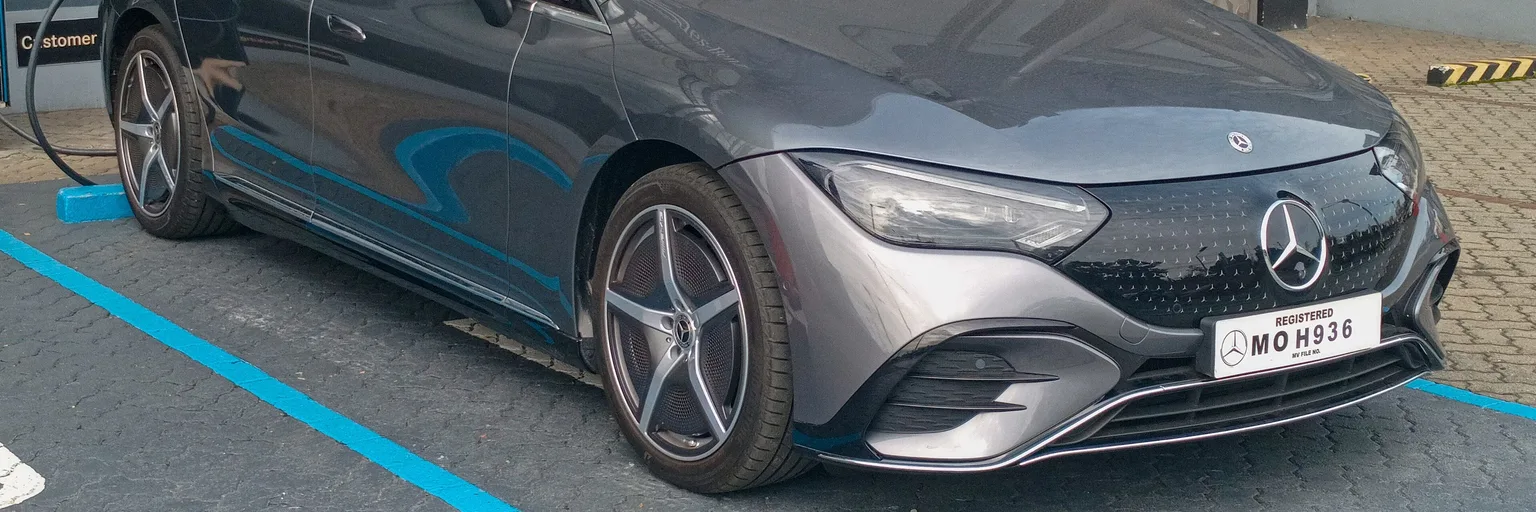
Lucid's French Gambit: Can Ultra-Luxury Trump Tesla in Europe?
Lucid's official arrival in France with its high-end Air and Gravity EVs sets the stage for a compelling showdown, but its ultra-luxury strategy must differentiate beyond mere specs to truly succeed against established electric giants.
Fiat's €15,000 EV: The Urban Disruptor Europe Needs?
Fiat's bold move to launch a sub-€15,000 electric city car, the Pandina, alongside Stellantis siblings, could fundamentally reshape the European EV landscape and challenge assumptions about electric vehicle accessibility.