CATL Is Still the Battery Leader. That Is No Longer Enough
CATL’s slowing profit growth exposes the harder phase of China’s battery race: scale still wins contracts, but price pressure now tests the entire business model.
Photo: BYD / sala de prensa (uso editorial)
A battery leader can keep gaining market share and still look vulnerable. That is the uncomfortable signal from CATL’s latest results: the company remains the dominant force in electric-vehicle cells, but the easy phase of winning through scale appears to be over.
According to Investing.com, CATL’s third-quarter net profit rose 14.5% year over year to 21.2 billion yuan ($3.17 billion). That is still a strong result in absolute terms. The problem is the direction of travel: profit growth has slowed as competition intensifies, following a much stronger fourth quarter in 2025, when profit increased 57.1%, as Reuters reported.
This is not a story about CATL suddenly losing its crown. It is a story about what that crown now costs.
Market share is becoming a less valuable victory
CATL’s scale remains extraordinary. Its global EV battery market share reached 40.2% in the first half of 2026, while its net profit for that period was RMB43.284 billion (US$5....), according to EV Infrastructure News. The market itself is still expanding: the International Energy Agency says global battery deployment grew by almost 30% in 2025.
Yet scale does not automatically translate into healthier economics when every competitor is trying to sell more cells at lower prices. A 2026 analysis of the battery-cell industry says Chinese overcapacity has intensified price pressure and that cell prices have declined by approximately 60% since 2022. That combination changes the meaning of growth. More volume may protect CATL’s relevance while doing less for each unit sold.
In our view, this is the central mistake behind the simplistic “CATL is winning” narrative. It treats market share as the finish line. In a manufacturing race, market share is often the price of admission. The real test is whether a company can keep investing in technology, factories and supply security while customers demand cheaper batteries.
CATL appears better positioned than many rivals, but that is not the same as being insulated. The same analysis finds that CATL and China Aviation Lithium Battery were able to keep operating margins stable through the first half of 2025, while major Korean competitors LG Energy Solution and Samsung SDI faced operating losses in the periods examined when US subsidies were excluded. That advantage matters, but it also raises the stakes: CATL is the company most expected to absorb price pressure without slowing down.
China’s battery war is shifting from expansion to endurance
The next phase will be less about who can build the most capacity and more about who can survive the consequences of having built it. The industry analysis describes a mismatch between Chinese cell capacity and current demand, alongside pressure on cathode materials and margins across the supply chain.
That is a brutal environment for manufacturers. Automakers gain bargaining power because they can push for lower prices, while battery suppliers must continue funding improvements that may not produce immediate returns. Technology, cost control and customer relationships become inseparable. A cell maker cannot rely on a single advantage if competitors can match its production scale or undercut its pricing.
CATL’s energy-storage business has helped support profit growth, with a July report saying that rapid expansion in storage offset pressure elsewhere. That diversification is strategically important, but it should not be confused with an escape route. If the broader battery ecosystem is suffering from excess capacity, adjacent markets will also face competition as manufacturers search for growth.
This is why CATL’s slowdown deserves more attention than a simple quarterly headline. It suggests that the company’s leadership is becoming harder to monetize, not that leadership has disappeared.
European drivers may benefit, but Europe also becomes more exposed
For buyers, the immediate logic is attractive. Falling cell prices can reduce automakers’ battery costs, giving manufacturers more room to lower EV prices, improve range or protect margins. The industry analysis explicitly identifies lower cell prices as a potential benefit for customers and vehicle manufacturers. That is one reason China’s intense competition could accelerate EV adoption beyond China: cheaper batteries make the economics of electric cars easier to defend.
But cheaper is not the same as safer. A market dependent on a small number of highly scaled suppliers can deliver impressive prices while concentrating risk. The IEA’s data underlines how central batteries are to the global EV system, and CATL’s share shows how much of that system depends on one company. For European automakers, a strong CATL is useful. An indispensable CATL is a strategic vulnerability.
Europe’s challenge is therefore not simply to imitate Chinese production at any cost. It is to build enough alternative capacity, technical expertise and supplier diversity that lower prices do not come at the expense of resilience. The difficulties facing European battery projects show how demanding that will be; the 2026 industry analysis points to insolvencies, postponed plants and canceled cell-production plans as evidence of the capital intensity involved.
The temptation will be to celebrate lower battery prices and postpone the harder industrial question. That would be shortsighted. Europe needs access to competitive cells, but it also needs options.
CATL wins the present; the industry must survive the future
Our verdict is nuanced but firm: CATL remains the benchmark, yet slowing profit growth shows that its scale is no longer a complete strategy. The winners of China’s battery war will be those that combine volume with durable margins, credible technology and enough control over their supply chains to withstand price cuts.
For European drivers, this could mean more affordable EVs and faster improvements. For European industry, it is a warning not to mistake cheap batteries for a secure battery system. CATL is not the problem. The problem is building an electric-car market that depends too heavily on any single leader—even a very capable one.
No topics yet: start the first one.
More stories
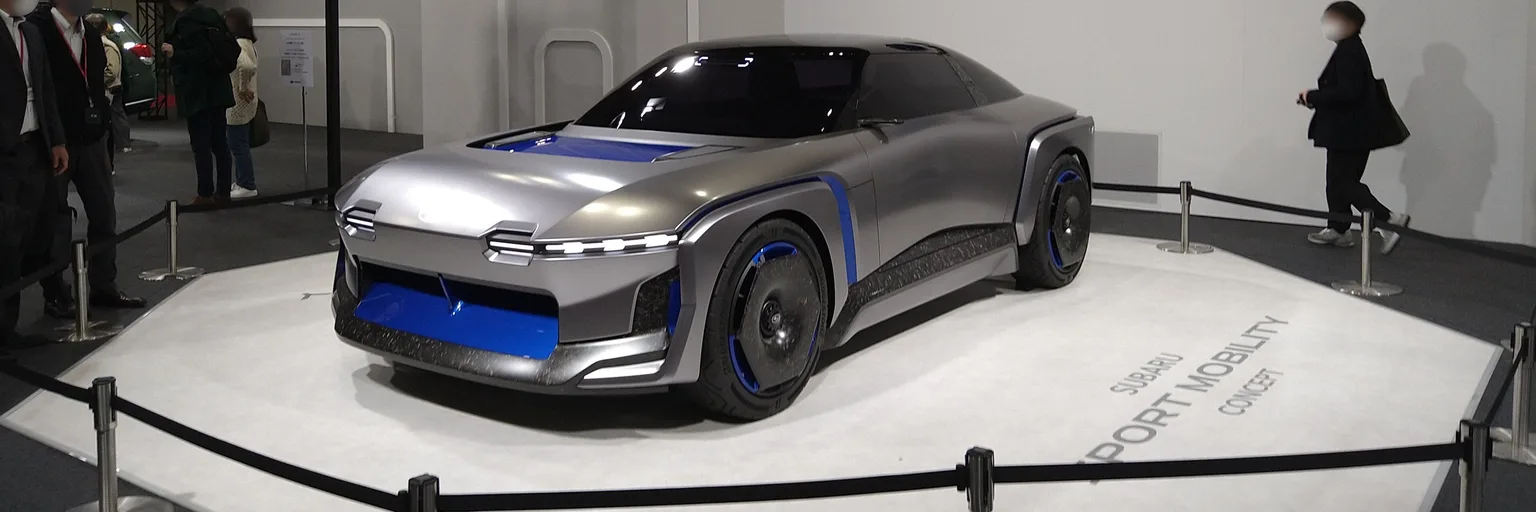
Subaru’s 510-HP EV Is Really a Race Against the Calendar
Subaru’s electric prototype matters less for its power than for the faster development model behind it—and the independence it seeks from Toyota.
Oil Giants' Crossroads: ExxonMobil vs. Chevron in a Volatile 2026
As geopolitical tensions fuel short-term gains for oil stocks, ExxonMobil and Chevron navigate a market shaped by conflict, rising prices, and the undeniable long-term shift away from fossil fuels.

Horner's 'Drive': A Memoir or a Calculated Strike at F1's Old Guard?
Christian Horner's new memoir isn't just a look back at his Red Bull tenure; it's a strategic broadside designed to reshape the narrative and challenge the very power structures that defined his F1 career.

Trump’s Diesel Deal: A Peace Gambit or a Political Gamble?
President Trump's move to waive Russian diesel sanctions, ostensibly to calm fuel prices and foster peace, appears to be a politically charged maneuver with minimal economic impact but significant geopolitical repercussions.