Renault 4 E-Tech: The LFP Battery Makes EVs Truly Accessible
Renault's strategic update to the 4 E-Tech, introducing a more affordable LFP battery variant and boosting existing ranges, marks a pivotal moment for electric vehicle accessibility and market competition.
AI-generated image
Are electric vehicles still perceived as a luxury for the privileged few? Renault appears to be pushing back against this notion with its latest refinements to the 4 E-Tech line-up, unveiled at the 2026 Paris Motor Show. These updates, particularly the introduction of a more budget-friendly version equipped with LFP battery technology, signal a clear intent to make EVs genuinely accessible and fiercely competitive in the European market.
Renault is not just incrementally improving its existing models; it's strategically expanding the offerings. The brand has announced a new entry-level Jogging trim for the Renault 4 E-Tech electric, set to arrive before the year's end. This variant will feature a compact 80 kW (110 hp) motor and a 37 kWh (36.5 kWh usable) LFP (lithium iron phosphate) battery, promising a WLTP range of up to 305 km and a 0 to 100 km/h sprint in 10.2 seconds. Beyond this new addition, both the existing 40 kWh and 52 kWh battery options for the 4 E-Tech have seen their WLTP ranges improved, reaching up to 310 km and 415 km, respectively, thanks to subtle aerodynamic enhancements like lower body fairings and new wing mirrors, as reported by Renault Group.
The LFP Advantage: Bridging Affordability and Performance
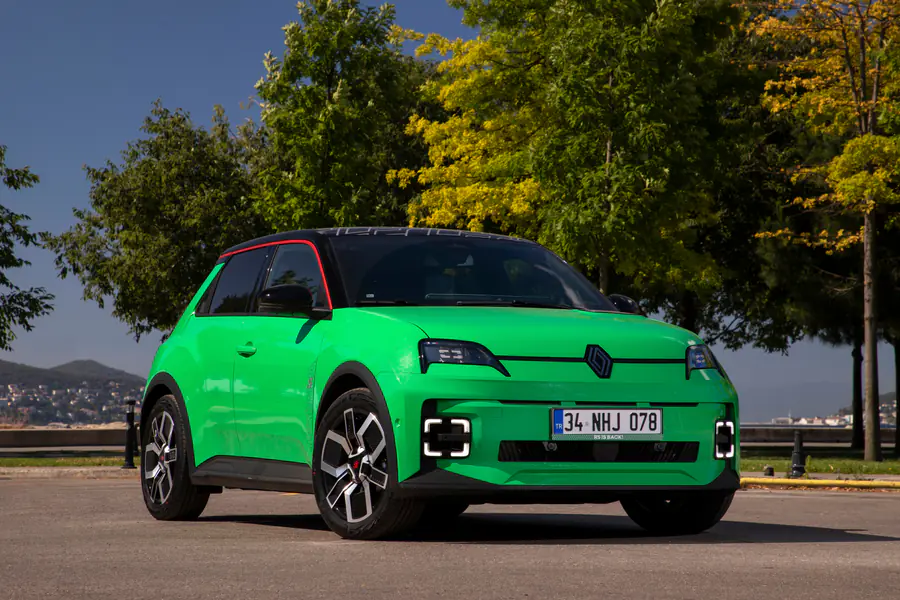
The arrival of the LFP battery in the Renault 4 E-Tech is more than just a specification change; it's a statement. As we've noted previously, LFP chemistry is heralded for its lower cost and robust durability, making it an ideal candidate for mass-market electric vehicles. Renault itself acknowledges that this technology is key to improving the price-to-range equation and making electric mobility more accessible across its passenger car lineup, following its implementation in models like the Twingo and Megane. The 305 km WLTP range offered by the new Jogging trim is certainly respectable for urban and suburban driving, offering practical everyday usability without the premium price tag often associated with longer-range EVs. This strategic move directly addresses one of the primary barriers to EV adoption: initial cost.
Furthermore, the standardized 6.6 kW AC onboard charger and 80 kW DC fast charger on the Jogging trim demonstrate that affordability doesn't mean sacrificing essential charging capabilities. A 10% to 80% charge in just 25 minutes at a DC fast-charging point ensures that even this entry-level model is prepared for the realities of modern EV ownership. This blend of cost-effectiveness and practical performance is precisely what the market needs to accelerate the transition to electric mobility.
Continuous Improvement: Range, Tech, and User Experience
Renault's commitment to
No topics yet: start the first one.
More stories
US vs. Europe EV adoption: It’s not just the tech, it’s the policy
While Europe's electric vehicle market continues its robust expansion, the US faces a significant slowdown, a stark divergence primarily driven by policy shifts and infrastructure disparities.
The BMW iX4 Isn't Just an SUV, It's an EV Range Revolution
BMW's new iX4 challenges electric vehicle norms, setting new benchmarks for range and rapid charging that could redefine expectations for luxury electric SUV coupés.

Dacia Hipster: Europe's ultra-affordable EV challenges market norms
Dacia's Hipster electric microcar concept makes a bold statement against the ever-growing complexity and cost of electric vehicles, offering a vision for accessible, essential mobility if it reaches production.

Aston Martin's EV Delay: A Prudent Pause or a Risky Bet on the Past?
Aston Martin's decision to push its first all-electric model to at least 2033 reflects a cautious luxury industry navigating evolving regulations and uncertain high-end consumer demand, prioritizing established combustion engines over premature EV investment.