US vs. Europe EV adoption: It’s not just the tech, it’s the policy
While Europe's electric vehicle market continues its robust expansion, the US faces a significant slowdown, a stark divergence primarily driven by policy shifts and infrastructure disparities.
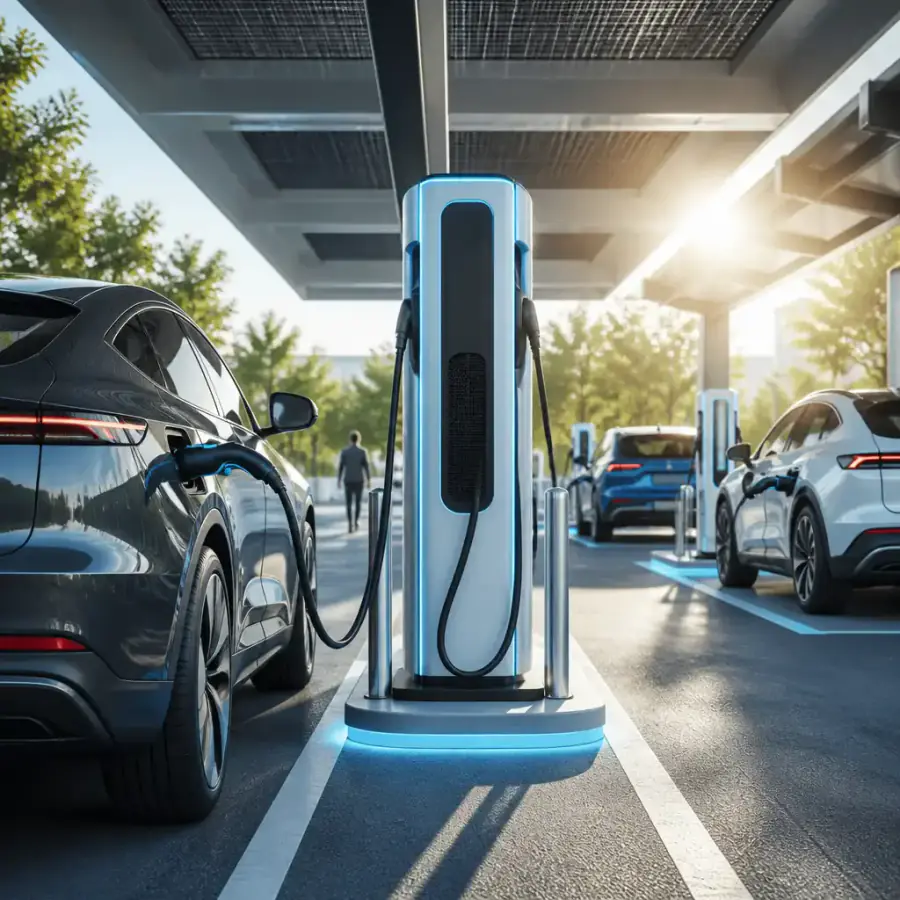
AI-generated image
Is the future of electric vehicles truly global, or are we witnessing a fractured adoption landscape? While the narrative of EV dominance remains strong in Europe, the American market appears to be hitting a wall, suggesting that market forces and incentives, rather than just the technology itself, are dictating the pace of this automotive revolution.
Indeed, for consumers in the United States, the enthusiasm for electric vehicles has cooled considerably, particularly since the expiration of a crucial $7,500 federal tax credit last September. This shift has led to what many analysts describe as a plummeting demand, with the EV market share dropping from a record high of nearly 12% in September to just 6% by January. Conversely, Europe continues to see its EV market expand, characterized by significant growth and increasing model availability, underscoring a fundamental difference in how these two major regions are approaching electrification.
The American Policy U-Turn
The primary culprit behind the US slowdown appears to be a dramatic shift in federal policy. The sudden disappearance of the federal tax credit left many consumers wary of the higher upfront costs of EVs. This policy change under the current administration has not only rolled back fuel economy standards from an ambitious 50.4 miles per gallon to 34.5 miles per gallon but also challenged mandates for EV sales and blocked state-level initiatives like California's 2035 ban on new gasoline-powered vehicles, as ABC News reported. These actions signal a clear departure from previous pro-EV stances, creating an environment of uncertainty that discourages both consumers and manufacturers. BloombergNEF has consequently revised its forecast for cumulative US EV sales through 2030 downwards by 14 million units, anticipating only 27% of total passenger car sales to be electric by then, a sharp decline from its previous projection of 48%, according to Utility Dive.
Infrastructure and Affordability: Europe's Outlook
Across the Atlantic, Europe’s EV growth, while also facing some tempered expectations, demonstrates a more resilient trajectory. Countries like the UK saw battery electric and hybrid sales account for nearly 30% of new car sales last year, and continental Europe reported a 19% market share for battery electric cars in February 2026, an increase of 3 percentage points from the previous year, as highlighted by The ICCT. This sustained momentum is underpinned by more consistent regulatory mandates, which compel automakers to sell a certain share of EVs. However, while the US still struggles with a notable lack of fast (Level 3) chargers outside of specific networks, Europe also faces its own significant infrastructure challenges. RBC Capital Markets notes 'similar infrastructure limitations' have contributed to tempered expectations for EV penetration there, as explained by RBC's Tom Narayan. Furthermore, the European market benefits from a wider array of more affordable EV models, with many available for under £20,000 in the UK, a stark contrast to the US average transaction price of over $57,000, as BBC News analysis indicates.
The Cost Conundrum and Market Dynamics
Beyond policy, the economics of EV ownership are playing a critical role. In the US, the significant price gap between new and used EVs, where new battery electric vehicles are often priced in excess of $50,000 while used ones can be found for around $30,000, incentivizes buyers towards the pre-owned market. This dynamic, coupled with a lack of compelling and affordable new EV models—65% of which are priced over $60,000—creates a barrier to new purchases. As RBC Capital Markets explains, the primary driver for EV adoption remains cost. Automakers like Hyundai are attempting to offset the loss of subsidies by lowering prices for some Ioniq models, but this strategy is not universally adopted, and direct-to-consumer brands such as Tesla are increasingly resorting to incentives like 0% financing for vehicles like the Model Y to stimulate demand.
The divergence in EV adoption between the US and Europe is a clear demonstration that technological advancement alone is insufficient for market transformation. The robust growth in Europe, contrasted with the US slowdown, underscores the critical importance of a supportive policy environment, comprehensive charging infrastructure, and a compelling range of affordable models. For the US market to regain its momentum, a renewed commitment to incentives and strategic infrastructure investment will be essential to overcome the current headwinds and bridge the chasm that has emerged in the global electric vehicle race.
No topics yet: start the first one.
More stories
Renault 4 E-Tech: The LFP Battery Makes EVs Truly Accessible
Renault's strategic update to the 4 E-Tech, introducing a more affordable LFP battery variant and boosting existing ranges, marks a pivotal moment for electric vehicle accessibility and market competition.

The BMW iX4 Isn't Just an SUV, It's an EV Range Revolution
BMW's new iX4 challenges electric vehicle norms, setting new benchmarks for range and rapid charging that could redefine expectations for luxury electric SUV coupés.

Dacia Hipster: Europe's ultra-affordable EV challenges market norms
Dacia's Hipster electric microcar concept makes a bold statement against the ever-growing complexity and cost of electric vehicles, offering a vision for accessible, essential mobility if it reaches production.

Aston Martin's EV Delay: A Prudent Pause or a Risky Bet on the Past?
Aston Martin's decision to push its first all-electric model to at least 2033 reflects a cautious luxury industry navigating evolving regulations and uncertain high-end consumer demand, prioritizing established combustion engines over premature EV investment.