Dacia Hipster: Europe's ultra-affordable EV challenges market norms
Dacia's Hipster electric microcar concept makes a bold statement against the ever-growing complexity and cost of electric vehicles, offering a vision for accessible, essential mobility if it reaches production.
AI-generated image
Is the automotive industry truly listening to what European consumers need, or is it merely pushing increasingly heavy, complex, and expensive electric vehicles? Dacia, with its audacious Hipster concept, is not just asking that question; it's offering a compelling, minimalist answer that could fundamentally reshape the landscape of urban electric mobility.
Unveiled as a concept, the Dacia Hipster is no ordinary design exercise. It's an electric microcar concept that champions simplicity and affordability, directly countering the trend of ballooning EV prices and sizes. Dacia's goal is to make electric mobility accessible to a wide audience currently priced out of the market, which is a significant challenge considering the average price of new vehicles in Europe rose by 77% between 2010 and 2024, far outpacing household purchasing power, as Dacia reports.
The Return to Essential Mobility
Dacia has consistently pursued a philosophy of making essential mobility accessible. The Hipster concept is described by Romain Gauvin, Head of Advanced Design & Exterior Design at Dacia, as the "most Dacia-esque project" he has worked on, with a societal impact akin to the Logan two decades ago, aiming to "invent something that does not exist today," according to media.dacia.com. This aligns with CEO Katrin Adt's statement that the Hipster is Dacia's "response to the mobility crisis in Europe," as reported by Autonews.
This vision takes shape in a vehicle that is only three meters long, 1.53 meters high, and 1.55 meters wide, yet offers four real seats and a boot that can adjust from 70 to 500 liters, making it a unique proposition in the market, as Dacia highlights. It's designed to be agile, practical, and economical, perfectly suited for urban and suburban routes. For instance, in France, 94% of motorists travel less than 40 km per day, a need the Hipster meets with an estimated range of just over 93 miles, requiring only two recharges per week for average daily journeys.
Design for Purpose, Not Pretense
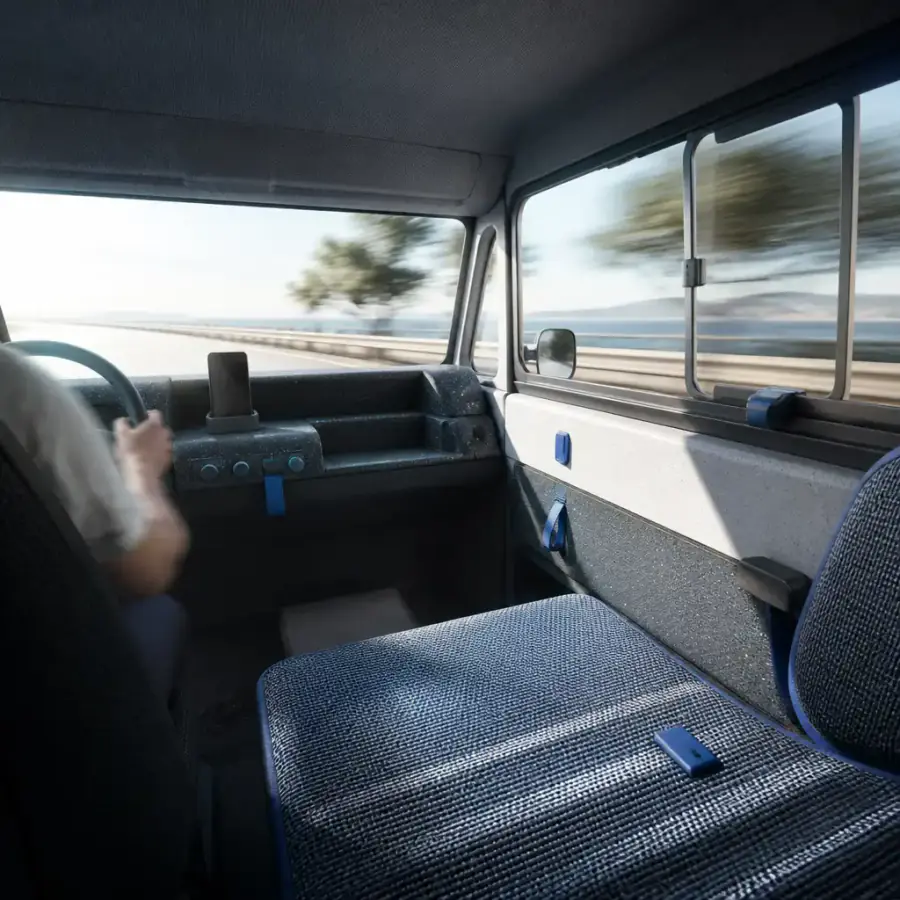
The Hipster's design language is a direct embodiment of Dacia's essentialist philosophy. It's robust and simple, characterized by a blocky stance with no overhangs at either end. This deliberate aesthetic avoids the "glorified-mobility-scooter" vibe, presenting it as a proper small car, as noted by Electrifying.com. The exterior prioritizes functionality, with a two-part tailgate that opens wide for easy boot access and innovative rear lights positioned behind the tailgate window to reduce costs and complexity. The use of Starkle®, a recycled material, for generous side protection further emphasizes its eco-smart and durable approach.
Cost and weight reduction are central to its concept. The Hipster is designed with a single body color and only three painted parts. Even exterior door handles are replaced by straps, a lighter and less expensive solution. Inside, the focus remains on space optimization, featuring very vertical windows and a glazed front roof section to enhance the feeling of roominess. To further save weight and cost, the side windows are sliding. The front seats merge to form a bench seat, a nod to iconic popular cars, and openwork headrests contribute to the lightweight interior. The cabin is minimalist, featuring a smartphone docking station instead of a built-in display, alongside YouClip anchor points for customizable accessories, demonstrating a pragmatic approach to modern features.
Challenging the 'More is More' Mentality
The Dacia Hipster takes Dacia's weight-driven approach even further, weighing in at around 800kg, which is 20% lighter than Dacia's own Spring EV. This reduction in mass translates to less raw materials, less energy used in manufacturing, and less energy consumed during driving, aiming to halve the carbon footprint over its entire lifecycle compared to the best current four-seater electric vehicles. This focus on efficiency and lightness stands in stark contrast to the trend of EVs becoming increasingly heavier and larger, a phenomenon that has raised concerns about safety risks for pedestrians and cyclists, as discussed by Oiwa Garage.
While details on battery size are sparse given its concept status, it's expected to feature a small battery and primarily AC charging, possibly with 11- or 22kW as standard. This is a deliberate choice, acknowledging that most city-car drivers do not need large batteries or rapid charging capabilities for their daily commutes. If the Hipster enters production, it could offer a compelling alternative to low-cost Chinese electric vehicles currently entering the European market, addressing the rising costs that have made EVs inaccessible for many. However, its production might necessitate the European Union creating a new small car category, as its width slightly exceeds Japan's kei car regulations, even while its length and height align, according to Oiwa Garage.
No topics yet: start the first one.
More stories
Renault 4 E-Tech: The LFP Battery Makes EVs Truly Accessible
Renault's strategic update to the 4 E-Tech, introducing a more affordable LFP battery variant and boosting existing ranges, marks a pivotal moment for electric vehicle accessibility and market competition.
US vs. Europe EV adoption: It’s not just the tech, it’s the policy
While Europe's electric vehicle market continues its robust expansion, the US faces a significant slowdown, a stark divergence primarily driven by policy shifts and infrastructure disparities.
The BMW iX4 Isn't Just an SUV, It's an EV Range Revolution
BMW's new iX4 challenges electric vehicle norms, setting new benchmarks for range and rapid charging that could redefine expectations for luxury electric SUV coupés.
Aston Martin's EV Delay: A Prudent Pause or a Risky Bet on the Past?
Aston Martin's decision to push its first all-electric model to at least 2033 reflects a cautious luxury industry navigating evolving regulations and uncertain high-end consumer demand, prioritizing established combustion engines over premature EV investment.