Porsche's Bold Retreat: Less Volume, More Supercar, Higher Margins
Porsche's "Sportwagenschmiede '35" strategy marks a significant pivot towards extreme exclusivity and diverse powertrains, repositioning the brand firmly in the luxury performance segment.
Photo: Grzegorz Czapski / Shutterstock.com
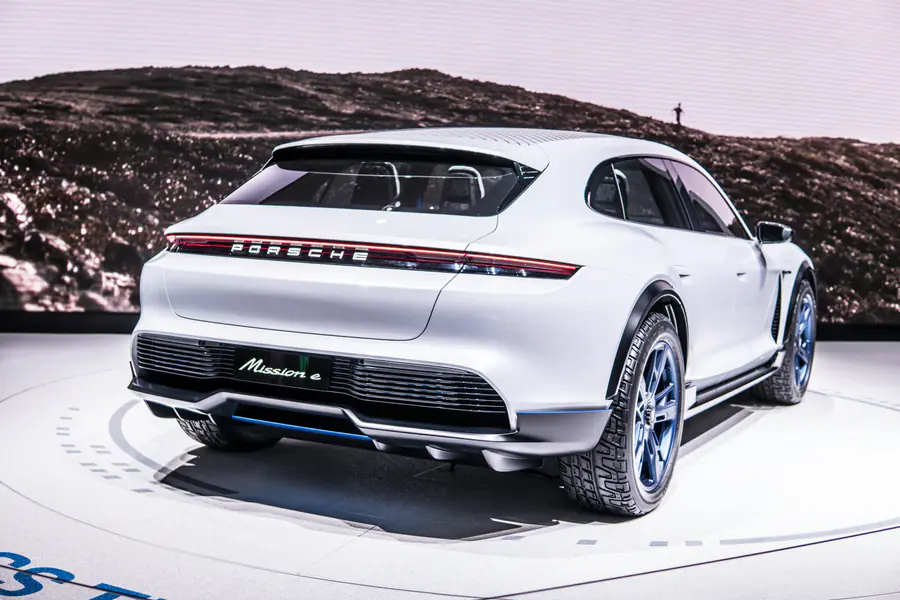
Is Porsche abandoning the masses, or simply recognizing where true luxury value lies in a shifting automotive landscape? The recent announcement of the Sportwagenschmiede '35 strategy by Porsche AG marks a significant pivot, aiming for higher margins and increased exclusivity rather than volume. Unveiled at its Capital Markets Day, this roadmap for the brand until 2035 signals a clear intent to elevate its position within the luxury performance segment, supported by a diverse product portfolio and a leaner organizational structure. ## The Pivot to Profitability Over Volume Porsche's new strategy, aptly named 'Sportwagenschmiede' — German for 'sports car forge' — clearly prioritizes "value over volume." The company aims to lower its profitability threshold to below 200,000 units annually, asserting a desire to generate profit by selling fewer, higher-priced vehicles. This strategic shift is designed to deliver a medium-term operating return on sales of 10% to 15% and a net cash flow margin from the automotive division of 9% to 12%. Long-term targets are even more ambitious, rising to 15% and 12% respectively. To achieve this, Porsche plans to increase the average selling price of its top-category models by approximately 20% in the medium term, justifying this premium through greater personalization options and new high-value segment offerings, as reported by motor16.com and elperiodicodelaenergia.com. ## A Diverse Powertrain Future, Not Just Electric Despite the industry's strong push towards electrification, Porsche's strategy confirms a multi-energy future, retaining combustion and plug-in hybrid (PHEV) alongside battery-electric vehicles. This approach suggests a recognition that different markets and customer segments still demand varied propulsion types. The plan includes significant product launches: the 100% electric 718 Boxster and Cayman are set to launch by 2028, expected to boost sales in their first full production year. Critically, 2028 will also see the introduction of a new SUV with combustion and PHEV powertrains, designed to coexist with the current electric Macan, with its real contribution to revenue and margin anticipated in 2029. Further cementing its luxury positioning, Porsche is exploring a new mid-engine supercar positioned above the iconic 911, aiming to broaden its high-end offerings. This is a significant move, signaling a return to hypercar territory previously occupied by models like the 918 Spyder. The new Mission S hypercar is slated for an October 15 unveiling in Paris, serving as an immediate showcase for the brand's continued capability to build aspirational vehicles. The strategy also outlines at least one new brand-defining product launch annually until 2030, with an emphasis on expanding into higher-margin D and E segments, as detailed by hibridosyelectricos.com. ## Streamlining for Exclusivity and Efficiency The Sportwagenschmiede '35 strategy isn't solely about new products and higher prices; it includes substantial internal adjustments. Porsche intends to reduce the complexity of its product range by decreasing the number of model variants by 20%, anticipating a 30% increase in sales per variant. This streamlining effort is coupled with significant cost-cutting measures, including a projected 20% reduction in development costs for future ranges, a 30% cut in production personnel costs, and a 20% decrease in sales expenses. Managerial positions are expected to be reduced by 40%, with an overall staff reduction target of 25% to 30% across direct and indirect functions, as reported by bolsamania.com and hibridosyelectricos.com. These measures are designed to create a more agile and financially robust company, capable of investing in both combustion and next-generation battery technologies while leveraging collaborations with Audi on PPE and PPC platforms. In essence, Porsche is not just adapting to market changes but actively shaping its future, aiming for a more exclusive and profitable niche in the global automotive landscape. This strategy suggests that the brand believes true luxury lies not in mass appeal, but in curated offerings, diverse powertrains, and an uncompromising focus on profitability and brand identity.
No topics yet: start the first one.
More stories
DBX GT: Aston Martin's Smart Pivot to Ultimate Luxury, Not Just Raw Power
Aston Martin's new DBX GT, retaining its potent V8 while prioritizing supreme comfort, signals a savvy expansion into a luxury SUV segment valuing refinement as much as exhilaration.