Chinese EVs are Reshaping Brazil's Automotive Landscape, Challenges Notwithstanding
Chinese EV manufacturers are strategically investing in local production and competitive pricing in Brazil, driving market share growth and challenging established automakers, despite infrastructure hurdles.
AI-generated image
Are we witnessing a seismic shift in the automotive world, where the once-dominant Western and Japanese giants are being outmaneuvered by an assertive wave of Chinese electric vehicle manufacturers? The evidence suggests that Chinese brands are leading a charge of strategic market penetration that is reshaping the global landscape, particularly in crucial emerging markets like Brazil.
This robust global push is nowhere more apparent than in Brazil, where Chinese automakers have significantly boosted their market share from 9% to a commanding 17% in just one year, according to Valor International. This culminated in BYD even topping Brazil's new car retail sales rankings in April 2026, marking a historic first for a Chinese brand, as detailed by GlobalChinaEV.
The Price and Technology Edge
While the lower price point of Chinese EVs has certainly been a key differentiator, with average prices in China dropping by half over a decade to 22.1 thousand euros in 2021, making them cheaper than in the US and Europe, according to G1, this is only part of the story. The narrative is also increasingly shifting toward technological advancements. Companies like BYD, for instance, are pioneering core technologies such as the Blade Battery and the e-platform 3.0, integral to their electric car offerings, as highlighted on BYD's official site. This technological edge, combined with aggressive pricing, has pressured other automakers to revise their pricing in Brazil, a clear sign of market disruption, as noted by InsideEVs.
Strategic Localization and Market Penetration in Brazil
Brazil exemplifies the strategic approach of Chinese automakers. While the broader Brazilian EV market faces significant hurdles, such as a lack of sustained government support, limited subsidies, and high initial prices compared to combustion engine cars, Chinese brands are making aggressive investments to localize production. BYD, for instance, is injecting R$ 5.5 billion into manufacturing electric cars in Camaçari, Bahia, demonstrating a long-term commitment that also involves other major players like Volvo and Toyota, investing billions in the country, as reported by Delta Global. This localization strategy is crucial, as it mitigates the impact of import taxes that are gradually increasing for EVs in Brazil, reaching 35% by July 2026, according to Delta Global. The success of this approach is evident in the BYD Dolphin Mini, which was the best-selling electric car in Brazil from January to August 2025, with 19,516 units sold, proving that accessible, locally relevant EV options can thrive, as detailed by Webmotors.
Building the Infrastructure for Mass Adoption
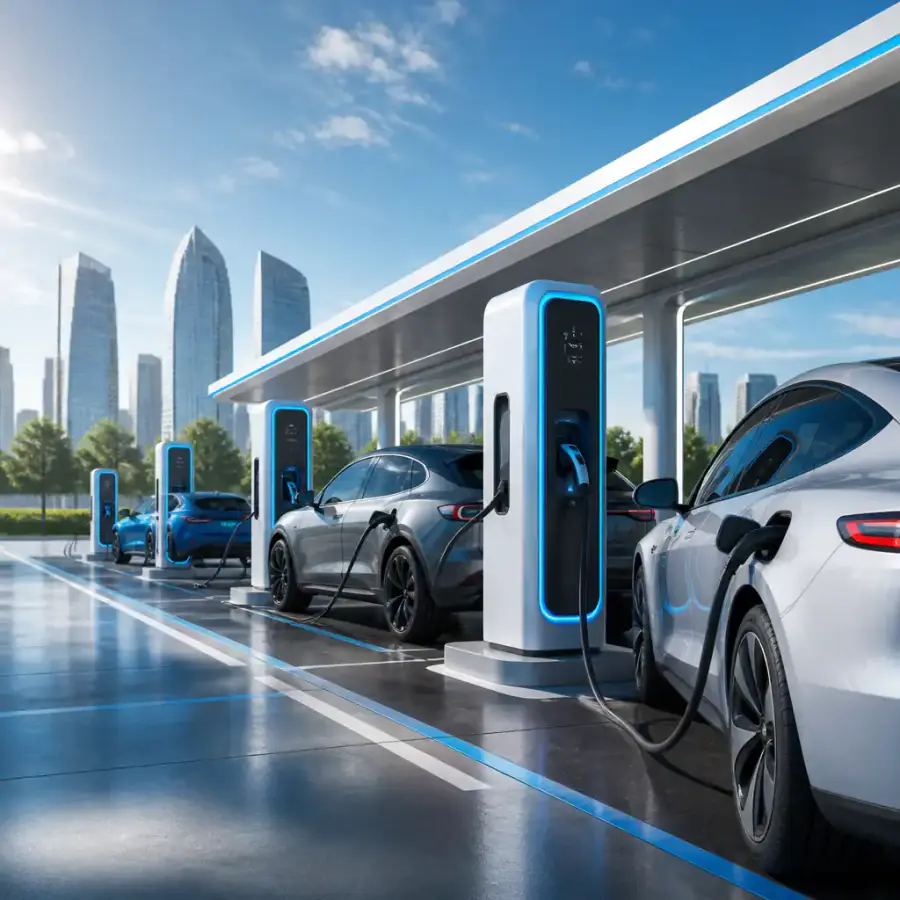
One of the most persistent challenges for EV adoption in Brazil has been the inadequate charging infrastructure. While the number of charging points is growing, reaching around 12,100 nationwide according to the ABVE, they remain mostly concentrated in major urban centers. This leaves vast areas, especially rural regions and highways, underserved, creating significant range anxiety for consumers. A Webmotors Autoinsights survey from April 2025 found that 54% of potential buyers cited the lack of charging points as their principal barrier to acquiring an EV, as reported by Webmotors. Yet, even here, private initiatives are stepping up, with manufacturers like Volvo and BYD investing in charging infrastructure, particularly fast-charging points on roads, which are more costly to operate but essential for long-distance travel, as highlighted by Delta Global. Such direct investments signal a proactive approach to overcoming market barriers, differentiating them from traditional players who often rely on government or third-party initiatives.
In our view, the narrative that Chinese EV manufacturers are solely reliant on cost advantages is outdated. While competitive pricing remains a factor, their current trajectory is clearly driven by robust technology, aggressive localization, and direct investment in infrastructure, fundamentally challenging the long-held dominance of traditional automakers. As Brazil's EV market continues to evolve, the strategic foresight and comprehensive approach of Chinese brands are setting a new standard for what it means to enter and succeed in the global automotive arena, driving the entire industry forward towards a more electrified future.
No topics yet: start the first one.
More stories
Volkswagen ID. Tiguan: A Masterstroke in EV Consolidation?
Volkswagen's new ID. Tiguan, slated to replace both the ID.4 and ID.5, signals a bold strategic move to streamline its electric SUV lineup, capture a wider market, and rectify past ergonomic missteps.
EVs' Hidden Carbon Cost: Why Manufacturing Matters More Than You Think
Electric vehicles offer a compelling green future, but a closer look at their lifecycle emissions, particularly the significant carbon footprint from battery manufacturing, reveals a complex path to true environmental superiority.

Renault 4 E-Tech: The LFP Battery Makes EVs Truly Accessible
Renault's strategic update to the 4 E-Tech, introducing a more affordable LFP battery variant and boosting existing ranges, marks a pivotal moment for electric vehicle accessibility and market competition.

US vs. Europe EV adoption: It’s not just the tech, it’s the policy
While Europe's electric vehicle market continues its robust expansion, the US faces a significant slowdown, a stark divergence primarily driven by policy shifts and infrastructure disparities.