Britain wants to be European again, but only for the EV perks
The UK wants Brussels to treat its electric cars as European. Rules of origin cut both ways, and the label only holds if the batteries are really made nearby.
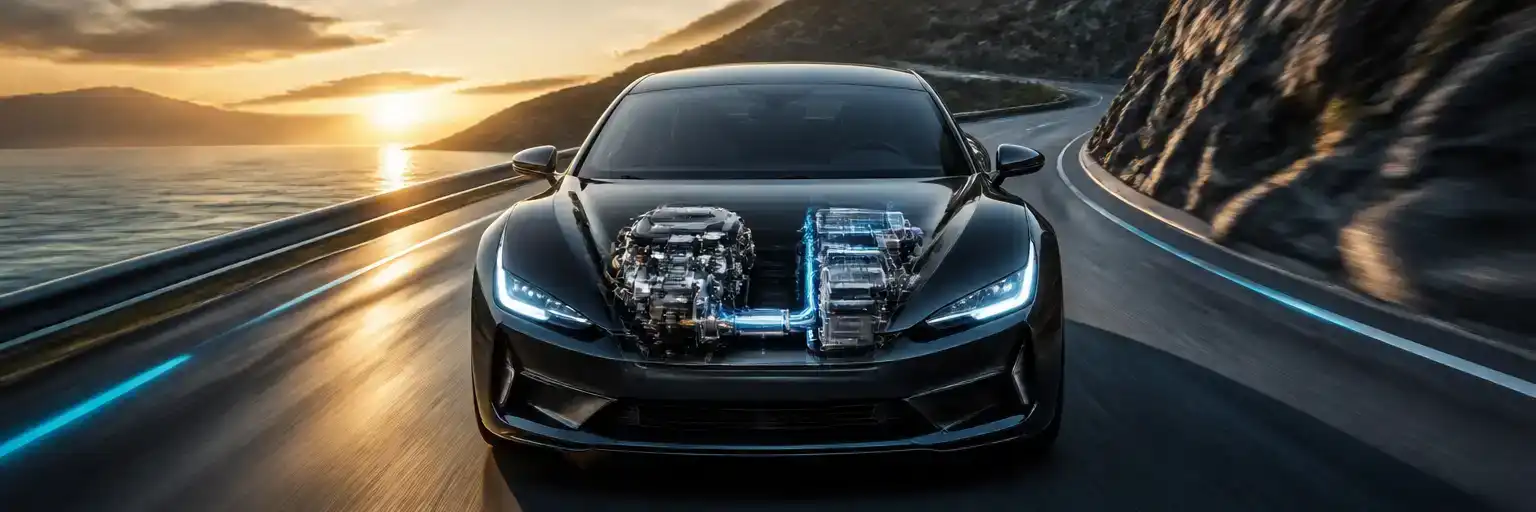
AI-generated image
Can you leave the club, keep the car factories and still ask for the membership perks? That is, in essence, what London is trying right now. As Motorpasión reports, the UK is negotiating with Brussels so that its cars and batteries can benefit from the EU's future industrial advantages.
The timing is probably not accidental. The trade deal signed after Brexit committed both sides to a progressive increase in EU and UK content in the EVs and batteries they trade, as the European Parliament's research service summarizes. Stricter thresholds kick in on January 1, 2027, and they are a big jump.
The label is a bargain with strings attached
Let's be blunt: asking to be treated as European is reasonable, but it isn't free. In our view, Europe's industrial support and tariff-free access should reward value created inside Europe. The initial phase of the rules, which ran from May 2021 to December 2023, required 40% content for vehicles and 30% for battery packs and cells, the IEA notes. According to EV Compared, from 2027 an EV needs 55% UK or EU content, 70% of its battery pack and 65% of its cells made in Europe. Miss any one of those and a 10% tariff applies.
That is the part the UK's pitch has to answer. A car assembled in Britain does not become European because of the postcode on the factory. It becomes European when the expensive part, the battery, comes from somewhere that counts. We think that is a fair test.
The cliff cuts both ways, and that is the UK's best card
Here is where London has a real argument. The pain is not one-sided. ACEA, the European carmakers' association, estimates that 82% of the 520,000 electric vehicles the EU expects to export to the UK in 2027 would fail the test, according to the same EV Compared piece. Treat that as an industry estimate, not a certainty, but it is a striking number.
It means Brussels has its own reasons to soften the cliff. If European brands start paying 10% to sell in Britain, or decide the UK market is no longer worth the hassle, the cost lands on EU factories and their workers too. So the UK is not begging; it is negotiating from a position of mutual hostage-taking. We think an extension or a smoothing of the rules looks more plausible than a flat refusal. That is a prediction, not a report.
Perks follow supply chains, not flags
But there is a trap in winning this argument too easily. Suppose the UK gets a political fudge: a delay, a lower threshold, a special status. What then? Carmakers building in Britain would still need battery supply that meets the content thresholds. A temporary exemption buys time, not competitiveness.
The honest route is the boring one: local cell and pack production, reliable enough that a British-built EV earns the European label on its own merits. Anything less turns access to European advantages into a diplomatic favor, and favors expire with the next government or the next trade dispute.
Our verdict
London is right to push, and Brussels is right to demand proof. The best outcome, in our view, is a short, conditional transition that gives UK-built and EU-built cars room to adapt, tied to concrete battery investment rather than promises. If you work in the supply chain, plan as if January 2027 is real: the sourcing decisions that determine whether a car pays 10% are made long before the customs form is filled out.
Britain left the EU. Being treated as European again is possible, but it will be paid for in cells and packs, not in speeches.
No topics yet: start the first one.
More stories
Ford's "no more boring cars" pledge is easy. Quality and price are the real test
Jim Farley wants 5 million sales a year by 2032 and fewer dull products. Styling alone won't get Ford there: reliability and sticker prices will decide whether the plan works.

VW's paused ID.Golf is survival mode, not a strategy
Pausing development of the electric Golf to save money isn't a pivot. It's a carmaker freezing its most hoped-for affordable EV to fix the books, and buyers should take note.

Audi's 87% profit drop shows the luxury badge is no shield
Audi kept just 13.2% of last year's Q3 profit. The cause isn't only tariffs or China: a premium brand without a US plant and with models in transition is exposed.
Audi's petrol-engine EV patents are a quiet range extender admission
Two Audi patents put a combustion engine inside an electric car. It's a pragmatic idea, but only if the industry stops pretending an EREV is just an EV with a long range.