Tesla's €3 billion Cybercab bet in Germany is really a bet on Brussels
Tesla is building a plant for up to 1 million driverless cars a year in Grünheide. The factory is the easy part: the European rulebook is the real gamble.
Photo: MEHR8000 / Wikimedia Commons (CC BY-SA 4.0)
What do you call a €3 billion factory for a car that, as things stand, may not be allowed to drive on its intended roads? We'd call it the boldest regulatory bet in the European car industry right now.
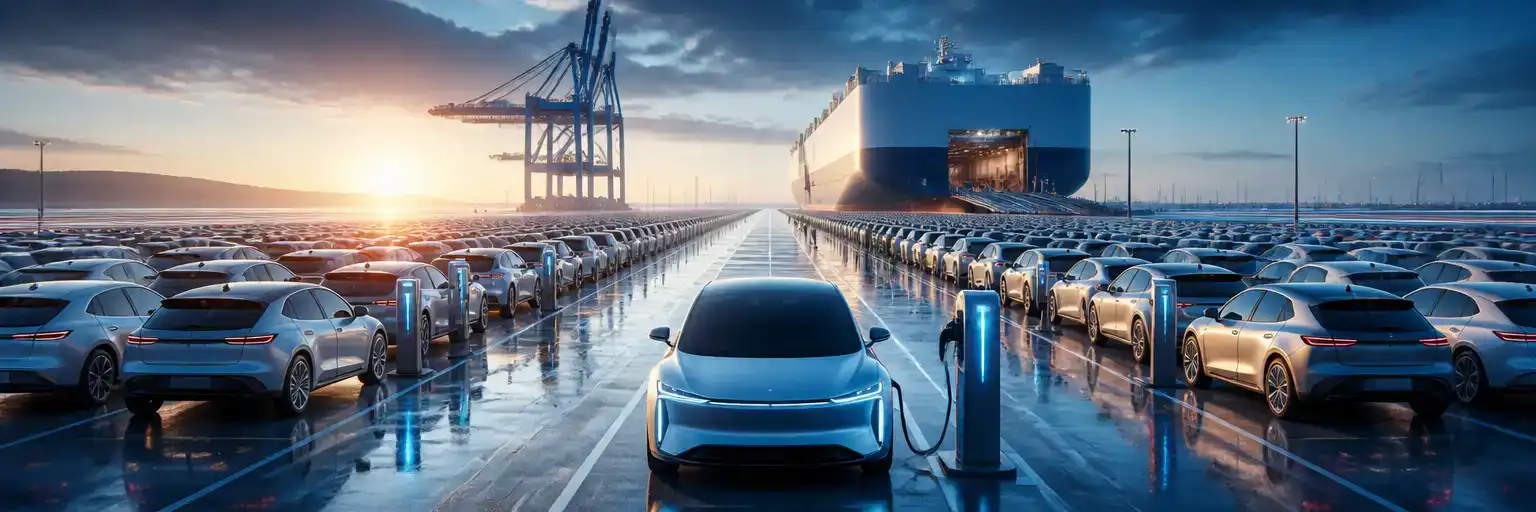
Here is what we know. t3n reports that Tesla will spend €3 billion expanding its Grünheide plant near Berlin, starting with a new production building able to make up to one million Cybercabs. Construction is planned for the first half of 2027 and production for 2029. The building permit application is due before the end of this year. Tesla also says it is looking for several hundred new employees in construction and manufacturing planning.
Note the wording: one million is a capacity target for a plant that doesn't exist yet, not output. Meanwhile, coverage has framed the move against a struggling German auto industry: Reuters speaks of "Germany's troubled auto" sector, and another outlet's headline says Tesla is betting on Germany "as rivals weigh closures." The contrast makes a great story. It is also only half the picture.
The money is the easy part
Yes, Tesla is spending while German rivals look cautious. In our view, that says more about priorities than about confidence in Germany. Tesla is reshuffling its whole footprint around autonomy. In Texas, auto motor und sport notes, Cybertruck output is to wind down from mid-2027 to make room for the Cybercab. The same article, citing TechCrunch, says Model S and Model X production already ended, with the freed space earmarked for Optimus robots.
Read together, these moves look like a company that has stopped thinking of itself as a carmaker with a robotaxi side project. Grünheide, which Reuters describes as opening in March 2022, becomes the European leg of that pivot. That's a compliment to the site's track record. It's also a reminder that Tesla can choose where to build, and it chose a place where it already has a permitting history and a workforce.
A car with no wheel needs a law, not a building
Here is the catch. Electrek's summary says EU rules cap driverless cars at 1,500 per model. EVXL's headline makes the same point. If that holds, a plant sized for a million units a year faces a gap of hundreds of times between what it can build and what the law lets Tesla sell.
We can't say how the cap will change, or whether it will. The reporting we have seen gives no timeline for European robotaxi or FSD approval, and auto motor und sport says so explicitly. So any prediction here is just that. Our reading is that Tesla is betting the rules will loosen by 2029, or that it will build for export, or both. Neither is guaranteed.
Even the design isn't settled in the public debate. lr-online ran a piece titled, in translation, "car expert can imagine a Cybercab with a steering wheel". We haven't seen its text, so we won't put words in the expert's mouth. But the headline shows where the conversation is heading, and we think a compromise version for Europe is plausible.
What to make of it
The German industry shouldn't read this as a lesson in courage. Tesla's real advantage is that building a factory is a decision it can make alone, while approvals are not. Cautious automakers may be spending slowly precisely because they can't price that risk.
Still, we think the plant is smarter than it looks. A 2029 start gives regulators time, a permit filed this year starts the clock, and the investment is a lobbying argument in itself: jobs and capacity for a country that wants both. Politicians will find it harder to say no to a finished building.
Our verdict: don't judge this by the €3 billion. Judge it by what Brussels and Berlin do with autonomous-vehicle rules over the next two years. If they open up, Tesla looks visionary. If not, Grünheide gets an expensive plant looking for a legal car.
No topics yet: start the first one.
More stories
Softening the UK ZEV mandate rewards laggards and punishes early EV buyers
Britain may cut its 2030 EV target from 80% to 60% just as electric cars close in on petrol. In our view, the real damage is the signal: rules that keep moving.
The EU's 87.5% CO2 target for 2035 is a ban with an escape hatch
Parliament's committee softened the 2035 combustion deadline, but a compromise this fiddly gives carmakers room to maneuver and leaves buyers guessing what they can actually buy.

Ferrari's real rival in Mexico wore red too, and Vasseur must act
Ferrari had pole and the pace to win in Mexico City, then lost to Verstappen by 0.799 seconds. The problem was lap one and a garage with no clear rules.

BYD's 305,743 pure EVs say the plug-in hybrid party is cooling
BYD sold over 300,000 pure EVs in a month for the first time while plug-in hybrids fell 17.23%. It looks like a shift toward full EVs, and rivals should pay attention.