The ID. Polo doesn't need to win spec wars, just Tuesday
VW's small EV only has to be good at ordinary life. Price and real-world charging, not spec-sheet bragging, will decide whether the bet pays off.
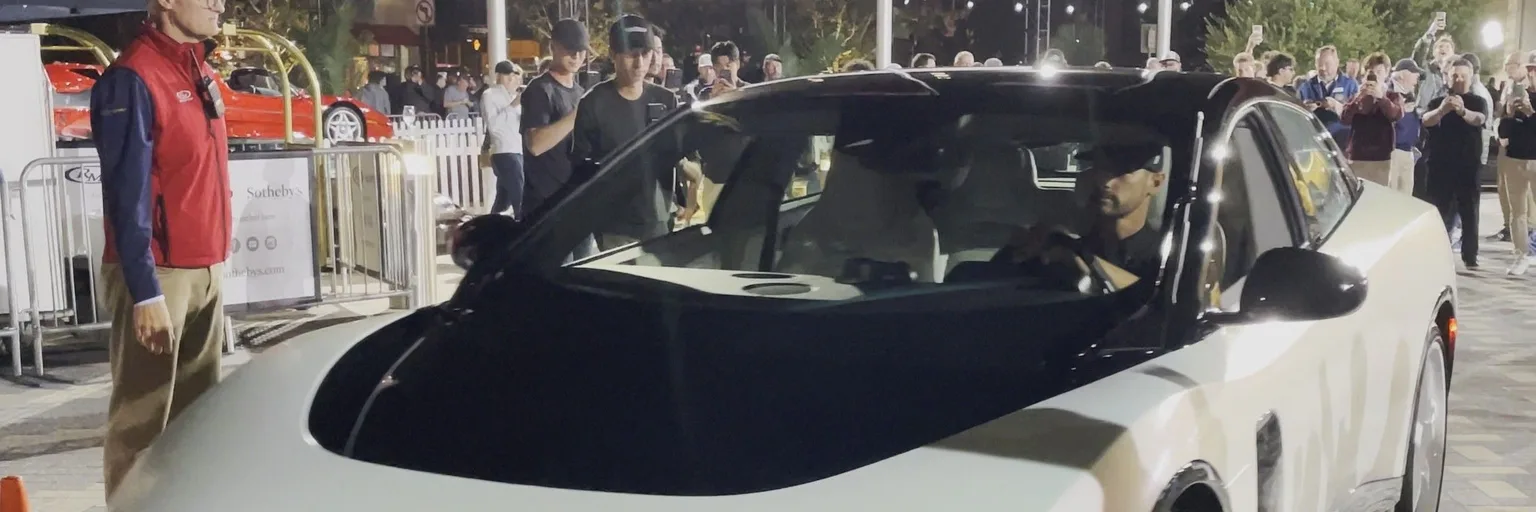
AI-generated image
What if the most important thing about a cheap electric car is that it's boring? Not boring to drive, necessarily, but boring to live with: no range anxiety rituals, no spreadsheet before a weekend trip, no surprises at the charger. That's the real test the VW ID. Polo faces, and it's a harder one than any acceleration figure.
What the Polo is being asked to prove
Spiegel put the premise plainly in its road test: with the ID. Polo, Volkswagen wants to show that an affordable EV can be enough in every situation of life. The snippet we have doesn't give the verdict, so we won't pretend to report it. Top Gear's summary is more telling: an excellent all-rounder and a joy to drive, even if the overall vibe is "satisfying rather than sexy."
Numbers in the documentation are patchy and partly contradictory. European sources point to prices from €25,000, up to 450 km of range and 130 kW fast charging; What Car? lists £23,945 in the UK. Autoevolution cites up to 452 km WLTP and a 10-80% charge in 24 minutes on certain versions. Two US-oriented pages disagree with each other on battery size and charging power, so we won't lean on either. Treat US specs and pricing as unconfirmed.
Cheap is a promise about money, not just the sticker
Let's be opinionated: the headline price is only half the pitch. A small EV for ordinary people lives or dies on whether the real price, after options and financing, stays close to what's advertised. VW has a track record here that cuts both ways. Its ID. Buzz is described by wz-net as a model that sells below expectations mainly because of its high price. Same brand, same electric ambition, a very different outcome. The Polo's job is to avoid becoming a case study in that.
That same report is also a quiet warning about something unglamorous: service. A buyer of a roughly €90,000 ID. Buzz waited five months for a charge-port flap fix, according to the Hannoversche Allgemeine, and VW's own reply was boilerplate. A cheap-car buyer has less patience and less money to absorb that kind of friction. In our view, after-sales handling will matter more to the Polo's reputation than another few kilometers of range.
Charging is where "enough" gets decided
A 130 kW peak figure looks fine on paper, but peak isn't what you experience. What you experience is winter, a cold battery, and a queue. That's why the software update VW announced for older ID. models is revealing. Version 3.9.1 adds manual battery preconditioning before DC fast charging, which doesn't raise the maximum charging power but helps use it in cold conditions. VW gives no figures for the time saved.
We read that as an admission: everyday charging performance is a software and thermal-management story, not a headline-kW story. The Polo is a newer car, and we don't know from the documentation what it offers on this front, so it's the first thing we'd check in any test or showroom visit.
Our verdict
The Polo doesn't need to be the quickest, longest-range or flashiest small EV. It needs to be a car you stop thinking about. If it truly delivers around 450 km WLTP, a charge stop of roughly 24 minutes and a price near the €25,000 mark in Europe, that's a convincing everyday package. WLTP is also a lab figure, so expect less on a cold motorway.
Our advice: if you're shopping, ignore the peak-power bragging and ask three questions. What's the final price on the road? What does a winter fast charge look like? And how does the dealer handle a small problem? If the answers are good, "enough" may be the most compelling word in electric cars. And for VW, a Polo that's merely enough may do more for its small-car bet than another expensive flagship.
No topics yet: start the first one.
More stories
The new Dacia Spring proves cheap EVs work, if the €17,900 holds
The second-generation Spring starts at €17,900 with up to 250 km of range. The price is great, but the real test is what a buyer pays after options and incentives.
Mercedes' EQE and EQS SUV exit is a cleanup, not a retreat
Mercedes pulling three big EVs from its German configurator is sensible housekeeping, and a reminder that a luxury EV can look dated far faster than a combustion flagship.
A €55,000 refurbished EQS battery is a warning to every used luxury EV buyer
A 300,000 km Mercedes EQS reportedly needs a battery, and the quote is for a non-new pack. Luxury EVs need transparent replacement pricing, and used buyers should price it in.
Ferrari Luce's sell-out proves the badge works, not that the EV does
A sold-out 2027 silences the critics on demand, but orders placed before anyone has driven the car measure scarcity and brand power, not the quality of Ferrari's first EV.