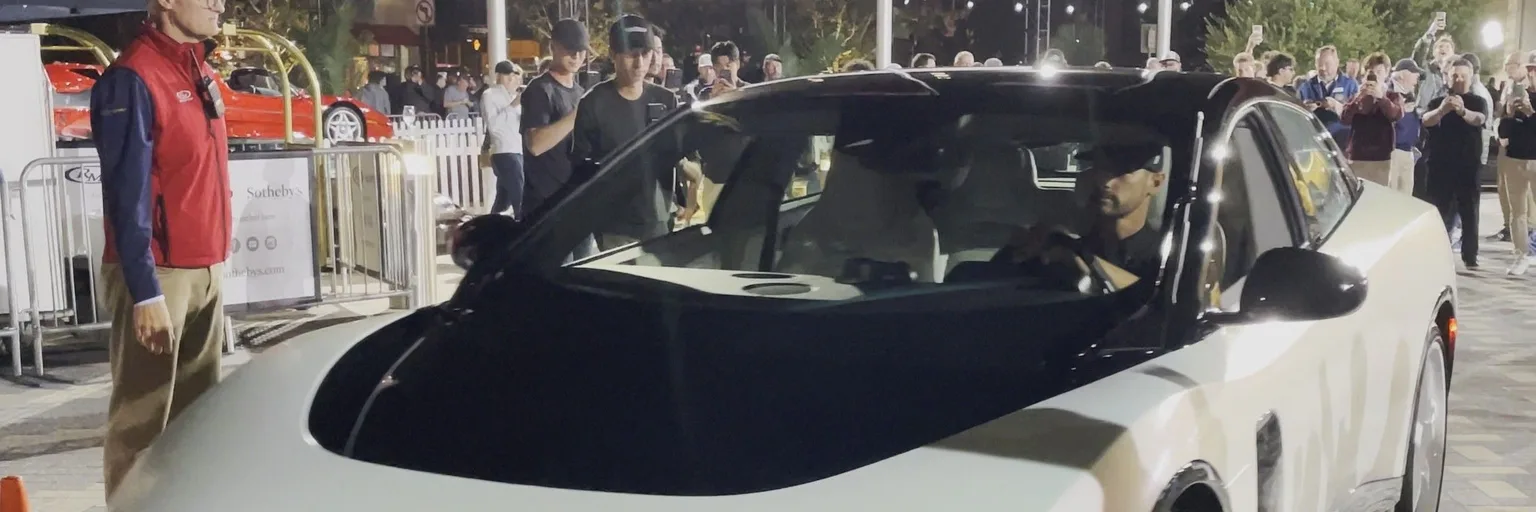
The new Dacia Spring proves cheap EVs work, if the €17,900 holds
The second-generation Spring starts at €17,900 with up to 250 km of range. The price is great, but the real test is what a buyer pays after options and incentives.
AI-generated image
Is a cheap electric car just a compromise with a battery? For five years the first Dacia Spring made that case look right. The second generation makes a decent argument against it, and the sticker price is only part of why.
What Dacia changed
Orders opened on September 8, 2026, and the first drives landed this week. The new Spring starts at €17,900. Numerama puts the price range at €17,900 to €19,400 depending on trim. It runs on the same RGEV Small platform as the electric Twingo and is built at the same plant in Novo Mesto, Slovenia. It gets an 80 hp motor, a 27.5 kWh LFP battery and up to 250 km of WLTP range. It is also 15 cm longer and 18 cm wider than before.
The change that matters most to the price is the factory. The old Spring was built in China and lost access to purchase aid. Because the new one is assembled in Europe, Frandroid reports it qualifies again for the French "Coup de pouce" bonus, worth €3,620 to €6,180 depending on income.
Sensible beats cheap, and this one is sensible
We think the story here isn't the price. It's that the car now feels like a car. Auto Express calls the ride, refinement and steering "a giant stride" forward, and says it is "far more mature." The 337-liter trunk, a new 6.6 kW AC charger and a V2L option (for powering outside devices) would have been unthinkable on a Dacia a decade ago.
The honest caveats are still there. Reviewers note hard plastics, an emergency braking system that triggered once for no reason in Numerama's test, and 0-100 km/h in 12.1 seconds. None of that matters much for a city car. Auto Express's trip computer showed 5.5 miles/kWh in mild weather, beating Dacia's own claim. It also warned that winter will cut that figure, and we agree. A Spring that really delivers around 250 km is plenty for its intended job, and it is a better deal than a bigger battery most owners would rarely use.
Dacia also says 93% of Spring buyers had never driven an EV. In our view that is the car's real mission. It is not meant to win spec-sheet comparisons. It is meant to be the first EV for people who wouldn't have bought one.
The €17,900 is a starting point, not a price
This is where we get skeptical. The base car is deliberately bare. Auto Express notes that even manual air conditioning is optional on the entry-level Expression trim. Then come the extras. The frunk costs €150, the heated seats €250, and the Agave blue paint €550. Caradisiac says almost all the clever storage solutions are optional, at €140 to €235. The Pack Charge adds the 11 kW AC charger, 50 kW DC fast charging and V2L for €500. Without it, a 15-80% charge on a household socket takes 9 hours. With it, a fast charger does the same in 28 minutes, which in our view is the difference between an urban toy and a car you can take on the occasional longer trip.
Add the fast-charging pack, a few comfort options and a color, and the real invoice probably drifts well past the headline figure. The incentive can cover that gap for some buyers. Caradisiac says the Spring falls below €15,000 after aid, and another web page, Euromotor, cites €14,280 after the bonus. We would treat the exact figure with caution, though. The aid depends on household income, the rules can change, and Caradisiac itself notes that the bonus shown is the one in force when it published.
Our verdict
The new Spring shows that a cheap EV can be sensible rather than merely cheap, and that is a real win for Dacia and for buyers who want a first electric car. Our advice is to ignore the €17,900 and price the configuration you would actually buy, with the charging pack, then subtract the aid you personally qualify for. If that number still starts with a 1 and stays close to the headline, Dacia has done something rare. If it creeps toward €20,000, this stays a good car but is no longer a revolution. Dacia's test now is whether it can keep the price honest while the options list grows.
No topics yet: start the first one.
More stories
The ID. Polo doesn't need to win spec wars, just Tuesday
VW's small EV only has to be good at ordinary life. Price and real-world charging, not spec-sheet bragging, will decide whether the bet pays off.
Mercedes' EQE and EQS SUV exit is a cleanup, not a retreat
Mercedes pulling three big EVs from its German configurator is sensible housekeeping, and a reminder that a luxury EV can look dated far faster than a combustion flagship.
A €55,000 refurbished EQS battery is a warning to every used luxury EV buyer
A 300,000 km Mercedes EQS reportedly needs a battery, and the quote is for a non-new pack. Luxury EVs need transparent replacement pricing, and used buyers should price it in.
Ferrari Luce's sell-out proves the badge works, not that the EV does
A sold-out 2027 silences the critics on demand, but orders placed before anyone has driven the car measure scarcity and brand power, not the quality of Ferrari's first EV.