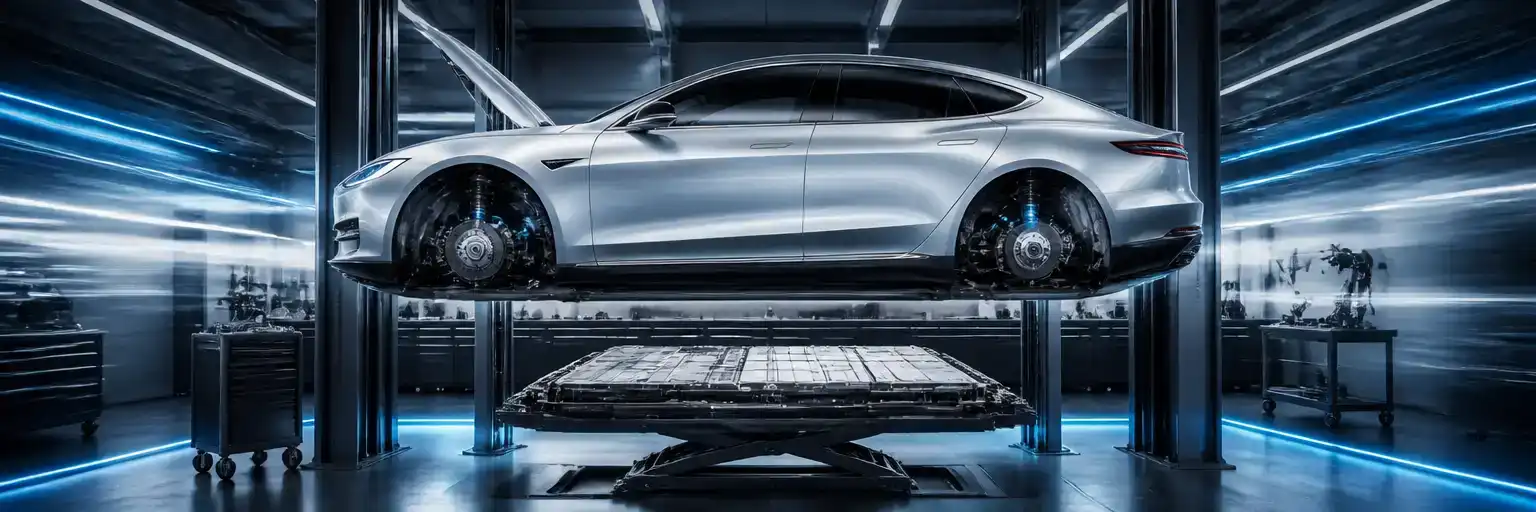
Stop asking if EVs are reliable: ask which EV, because the TÜV gap is huge
Germany's TÜV Report 2027 puts EVs at both the top and the bottom of the inspection table. The powertrain tells you little; the model's record tells you a lot.
Photo: CEphoto, Uwe Aranas / Wikimedia Commons (CC BY-SA 3.0)
Is an electric car more or less reliable than a gasoline one? After this year's TÜV Report, we think the question is broken. The answer depends entirely on which car you mean, and the spread is too wide to hide behind an average.
What the inspectors found
The TÜV Report 2027 draws on about 9.7 million inspections of 200 models, run from July 2025 to June 2026. As n-tv reports, 20.9% of the cars inspected had "significant" or "dangerous" defects, slightly down from 21.5% the year before. This is German data from the mandatory periodic inspection, so treat it as a European signal, not a US verdict.
Among 2- to 3-year-old cars, EVs fill both ends of the table. The Mazda MX-30 e-Skyactiv posts 3.0%, third overall. The bottom three of 109 are all electric: the Tesla Model 3 at 12.5%, the MG4 at 16.0% and the Tesla Model Y at 18.5%. The class average is 6.4%, according to t-online.
"EVs" fail the test as a category
The ADAC notes that 26 of the 109 models in that age group are fully electric, and four of them reach the top ten. Later, 12 of 18 EVs in the 4- to 5-year group beat the 10.2% average, and the Audi Q8 e-tron wins that class at 3.3%. An industry where electrics can both win a class and finish dead last isn't telling you much about the technology as such.
That cuts against both camps. EV skeptics can't say electrics are fragile when Mazda, Mini, Hyundai and Audi do well. Evangelists can't say fewer moving parts guarantees trouble-free ownership when the worst results in the age group are electric.
The failures look like engineering choices
The defects are specific, which we find more useful than any ranking. For the MG4, inspectors flagged brake discs in 10.3% of cars, against 1.0% for the age group. For the Model Y, Kreisbote/SP-X reports that worn suspension joints were cited 24 times as often as average. TÜV says brakes and suspension are common weak spots for EVs in general.
Plausible explanations exist. Regenerative braking means friction brakes get used less, which can encourage corrosion, and heavier cars load the suspension harder. But the Mazda shows these are risks, not destiny. We read that as design, parts and maintenance choices, which differ by manufacturer.
Mileage doesn't excuse everything either. The Model Y examples averaged 58,000 km, 11,000 more than their peers, which is a factor. The MG4s averaged 37,000 km, below the class average of nearly 44,000 km. Notably, TÜV calls the MG4 the first Chinese-brand model in the report, so it deserves watching rather than a verdict from a single result.
What buyers should do
First, shop by model and age, not powertrain. Even within a brand it flips: the BMW 1/2 Series leads its compact class at 3.6% in the first inspection, then has the highest defect rate of any model in the 4- to 5-year group at 21.8%. A good first result isn't a lifetime guarantee. These aren't EVs, but it's the same lesson.
Second, brands at the bottom deserve scrutiny. Tesla's Model Y rate rose from 17.3% to 18.5%, and no model in that age group has been worse since the 2015 report. That is a trend, not a blip. We'd want to see it fixed before recommending one used, and we'd check brakes and suspension on any inspection.
Third, a caveat: this measures roadworthiness at inspection, not battery health, software or ownership cost. TÜV itself wants better inspection of high-voltage systems and battery condition.
Our verdict: drop "EV" as a quality label. Look up the specific model's record, and treat a poor one as a reason to walk away, not an electric-car problem to excuse.
No topics yet: start the first one.
More stories
The ID. Polo doesn't need to win spec wars, just Tuesday
VW's small EV only has to be good at ordinary life. Price and real-world charging, not spec-sheet bragging, will decide whether the bet pays off.
The new Dacia Spring proves cheap EVs work, if the €17,900 holds
The second-generation Spring starts at €17,900 with up to 250 km of range. The price is great, but the real test is what a buyer pays after options and incentives.
Mercedes' EQE and EQS SUV exit is a cleanup, not a retreat
Mercedes pulling three big EVs from its German configurator is sensible housekeeping, and a reminder that a luxury EV can look dated far faster than a combustion flagship.
A €55,000 refurbished EQS battery is a warning to every used luxury EV buyer
A 300,000 km Mercedes EQS reportedly needs a battery, and the quote is for a non-new pack. Luxury EVs need transparent replacement pricing, and used buyers should price it in.