Peugeot RCZ Vision: A European Challenge to EV Convention
Peugeot's RCZ Vision concept is a bold declaration of intent, merging emotive design, cutting-edge solid-state battery technology, and promising performance to carve out Europe's unique path in the electric sports car segment.
Photo: Peugeot / sala de prensa (uso editorial)
The Paris Motor Show 2026 is shaping up to be a pivotal moment for the automotive industry, a true battleground where established European giants and ambitious new entrants—especially from Asia—are launching a formidable product blitz to capture market share in the rapidly evolving electric vehicle landscape. Amidst this intense competition, Peugeot has made a bold statement with the unveiling of its RCZ Vision concept, an all-electric sports coupé that appears to be more than just a design exercise; it’s a confident declaration of intent for Europe's electric future.
Stellantis, Peugeot's parent company, offered an exclusive preview of several concepts “The Night Before” the show, showcasing nine concept cars from eight brands, including the highly anticipated RCZ Vision. This revival of a stylish nameplate immediately positions Peugeot at the forefront of the discussion around performance, design, and innovation in the electric age, especially as competitors continue to aggressively expand their offerings. The RCZ Vision, alongside the E-T16 Concept, signals a renewed focus on emotion, elegance, and driving pleasure, suggesting a distinct European approach to high-performance EVs.
Reclaiming Emotional Design and Performance
The RCZ Vision is not just about looks; it backs its striking design with compelling performance figures that challenge existing benchmarks. Peugeot promises a robust 500 hp and an impressive range of up to 600 km, or 373 miles, with a targeted energy consumption of just 11.5 kWh/100 km. These specifications position the RCZ Vision as a serious contender, designed to excite enthusiasts while hinting at practicality. Such capabilities are essential for European manufacturers aiming to retain, or even reclaim, leadership in performance EVs against a backdrop of increasing innovation. The vehicle's design, which Electrifying.com reported was described by the French carmaker as the “ultimate expression” of its ‘Feline future’ design language, certainly evokes the original RCZ’s celebrated style, ensuring a strong emotional connection that is often a hallmark of European automotive design. We believe this focus on design identity and performance is key to differentiating from the more utilitarian, although often efficient, designs emerging elsewhere.
Technology as a Differentiator: Beyond the Aesthetic
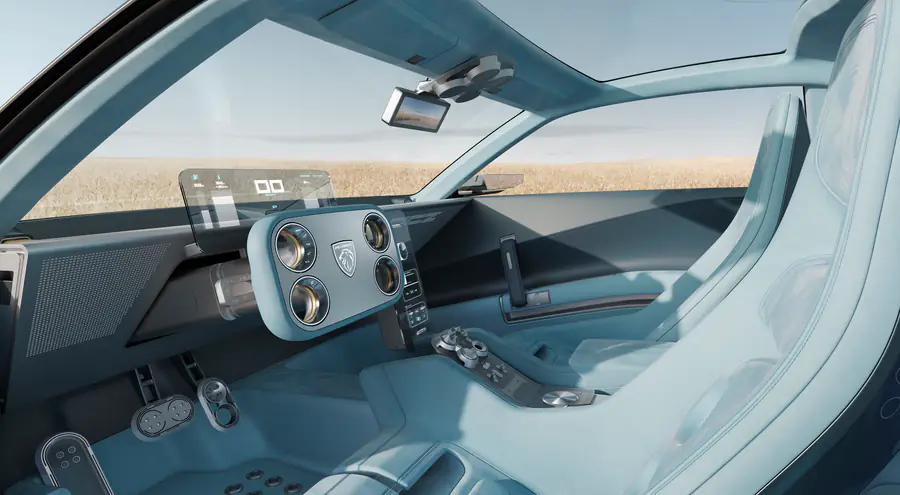
Beneath its sleek exterior, the RCZ Vision integrates advanced technologies that could prove to be crucial differentiators in the crowded EV market. The concept utilizes a solid-state battery, a technology many believe is key to the next generation of electric vehicles due to its potential for higher energy density and faster charging. Coupled with a 1,000V architecture, this enables an astonishingly rapid charge time, allowing the battery to go from 10% to 80% in under 10 minutes, as reported by Motor1.com. These charging speeds address one of the primary anxieties surrounding EV adoption, making electric long-distance travel far more convenient and competitive with traditional internal combustion engines. Furthermore, the RCZ Vision is built on Stellantis’s new STLA One mega platform, which, along with by-wire steering and braking, promises a modular and flexible base for the company’s future electric offerings from 2027 onwards. This suggests a scalable and efficient approach to EV development that could yield significant advantages in production and cost efficiency.
A Blueprint for Future Production, Not Just a Dream
While the RCZ Vision is undeniably a concept car, Peugeot has been deliberate in indicating that many of its innovations are not merely speculative. The innovative Hypersquare steering wheel, for instance, is slated for production, set to debut in the next-generation Peugeot E-208 in 2027, though the transparent micro LED display's production status remains unconfirmed. This commitment to bringing concept features to mass-market models elevates the RCZ Vision from a mere show car to a strategic blueprint for Peugeot’s future. It signals that the brand is not just showcasing aspirational design, but is actively working to integrate these advanced technologies into its core lineup. This forward-looking strategy, focusing on both emotional appeal and practical innovation, could be Peugeot's winning formula in the intensely competitive global EV market. It’s a clear message that Europe's automotive heritage, blended with cutting-edge electric technology, remains a formidable force.
No topics yet: start the first one.
More stories
BYD Dolphin Mini's Tire Troubles: A Hard Lesson in Localization
Despite its surging popularity, the BYD Dolphin Mini's persistent tire availability issues in Brazil reveal how easily a seemingly minor component choice can create significant hurdles for global EV success.
Smart #2: Can a Return to Roots Reignite Urban EV Passion?
The Smart #2, unveiled at the Paris Auto Show, aims to recapture the brand's original compact city car ethos with an affordable electric offering, but faces stiff competition in a crowded EV market.

Rivian R2: The Smarter EV Future as US Market Sheds Subsidies
As the federal EV tax credit expires and sales dip, the market is shifting focus from luxury to accessible models, with Rivian's R2 emerging as a key player in this necessary correction.

BYD's Flash Charging: Europe's EV Game Changer or Just a Flash in the Pan?
BYD's impending introduction of Flash-Charging to Europe promises to drastically reduce charging times, a move that could significantly alleviate range anxiety and accelerate EV adoption, but it also highlights the urgent need for a matching infrastructure overhaul.