Rivian R2: The Smarter EV Future as US Market Sheds Subsidies
As the federal EV tax credit expires and sales dip, the market is shifting focus from luxury to accessible models, with Rivian's R2 emerging as a key player in this necessary correction.
Photo: Rivian / sala de prensa (uso editorial)
Is the sharp decline in US electric vehicle sales a sign of a market in trouble, or merely a much-needed course correction? Recent data paints a picture of significant shifts, suggesting that while the initial boom might be tapering, the EV landscape is maturing towards more practical and affordable solutions, with vehicles like the Rivian R2 leading the charge.
Since September 2025, when the crucial $7,500 federal tax credit for electric vehicles expired, the US market has undeniably cooled. Prior to its expiration, the incentive had fueled a buying frenzy, culminating in record-breaking sales in August and September 2025 as consumers rushed to purchase eligible models, as Benchmark Minerals reports. However, the immediate aftermath saw a sharp decline in demand. This dramatic shift highlights the profound impact of government incentives on consumer behavior and raises critical questions about the market's underlying health.
The Tax Credit Cliff: A Necessary Market Realignment
The expiration of the New Clean Vehicle Credit (30D) on September 30, 2025, was not merely a hiccup; it was a structural shock. This credit, along with the Qualified Commercial Clean Vehicle Credit (45W), had effectively subsidized a significant portion of EV sales, with an estimated over 90% of all EVs purchased in 2025 receiving some form of tax credit support. While the 30D credit applied to a limited number of models, the 45W credit, especially through leasing arrangements, expanded the reach of incentives to many more EVs, bypassing strict sourcing requirements. Its removal was always going to create a vacuum, leading to the predictable drop in sales that has since been observed, with some analysts forecasting a 27% fall in registrations without it, according to Reuters.
This isn't necessarily a failure of the EV concept but rather a recalibration. The market, previously bolstered by significant subsidies, is now forced to stand on its own feet. This transition exposes the inherent demand for more affordable options, pushing manufacturers to re-evaluate pricing strategies and production costs. The initial wave of EVs often catered to the premium segment, but the current climate demands a pivot towards accessibility, a trend underscored by the increasing market share of hybrid vehicles as EV sales decline, as noted by review-energy.com.
Rivian R2: The Blueprint for Mass Market Appeal
In this evolving landscape, the Rivian R2 emerges as a compelling answer to the market's new demands. With a starting price of $45,000, the R2 is positioned significantly lower than its R1S counterpart, which starts at $75,900. This strategic pricing is a clear indicator that Rivian understands the current imperative: to broaden the brand’s consumer base by making electric vehicles financially attainable for a wider audience. Rivian CEO RJ Scaringe explicitly stated that the R2 is designed to “really open up the market for us” for consumers who love the brand but cannot afford vehicles priced over $90,000, as reported by news.dealershipguy.com.
The R2's design philosophy is rooted in cost-efficiency without compromising the brand's adventurous identity. Rivian has implemented aggressive cost-cutting measures, reducing the bill of materials by approximately 50% compared to the R1 and significantly lowering labor costs. This includes a notable reduction in body parts and joint counts, demonstrating a meticulous approach to making EV production more economical. These efforts are crucial not only for Rivian's own profitability—which the R2 is seen as a key to, according to CNBC—but also for setting a precedent for the entire industry.
Challenging Tesla's Dominance with Practical Innovation
Many see the R2 as Rivian’s most exciting alternative to Tesla, and for good reason. It offers a fresh take on the utility and performance that defined early EVs but in a more accessible package. With over 100,000 pre-orders and deliveries starting in June, the R2 is quickly proving its potential to disrupt the US electric vehicle market, potentially challenging Tesla's long-standing dominance, as Forbes highlights. This isn't just about price; it’s about a more practical, appealing design that caters to everyday use while retaining the spirit of adventure that Rivian embodies.
While Rivian has faced challenges, such as pausing construction on its Georgia plant and moving production to its Illinois facility, these strategic shifts underscore its commitment to bringing the R2 to market efficiently. If Rivian succeeds in scaling the R2, it will undoubtedly pressure legacy automakers to rethink their EV pricing and strategy, pushing the industry further towards genuinely mass-market electric solutions. The R2's success hinges on overcoming these production hurdles, but its market reception thus far signals a strong demand for what it offers: an electric vehicle that lives up to the hype without the premium price tag, as Fast Company affirms.
The cooling of the US EV market isn't a death knell; it's a necessary evolution. The expiration of tax credits has exposed the market's reliance on incentives, but it has also catalyzed a critical shift towards affordability and practicality. Vehicles like the Rivian R2 represent the future of EV adoption, proving that the next wave of electric mobility will be defined not just by innovation, but by accessibility and intelligent pricing. This market reset promises a more sustainable and inclusive electric future, challenging manufacturers to deliver real value rather than just relying on subsidies.
No topics yet: start the first one.
More stories
BYD's Flash Charging: Europe's EV Game Changer or Just a Flash in the Pan?
BYD's impending introduction of Flash-Charging to Europe promises to drastically reduce charging times, a move that could significantly alleviate range anxiety and accelerate EV adoption, but it also highlights the urgent need for a matching infrastructure overhaul.

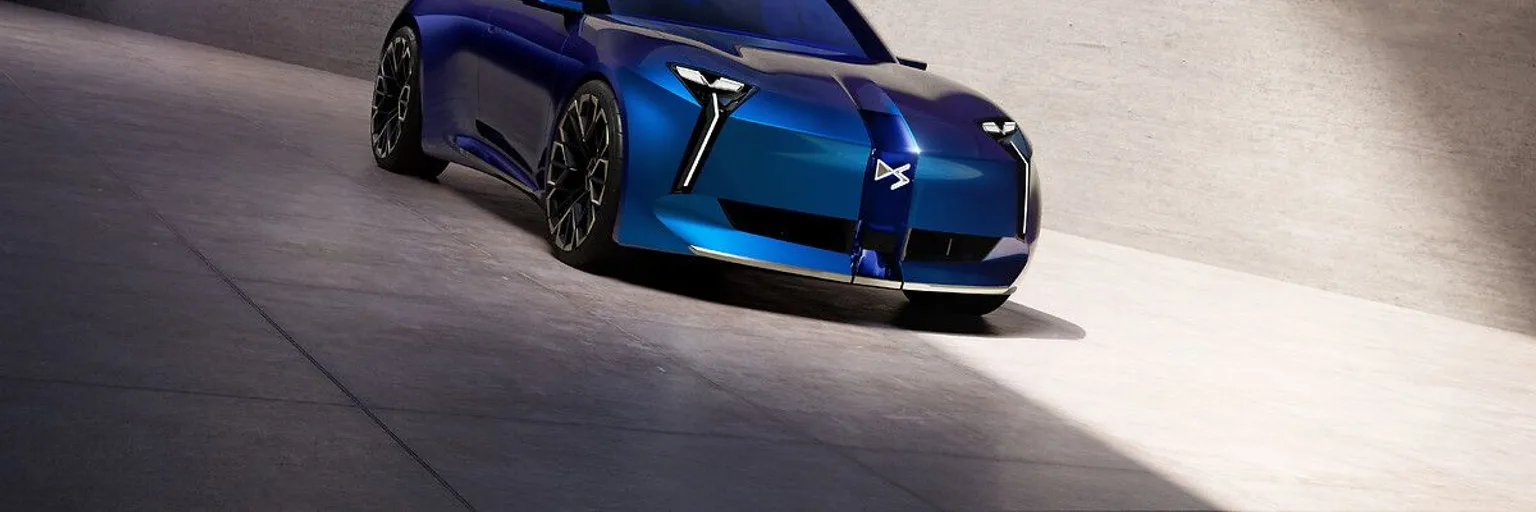
DS F3VER Concept: A Bold Design Manifesto for the Electric Age
DS Automobiles' F3VER Concept, unveiled at the Paris Motor Show, boldly redefines the brand's aesthetic with a "Design Intelligence" philosophy, setting a striking new course for its future compact EVs.
Huawei's Luxury EV Nightmare: What a Snapped Pedal Means for Safety
The repeated brake pedal failures in Huawei’s high-end Maextro V800 during emergency tests expose critical questions about rapid development and quality control, potentially undermining trust in cutting-edge automotive technology.

Citroën's Electric 2CV: A Smart Strategy, Not Just Nostalgia
By prioritizing the original's core philosophy of affordability and minimalism over mere retro aesthetics, Citroën's sub-€15,000 electric 2CV could redefine the entry-level EV market in Europe.