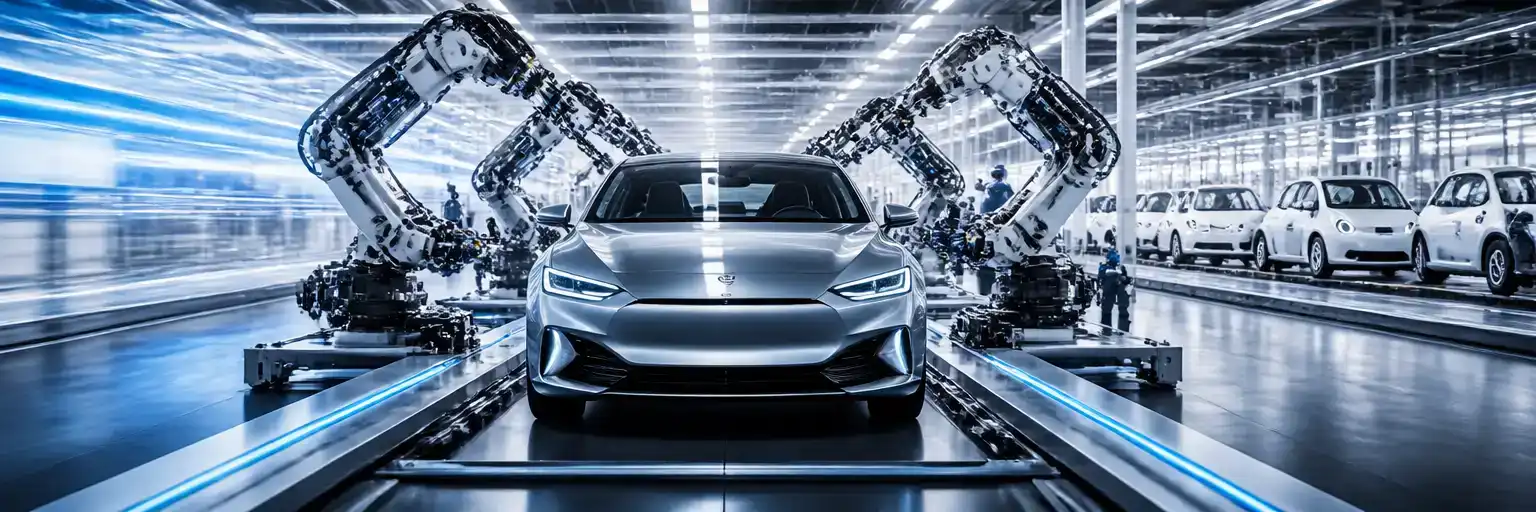
BYD's French Ambition: A Strategic Challenge for Europe's EV Future
BYD's exploration of a new electric vehicle factory in France signals a profound shift in the European auto landscape, promising jobs and accelerated EV adoption, but also intensifying competition for legacy automakers.
Photo: BYD / sala de prensa (uso editorial)
Will Europe's automotive landscape be irrevocably reshaped by a new challenger? The question looms large as BYD, the Chinese electric vehicle giant, is now "closely studying" the possibility of establishing a factory in France. This isn't just another foreign investment; it's a strategic maneuver by the world's largest electric carmaker, one that promises both immense opportunity and formidable competition for the continent's established players.
BYD's executive vice president, Stella Li, confirmed on October 12, 2026, to French TV station BFM that France is on a shortlist for a potential plant, highlighting the country's "competitively priced energy" as a key factor. This revelation, made on the sidelines of the Paris auto show, follows BYD's earlier announcement of a factory in Hungary, with production expected to launch in the fourth quarter. The company has made it clear that it aims to build two more plants in Europe, acknowledging that it will eventually need three assembly plants and one battery factory to meet its ambitious growth plans and comply with future EU local content rules.
A New Era of Competition for Europe's Automakers
For years, the European automotive industry has been a bastion of engineering and design. However, BYD's arrival, and specifically its potential for localized production, represents a seismic shift. In 2025, BYD surpassed Tesla to become the world's largest electric carmaker and even overtook Ford in total automobile sales, as noted by Automotive Manufacturing Solutions. This is a company with a vertically integrated business model, producing most of its components in-house, including its proprietary Blade Battery, which gives it significant cost and supply chain advantages.
If BYD builds in France, it will no longer be simply importing vehicles from China. It will be a local producer, directly challenging brands like Renault, Peugeot, and Volkswagen on their home turf. This will undoubtedly intensify price competition, particularly in the burgeoning affordable EV segment, forcing European manufacturers to innovate faster and potentially streamline their own production processes to compete effectively. The sheer scale and integrated capabilities of BYD mean that this is not a competitor to be underestimated.
The Strategic Appeal of 'Made in Europe'
BYD's push for European manufacturing is a calculated move to circumvent anticipated EU local content rules, which are designed to protect the region's industry from a surge in imports. By producing cars within the EU, BYD can potentially avoid tariffs and position itself as a more integrated player in the European market. As Stella Li indicated, the goal is for French drivers to perceive BYD not as a foreign entity, but as a local company. This strategy could significantly accelerate EV adoption by increasing the availability of competitively priced models tailored for European tastes and regulatory environments.
Furthermore, setting up production facilities locally allows for greater responsiveness to market demands and reduces logistical complexities. While BYD has established its footprint globally since 2021, a robust European manufacturing base will solidify its long-term commitment and provide a stronger foundation for sustained growth in a critical market. This is about building trust and market share through localization, a playbook that has proven effective across various industries.
France's Calculated Gamble
France has not been shy about its interest in attracting BYD. As early as May 2024, a senior minister expressed that France "would be happy" to host a BYD factory, as reported by Asia Financial. This welcoming stance reflects a calculated gamble. On one hand, a BYD factory could bring substantial investment, create jobs, and bolster France's position as a hub for advanced manufacturing, particularly in the critical EV sector. It aligns with broader national goals to accelerate the transition to electric mobility and strengthen industrial capabilities.
On the other hand, supporting a direct competitor to domestic champions like Renault and Stellantis carries inherent risks. The potential for job creation must be weighed against the increased pressure on existing automakers, who might struggle to compete with BYD's vertical integration and cost efficiencies. The French government, like others across Europe, must navigate the delicate balance of attracting foreign investment to spur growth while safeguarding its indigenous automotive industry. The decision to welcome BYD is a vote of confidence in the overall expansion of the EV market, but it also signals an acceptance of tougher competition for local players.
Ultimately, BYD's serious consideration of a French factory is a powerful indicator of the evolving global automotive landscape. It’s a clear signal that Chinese EV manufacturers are here to stay and intend to play a major role in Europe's electric future, not just through imports, but through localized production. This move could bring undeniable benefits in terms of jobs and EV market growth, but it also lights a fire under European manufacturers, challenging them to adapt faster or risk being outmaneuvered in their own backyard. The race for EV dominance in Europe just got a lot more intense.
No topics yet: start the first one.
More stories
A Porsche as a Weapon: The Extreme Fallout of Workplace Rage
The dramatic destruction of a dental clinic by a recently fired dentist using his Porsche highlights the volatile emotional responses job termination can ignite, turning a luxury vehicle into an instrument of extreme vengeance.
Schaeffler's China EV Write-Down: A Warning Shot for European Suppliers
Schaeffler's recent 240 million euro write-down on its Chinese EV business serves as a stark financial warning, underscoring the intense competition and evolving landscape European automotive suppliers face in the world's largest electric vehicle market.
China's EV Reckoning: Quality Over Quantity to Dominate Global Markets
China's new mandatory EV efficiency standards and consolidation efforts signal a decisive pivot from mass production to refined quality, poised to reshape its global automotive reputation and competitive edge.
Europe's EV Crossroads: Luxury Niche or Mass-Market Imperative?
Europe's automotive industry faces a pivotal strategic choice: prioritize high-margin luxury electric vehicles or aggressively pursue affordable, high-volume models to compete against global rivals.