China's EV Reckoning: Quality Over Quantity to Dominate Global Markets
China's new mandatory EV efficiency standards and consolidation efforts signal a decisive pivot from mass production to refined quality, poised to reshape its global automotive reputation and competitive edge.
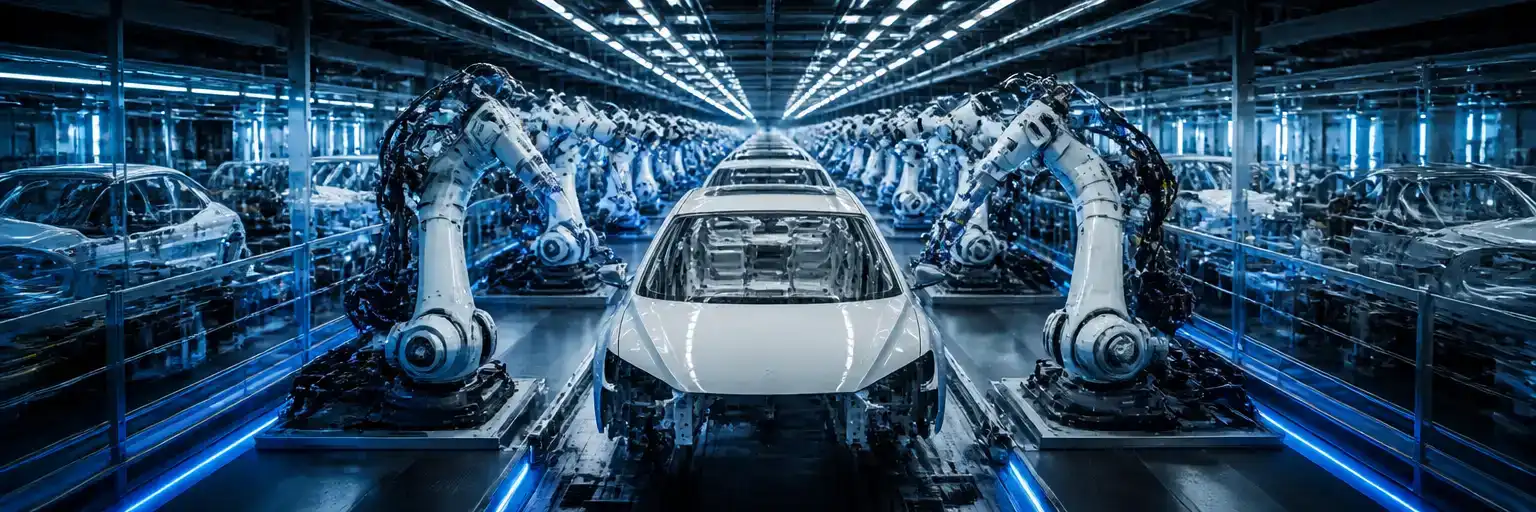
AI-generated image
For decades, China has been synonymous with rapid industrial expansion, earning its moniker as "the world's factory." Its electric vehicle (EV) sector, in particular, has exploded, leading to unprecedented volume and market share. However, this growth has often been accompanied by questions about sustainable practices and product quality. Now, Beijing appears to be engineering a significant shift, prioritizing refinement and efficiency to secure its long-term global automotive standing.
Beginning January 1, 2026, China has implemented the world's first mandatory national standard for the energy consumption of pure-electric passenger cars, a move reported by electrive.com and CarNewsChina. This new regulation replaces a previous recommended framework, applying direct legal force to all newly produced EV models. Concurrently, the government is intensifying its long-standing campaign to consolidate what it considers an overly fragmented EV market, a strategic maneuver that will undoubtedly redefine the competitive landscape.
From Volume Leader to Quality Benchmark
China's journey to becoming the world's largest producer and consumer of electric vehicles is a testament to its ambitious industrial policies. For twenty years, the government has pursued strategies that enabled this rapid ascent, with China accounting for more than 70% of global EV production in 2024, according to the IEA's Global EV Outlook 2025 report. Early on, substantial governmental support and a focus on leapfrogging traditional automotive technologies, as outlined in strategies like the 863 Program, helped domestic firms close technological gaps in critical areas like battery development, as detailed by issues.org. This strategy was fueled by nationwide subsidies, which ranged from $10,000 to $20,000 per vehicle in its initial phases, and policies that encouraged technology transfer through joint ventures.
While effective in fostering growth, this rapid expansion also led to a proliferation of manufacturers and a market saturated with numerous models. The new mandatory energy consumption standards signal a decisive pivot: from prioritizing sheer volume to enforcing engineering excellence. The regulations tighten requirements by approximately 11% compared with the previous recommended version, introducing differentiated indicators based on vehicle weight and technical characteristics. For instance, pure-electric passenger cars weighing around two tonnes will now face a maximum electricity consumption limit of 15.1 kilowatt-hours per 100 kilometers. Authorities anticipate that technical upgrades spurred by these rules could lead to an average increase of about 7% in driving range for vehicles with the same battery capacity. This isn't merely about incremental efficiency gains; it's a clear statement that the market is maturing, demanding higher engineering standards and a focus on optimal performance rather than just raw battery capacity.
A Necessary Pruning: Consolidating for Strength
Alongside the efficiency drive, Beijing has consistently advocated for consolidation within its sprawling EV industry. As early as 2021, Reuters reported on calls from government ministers to encourage mergers and acquisitions, signaling a desire to streamline an overcrowded market. This push is a direct response to the era of generous subsidies that, while successful in kickstarting the industry, also led to a fragmented landscape with hundreds of EV makers, as highlighted by analyses from MERICS. The shift from direct financial incentives to regulatory requirements, as observed by Global Fleet, indicates a deliberate strategy to allow the most competitive and innovative firms to thrive, while weaker players are phased out or acquired.
This consolidation is not just about reducing numbers; it's about fostering an environment where leading companies like BYD and Geely, whose newer models already meet many of the new efficiency thresholds, can further invest in R&D and scale production with a focus on cutting-edge technology and global competitiveness. The new standards are directly linked to financial incentives, with vehicles failing to meet the updated technical requirements potentially losing eligibility for purchase tax exemptions in 2026 and 2027. This move forces automakers to prioritize energy-efficiency improvements across their platforms, ensuring that only the most competitive and compliant models remain viable in the market.
The Global Implications of China's EV Evolution
China's latest regulatory measures, combining stringent efficiency mandates with a push for industry consolidation, represent a strategic evolution from a quantity-driven to a quality-focused EV market. This shift is poised to redefine its role from merely the world's largest producer to a benchmark for advanced and sustainable electric vehicle technology. The implications for the global automotive industry are profound: as Chinese manufacturers are compelled to innovate for efficiency, they will inevitably elevate the standard of their offerings, further intensifying international competition. This strategic pivot suggests that China aims not just to build more EVs, but to build better ones, challenging established global players and solidifying its leadership in the next generation of automotive technology.
No topics yet: start the first one.
More stories
Europe's EV Crossroads: Luxury Niche or Mass-Market Imperative?
Europe's automotive industry faces a pivotal strategic choice: prioritize high-margin luxury electric vehicles or aggressively pursue affordable, high-volume models to compete against global rivals.
Brent at $106: The Painful Catalyst Accelerating Europe's EV Future
The significant surge in Brent oil prices is hitting European drivers hard, but this financial strain may paradoxically hasten the continent's transition to electric vehicles as conventional fuel becomes prohibitively expensive.
Stellantis' FaSTLAne 2030: A Realistic Power Play for European Dominance
Stellantis’ ambitious plan for over 50 new models and a 25% market coverage expansion in Europe by 2030 signals a strategic pivot towards volume and powertrain diversity, aiming to secure its future in a dynamic automotive landscape.
Germany's Auto Industry: A Reckoning Beyond Electrification
The projected loss of nearly 200,000 jobs in the German automotive sector isn't merely an EV transition, but a multi-faceted structural upheaval demanding radical reinvention.