Aito's European entry: Why Huawei's shadow complicates success
Huawei-backed Aito targets a European launch by autumn 2027, yet stringent regulations, geopolitical tensions, and its partner's domestic woes present significant hurdles that could slow its ambitious expansion.
Photo: JamesYoung8167 / Wikimedia Commons (CC BY-SA 4.0)
Are Chinese electric vehicles truly on the verge of dominating the European market, or are we witnessing a more complex integration than the bold headlines suggest? Recent developments from Aito, the brand jointly developed by Huawei and Seres, indicate that while ambition is high, the reality of entering Europe is fraught with strategic challenges and regulatory recalibrations.
At the Paris Motor Show on October 12, Aito confirmed its intention to launch in Europe by autumn 2027, showcasing a lineup of luxury SUVs: the Aito 6, 7, 8, and 9. This announcement comes as the brand initiates the rigorous EU Whole Vehicle Type Approval (WVTA) process, with Germany selected as the lead market for its stringent standards, as China EV Home reports. This ambitious timeline highlights the significant challenges and strategic recalibrations necessary for Chinese EV brands to truly establish a foothold in the competitive European market.
The long, winding road to European approval
The most significant hurdle for any automotive brand entering a new continent is regulatory compliance, and Europe is notoriously demanding. Aito's commitment to undergoing EU WVTA underscores the scale of this task. This certification is not merely a bureaucratic checkbox; it represents fundamental requirements for safety, emissions, and quality that often necessitate significant vehicle modifications for models originally designed for the Chinese market. It’s a process that can take years, as Aito’s autumn 2027 target — over a year from now — clearly indicates. This isn't just about technical specifications; it’s about cultural integration into a market with established expectations for what constitutes a safe and reliable vehicle. Obtaining these approvals is an expensive and time-consuming endeavor that can significantly delay market entry and increase vehicle costs, ultimately impacting their competitive pricing advantage.
The Huawei dilemma: A double-edged sword
Aito's primary competitive edge in China comes from Huawei’s intelligent vehicle technology ecosystem, including its ADS assisted driving and HarmonyOS digital cockpit infotainment. However, this partnership, while strong domestically, presents a unique challenge in Europe. Huawei faces growing restrictions in the region, which could complicate Aito's market entry. The close ties to Huawei are undeniable, and Huawei's growing restrictions in the region may lead to scrutiny from European consumers and regulators. Indeed, Electrek notes that the word “Huawei” was absent from Aito’s Paris press kit, suggesting a conscious effort to distance the brands for the European audience. The brand's decision to launch under the Aito name, rather than Seres directly (which already has experience selling in Norway), could be a strategic move to potentially sidestep some of the scrutiny Huawei might attract. Yet, the question remains: can Aito truly separate itself from Huawei's brand perception in a market increasingly wary of Chinese tech giants and their associated geopolitical concerns?
Domestic pressures fuel overseas urgency
The push into Europe is not just about expansion; it's also a response to significant domestic market pressures. Seres Group, Aito's manufacturing partner, reported a substantial decline in new energy vehicle sales in China, with September 2026 sales down 34.48% year-over-year. Sales for the first nine months were down 15.79% year-over-year. Financially, Seres reported a net loss of RMB 1.72 billion ($257.0 million) in the first half of 2026, swinging from profit to loss, as China EV Home highlights. With weakening domestic sales and profitability under pressure, overseas expansion is becoming a critical source of potential growth for Seres.
This urgency could accelerate Aito's efforts, but it also means the brand might be entering Europe out of necessity rather than from a position of overwhelming strength. While Chinese EVs are undeniably a growing force, their entry into Europe is a complex dance between ambition, regulation, and geopolitical realities. Aito's journey will be a telling indicator of whether Chinese brands can truly conquer the European market on their own terms, or if they will be forced to adapt more significantly than anticipated to gain acceptance.
No topics yet: start the first one.
More stories
EV Adoption's Next Frontier: Charging Costs and True Economic Value Reshape the Market
As the electric vehicle market matures, consumer focus is shifting from initial range and purchase price to the practical realities of charging costs, battery performance, and their wider economic impact, forcing a re-evaluation of brand loyalty among drivers.
Why the Renault Trafic E-Tech Electric Sets a New Standard for Commercial EVs
Renault's new Trafic E-Tech Electric leverages software-defined architecture to offer unparalleled customization and over-the-air updates, setting a new benchmark for flexible commercial electric vehicles.

CUPRA Raval: incremental upgrades outsmart radical overhauls in urban EVs
The CUPRA Raval's new ABT sport pack and upcoming 2027 features prove that strategic aesthetic and technological enhancements, not sweeping changes, are key to maintaining market leadership in the urban electric vehicle segment.
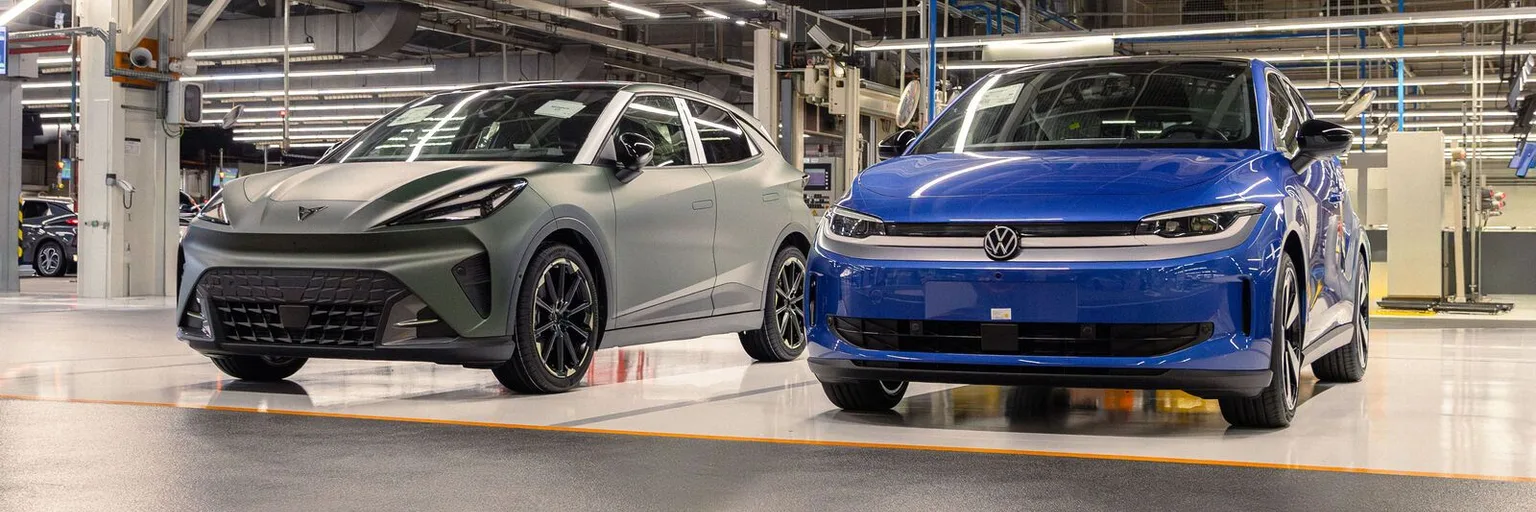
VW's Multi-Brand EV Push: A Smart Bet Against Asian Rivals?
Volkswagen Group's Electric Urban Car Family, showcasing four distinct EVs on a shared platform, signals a strategic play for market dominance and affordability in Europe.