Tesla's 'Dumb Summon': A Candid Admission or a Marketing Masterstroke?
Tesla's official adoption of 'Dumb Summon' in Europe is more than just a quirky name; it's a strategic move to manage expectations and navigate the complex European regulatory landscape for assisted driving features.
AI-generated image
Is calling one of your assisted driving features 'Dumb Summon' a bold, self-aware admission of current limitations, or a calculated, cheeky marketing tactic? Tesla, a company known for its unconventional naming, has officially adopted this moniker for its original Summon function in Europe, alongside a broader rebrand of its advanced driver-assistance systems. This move raises intriguing questions about the brand's long-term strategy for self-driving technology, particularly in a market as complex as Europe.
The original Summon feature, now formally 'Dumb Summon', allows owners to move their vehicle straight forward or backward using the Tesla app or key fob. It's a simple, albeit useful, function for maneuvering in tight parking spots or garages, and Tesla executives, including Elon Musk, have reportedly used the term internally for years to distinguish it from more advanced capabilities. Now, it's public-facing in the European configurator, appearing alongside 'Actually Smart Summon' (ASS) and under the newly termed 'Tesla Assisted Driving Basic' package, a subscription service priced at €99 per month.
The Art of Understatement, or Just Honesty?
In our view, the adoption of 'Dumb Summon' is a quintessential Tesla move, blending a hint of self-deprecation with clear product differentiation. It's a name that immediately communicates the basic, no-frills nature of the function, setting a low bar for user expectations. This stands in stark contrast to the often ambitious, even hyperbolic, nomenclature Tesla has historically used for its autonomous driving efforts. By clearly labeling the original Summon as 'Dumb,' Tesla inherently elevates 'Actually Smart Summon' as the superior, more advanced option, creating a compelling narrative for progression.
It’s a clever way to manage user perception, especially when dealing with technology that can be misunderstood or lead to inflated expectations. In a market where regulators are scrutinizing autonomous claims, this transparency—or at least, this deliberate bluntness—might serve to build trust. It frames the entry-level feature accurately, allowing the company to avoid potential criticism about overstating its capabilities while simultaneously highlighting the relative sophistication of its 'smart' counterpart.
Europe's Reality Check on 'Smart' Autonomy
The most revealing aspect of this rebrand, however, lies in the context of Europe's stringent regulatory environment. While 'Actually Smart Summon' can navigate parking lots autonomously, its functionality is severely curtailed across the continent. European regulations (UNECE R79) currently mandate that owners remain within approximately 6 meters (about 19.5 feet) of their vehicle, with a total travel distance for the feature limited to about 20 meters, as Somos Eléctricos reports. This is a stark difference from the roughly 65 meters (213 feet) allowed in North America, effectively rendering the
No topics yet: start the first one.
More stories
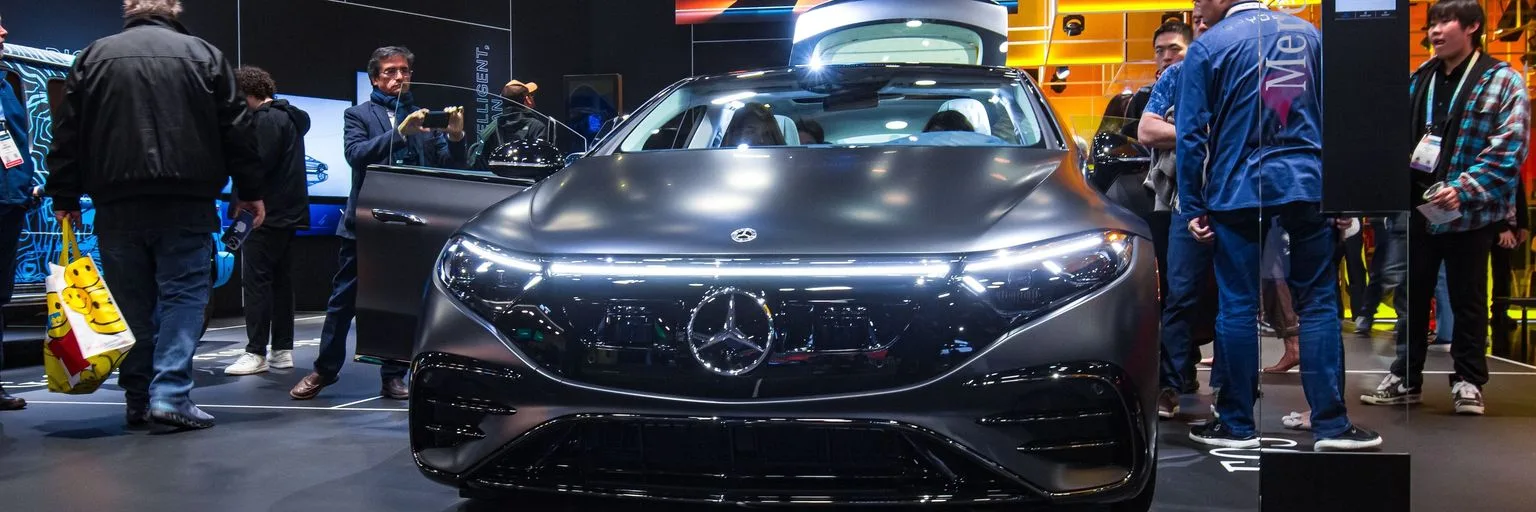
Steer-by-Wire: Mercedes EQS innovation or an expensive leap of faith?
Mercedes-Benz's adoption of steer-by-wire in the EQS, eliminating the mechanical link to the wheels, promises radical handling but forces us to re-evaluate what true driving connection means.