Alfa Romeo Cuorerosso: An Emotional Blueprint for a Hybrid Future
Alfa Romeo's Cuorerosso concept, revealed at the Paris Motor Show, is more than a design exercise; it’s a bold declaration that performance heritage and multi-energy electrification can coexist beautifully, shaping the brand's path forward.
Photo: Alfa Romeo / sala de prensa (uso editorial)
Can Alfa Romeo truly bridge its storied, visceral past with the inevitable demands of an electrified future without losing its very essence? The debut of the Cuorerosso concept at the Paris Motor Show 2026 suggests the answer is a resounding yes, provided it can execute this ambitious vision. This isn't just another show car; it's a strategic manifesto, charting a course that prioritizes emotional connection and driving pleasure amidst evolving automotive landscapes.
Unveiled today, October 12, at precisely 10:55 AM, the Alfa Romeo Cuorerosso — Italian for 'red heart' — is positioned by the brand as a synthesis of passion and tradition. It’s a concept designed to speak to the Alfisti of the world, built on the premise that driving is first and foremost about feeling, not just explaining. Alfa Romeo describes it as a declaration of intent, focusing on emotion at the wheel, thereby reinforcing its identity as a "Love Brand" where the choice of a car is an impulse that resonates deeply before being confirmed by reason.
Design: "Bellezza Necessaria" Meets Modernity
The Cuorerosso breaks from market trends by presenting itself not as an SUV, but as a four-door GT sedan, signalling Alfa Romeo's commitment to the sports sedan as a core element of its identity. The design philosophy, termed "Bellezza Necessaria" (necessary beauty), started from a solid clay block, carving away material to reveal forms that speak to both elegance and aggression. At 4,700 mm long, 1,980 mm wide, and a mere 1,331 mm high, it is longer and wider than a Giulia Quadrifoglio but significantly lower, with proportions reminiscent of classic Italian sports cars.
Key design elements include a distinctive wedge line from nose to tail, a modernized Scudetto grille featuring a weave of small backlit triangular elements, and minimalist LED headlights integrated into a carbon fiber structure. The rear, with its Coda Tronca (truncated tail) and circular lighting, draws inspiration from the iconic Alfa Romeo 8C, aiming for aerodynamic efficiency with an impressive 0.28 Cd drag coefficient. The four doors, hinged at opposite ends and featuring no B-pillar, open via touch controls on the roof, revealing a spacious four-occupant cabin despite its coupé silhouette.
Performance: Hybrid V6 and Multi-Energy Flexibility
While a concept, the Cuorerosso strongly suggests a multi-energy future, compatible with full-electric, plug-in hybrid, mild hybrid, and full hybrid powertrains. The most captivating proposal for its top-performance variant is a hybrid version of the Giulia Quadrifoglio's 2.9-litre twin-turbo V6 engine, paired with Q4 all-wheel drive, a torque converter automatic, and a carbon-fiber driveshaft. This setup, while not confirmed for production, points towards a future where the mechanical essence of Alfa Romeo, including its celebrated six-cylinder engines, can coexist with electrification, potentially delivering power in excess of 600 bhp.
Weighing 1,750 kg, the Cuorerosso incorporates Brembo carbon-ceramic brakes and air suspension to manage its mass. An intriguing steer-by-wire system aims to enhance the driving experience, retaining a "strong analogue component" through haptic and acoustic feedback. This commitment to driving pleasure, even with advanced technology, underscores the brand's dedication to its enthusiasts.
Interior: Driver-Centric Innovation
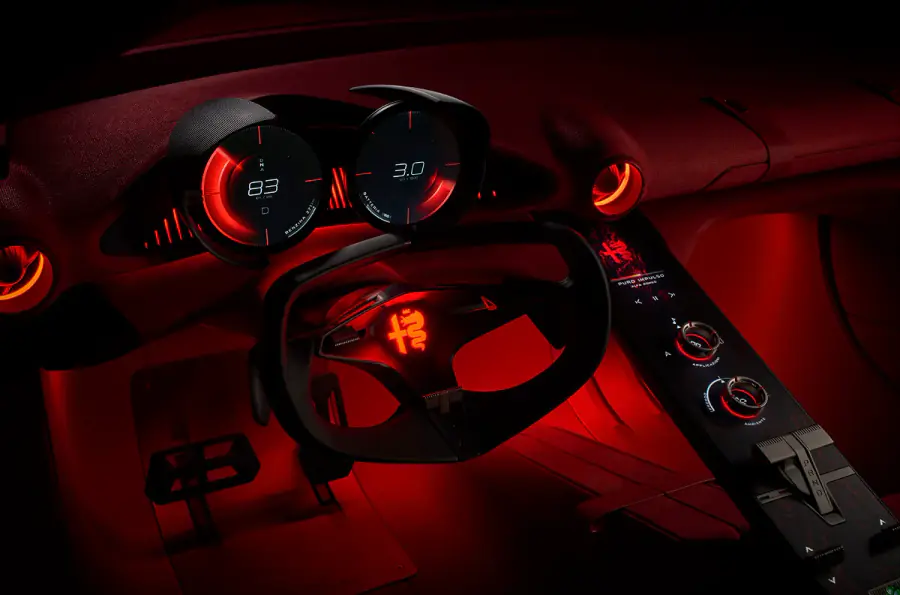
Inside, the Cuorerosso strikes a balance between tradition and innovation. The environment is notably driver-focused, with a yoke-style steering wheel and a high center console. The instrument cluster offers an innovative feature: it can transform from a dual 'telescope' layout to a single, more concise unit in 'Concentrato' mode, presenting only essential driving information. Physical switches for critical functions like gear selection, drive modes, and climate control are retained, reflecting designer Gilles Vidal's belief that fundamental controls should remain intuitively accessible.
Luxury materials abound, with Alcantara, metal, and leather—including 60 percent recycled leather—adorning the cabin. The dashboard takes cues from the 1967 33 Stradale, and the 'Magma Display', a backlit OLED screen, remains hidden until needed, integrating technology seamlessly into the design. With three drive modes—Cruise, Sport, and Quadrifoglio—the Cuorerosso’s interior is crafted to immerse the driver in an emotional experience, further enhanced by cabin lighting that dims in Quadrifoglio mode.
A Bold Statement for Alfa Romeo's Future
The Cuorerosso concept is more than just an exclusive sports car; it is a clear blueprint for Alfa Romeo's design language and technological direction through the end of the decade. While it does not directly preview a single production model, elements of its design and multi-energy strategy are expected to inform upcoming vehicles, including replacements for the Tonale SUV around 2028 and a new hatchback to succeed the Giulietta. This concept boldly confirms that Alfa Romeo intends to continue creating cars "for those who love to drive," prioritizing emotion, performance, and distinctive Italian flair, even as it embraces the inevitable shift towards electrification.
No topics yet: start the first one.
More stories
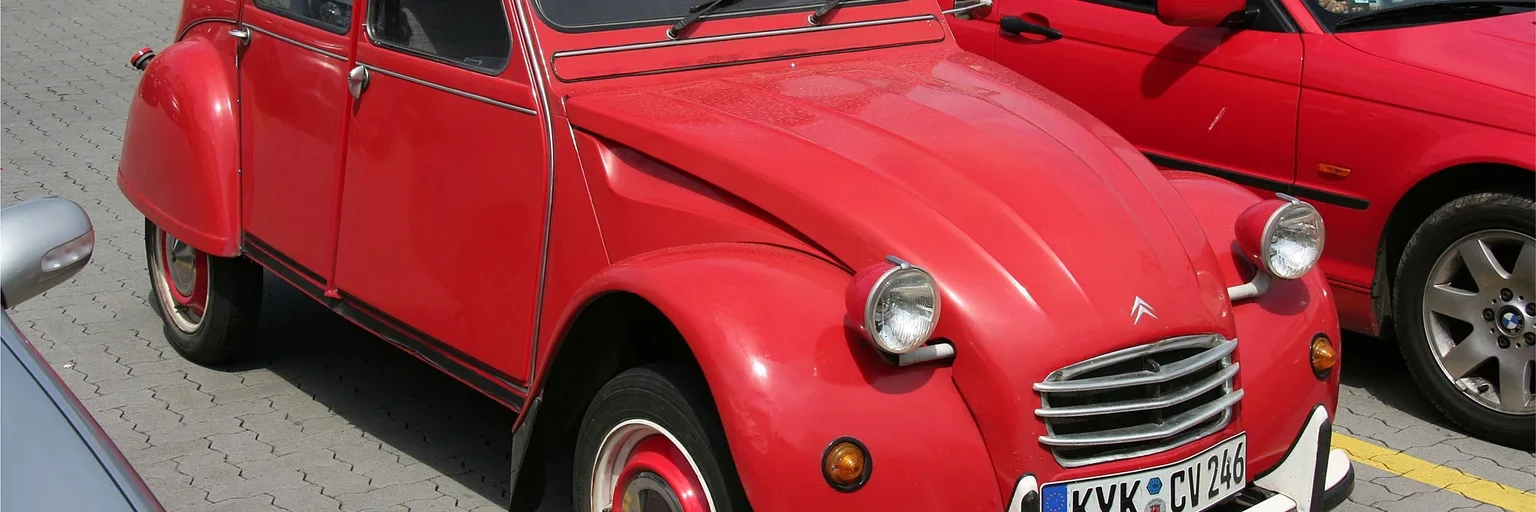
The 2CV's €15,000 promise is a price tag first and a tribute second
Citroën's electric 2CV can hit roughly €15,000 in 2028 only if reported Leapmotor tech and cost base do the heavy lifting while the French design keeps the soul.
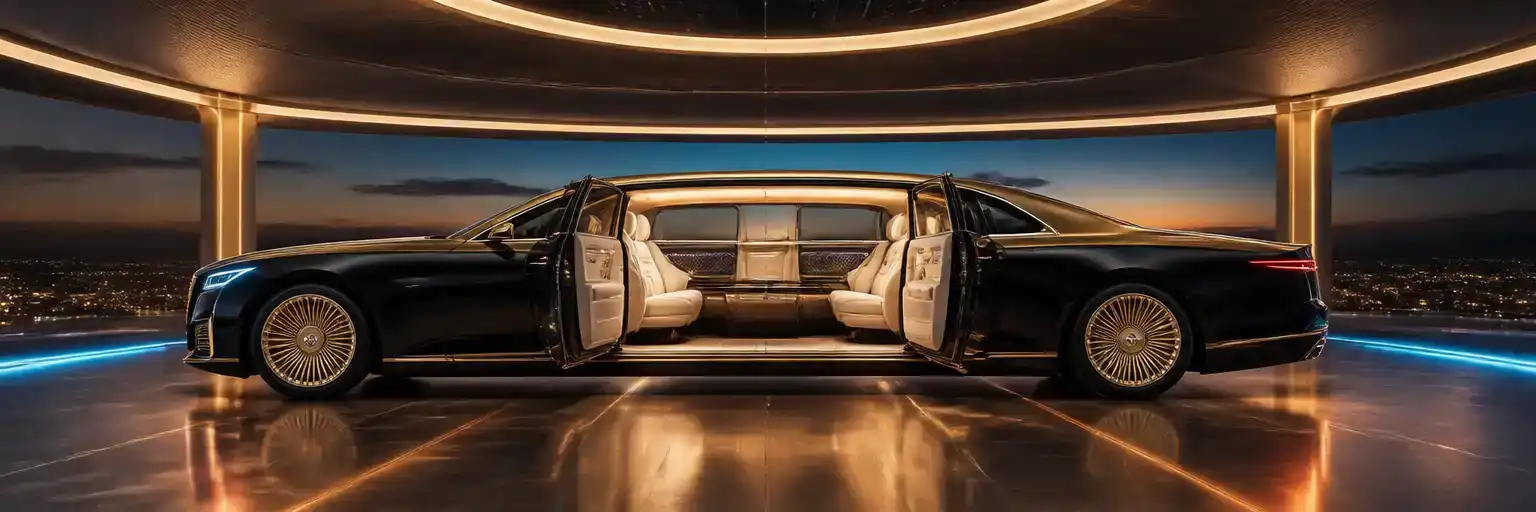
Yangwang Altior can copy a Phantom, but not the decades behind it
BYD's electric limousine ticks every spec box and even borrows the umbrellas. What it can't download is trust built over generations, and that is Rolls-Royce's real product.
Yangwang's 503 km/h is a great stunt, not proof of luxury, and that's fine
The U9 Xtreme's one-way run proves BYD can win engineering headlines. Whether it builds credible luxury is a separate question, and the answer isn't on that desert road.

The Quattro returns without Audi, and that's just fine
A British start-up is reviving the Quattro with RS4 hardware and a V8. In our view, heritage is an asset anyone with the engineering can serve, so judge the car, not the badge.