Jeep's Renegade Rebirth: Why STLA One is Electrification's True North
The return of the Jeep Renegade on Stellantis' STLA One platform signals a pivotal moment, balancing rugged 4x4 heritage with a multi-energy, electrified future for Europe.
Photo: Jeep / sala de prensa (uso editorial)
Can a brand steeped in a legacy of rugged off-road prowess truly embrace an electrified future without losing its very soul? Jeep's strategic move to bring back the Renegade, built on Stellantis' adaptable STLA One platform, suggests the answer is a resounding 'yes,' but it’s a delicate balancing act that could redefine the compact SUV segment.
The American icon confirmed at the Paris Motor Show 2026 that a new generation of the Jeep Renegade will debut before 2030. This isn't just a re-release; it's a completely updated project, poised to ride on the multi-energy STLA One architecture. This decision underscores a clear intent: to expand Jeep's European presence to six models by the end of the decade, combining diverse platforms and powertrains while, crucially, retaining its non-negotiable 4x4 identity.
STLA One: The Modular Backbone of Jeep's Future
The choice of the STLA One platform for the forthcoming Renegade is more than just a technical detail; it's a foundational statement. Stellantis describes STLA One as an architecture designed to consolidate five existing platforms into a single, scalable, best-in-class solution, capable of supporting various vehicle segments and propulsion systems [4], [17]. Xavier Peugeot, head of Jeep Europe, has lauded it as "the most competitive of the group for the future" [2], [3]. This platform is built for modularity, providing a unified technical base for developing an entire family of models, which in turn reduces complexity and development costs [3].
This new Renegade is expected to be larger than its predecessor [1], [7], reinforcing its role in the compact SUV segment. While specific technical details, precise dimensions, or exact motorizations are yet to be announced, the STLA One platform itself is designed to accommodate various power sources, including mild hybrid, full hybrid, and fully electric versions [6], [18]. This flexibility is key to Jeep's strategy of adapting its offerings to the diverse needs of European markets while ensuring all models remain compatible with 4x4 traction, a defining characteristic of the brand [3], [5]. Over 610,000 Renegade units have been sold in Europe since its 2014 launch [2], [3], [5], highlighting its market significance.
Beyond Renegade: A Wider European Strategy
The Renegade's return is a cornerstone of Jeep's broader plan to introduce six new models in Europe by 2030, leveraging STLA One alongside STLA Medium and STLA Large platforms [2], [3]. This expansion aims to increase Jeep's European SUV market coverage from 50% to 90% [5]. Beyond the confirmed Renegade, Jeep is also exploring the potential return of the historic Willys nameplate. This new Willys would be even more compact than the current Avenger, positioning it to expand the brand's entry-level offerings [1], [3]. However, the Willys project is still in the exploratory phase, with no definitive production decision announced, and its debut is anticipated after 2030 [2], [3], [5]. Both the Renegade and the potential Willys underscore Jeep's commitment to evolving its lineup with electrified options while preserving its core identity as an off-road pioneer.
No topics yet: start the first one.
More stories
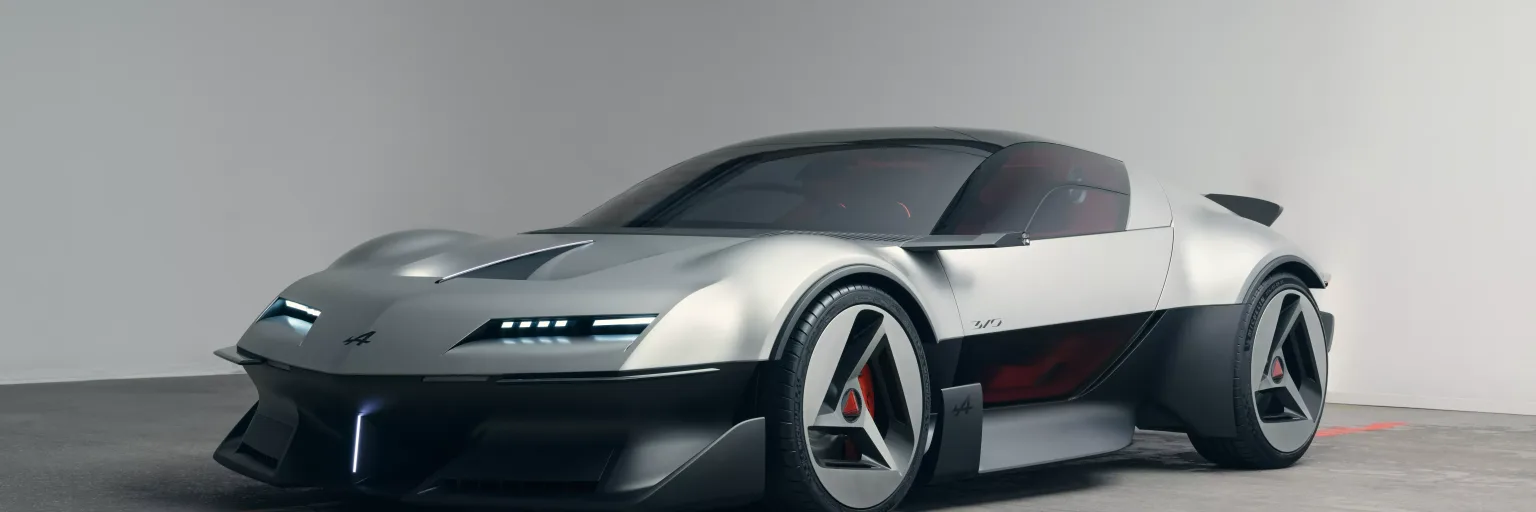
Alpine's A310 Vision: Why Retro-Futurism is the EV Game Changer
The Alpine A310 Vision concept proves that blending iconic 70s aesthetics with advanced electric platforms creates a compelling emotional connection, setting a unique course in the evolving EV sportscar landscape.
Omoda 5 2027: A Chinese Challenger Redefining Europe's SUV Market
The refreshed Omoda 5, arriving in 2027 with compelling hybrid and electric powertrains and advanced autonomous parking, is poised to challenge established European and Asian SUV brands to rethink their strategies.

Aito's European entry: Why Huawei's shadow complicates success
Huawei-backed Aito targets a European launch by autumn 2027, yet stringent regulations, geopolitical tensions, and its partner's domestic woes present significant hurdles that could slow its ambitious expansion.

EV Adoption's Next Frontier: Charging Costs and True Economic Value Reshape the Market
As the electric vehicle market matures, consumer focus is shifting from initial range and purchase price to the practical realities of charging costs, battery performance, and their wider economic impact, forcing a re-evaluation of brand loyalty among drivers.