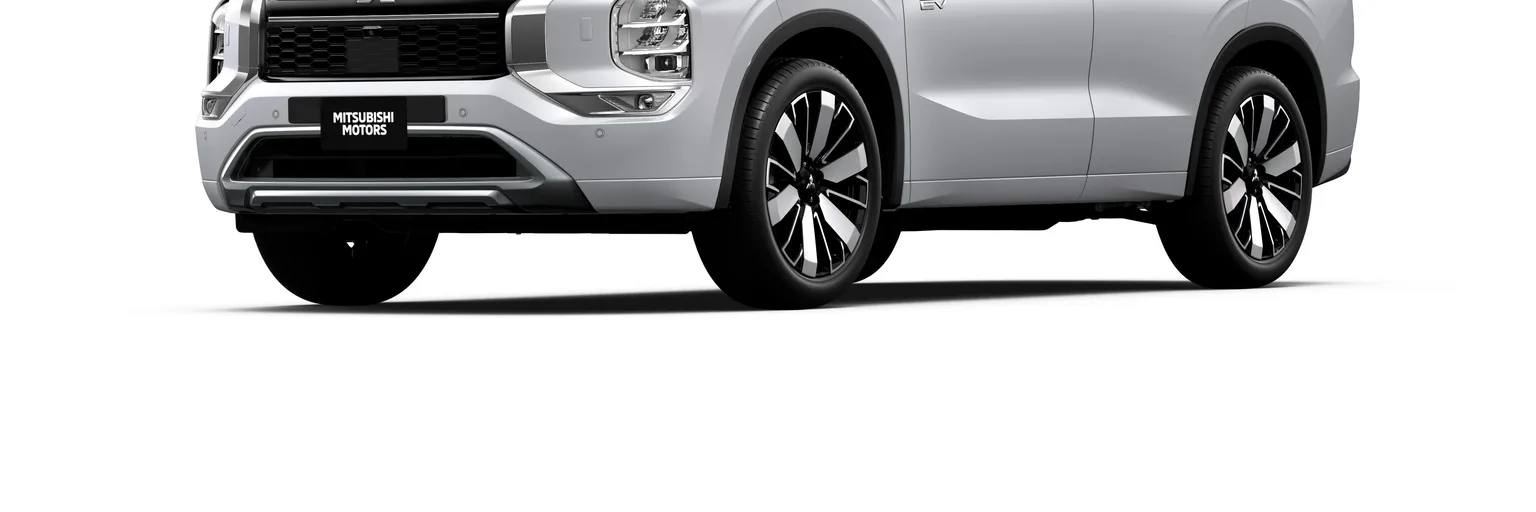
Toyota’s Land Cruiser Recall Puts Hybrid Trust to the Test
The Land Cruiser Hybrid recall is not proof that hybrid systems are unreliable, but it shows why Toyota’s reputation now depends on fast, precise fixes.
Photo: Toyota / sala de prensa (uso editorial)
A hybrid badge is not a reliability guarantee—and Toyota’s latest Land Cruiser recall is a useful reminder of why. The affected vehicle is not being recalled because its high-voltage battery suddenly became dangerous. It is being recalled because a fuel connection near the tank could come loose, leak gasoline and create a fire risk. That distinction matters, but it does not make the trust problem disappear.
On October 21, 2026, the National Highway Traffic Safety Administration said Toyota would recall 105,794 vehicles in the United States. The campaign covers certain 2024-2027 Toyota Land Cruiser Hybrid vehicles. Dealers will install an additional clamp or replace the resin fuel tube at no charge, as Reuters reports.
The recall is about fuel-system execution, not hybrid electricity
The first temptation is to treat every hybrid recall as evidence against hybrid technology. That would be the wrong diagnosis here. The documented failure mechanism is a fuel-tube connection near the tank, not a defect in the battery pack or the high-voltage circuits. In other words, the Land Cruiser’s hybrid architecture is not automatically the culprit merely because the recalled vehicle happens to be a hybrid.
But the opposite reaction—“this has nothing to do with hybrid reliability”—is also too comfortable. Buyers do not experience a vehicle as a collection of isolated engineering subsystems. They experience one product, assembled and sold under one name. A fuel leak on a hybrid SUV is still a failure of the vehicle’s overall quality control, and the potential consequence is a fire if leaked fuel reaches an ignition source. The recall notice summarized by WHTC identifies the connection as the point of concern.
That is the uncomfortable lesson for Toyota: complexity does not have to fail in its most exotic form to damage confidence. A conventional-looking component can undermine the “conservative choice” story just as effectively as a sophisticated electronic problem.
Toyota’s response is the part that can preserve trust
A recall is not automatically a brand failure. In our view, the quality of the response matters more than the existence of the campaign. Toyota’s remedy is concrete: a supplemental clamp or, where necessary, replacement of the resin fuel tube, performed free of charge by dealers. That is the correct baseline for a safety issue, not a generous extra.
The company therefore has an opportunity to turn a worrying headline into evidence of responsible ownership support. The fix needs to be easy to access, clearly explained and applied consistently across the affected vehicles. Owners should not have to decode whether their Land Cruiser is included or negotiate over payment for work connected to a safety recall. Toyota’s VIN lookup page allows customers to check recall and service-campaign information, but a lookup tool is only useful if communication around it is direct and timely. Toyota provides the official recall search here.
The stakes are unusually high because the Land Cruiser is not an anonymous commuter appliance. It carries a reputation built around durability, dependability and the ability to keep working in demanding conditions. That reputation makes customers more forgiving of a minor software annoyance than of a possible fuel leak—but it also gives Toyota more credibility to lose.
“Hybrid” should mean efficient and engineered, not magically worry-free
The market has spent years turning hybrid powertrains into a shorthand for sensible ownership. Much of that appeal is understandable, but it can become a lazy assumption: hybrid equals mature, and mature equals trouble-free. This recall exposes the weakness in that shortcut.
A hybrid vehicle combines fuel-system hardware, electric propulsion, control software and high-voltage components. That does not mean it is inherently unreliable. It does mean that reliability has to be demonstrated across the whole vehicle, rather than inferred from the reputation of one technology. The Land Cruiser case is particularly instructive because the problem sits outside the part of the car many people associate with hybrid risk.
That is why buyers should resist both extremes. There is no basis in the supplied information for declaring the Land Cruiser Hybrid fundamentally unsafe or for claiming that hybrid vehicles as a category are a poor choice. There is equally no basis for assuming that Toyota’s reputation makes inspection unnecessary. The sensible position is more demanding: trust the technology, but verify the specific vehicle and the completed remedy.
The owners, not the headline, will decide Toyota’s next chapter
The immediate practical advice is simple: affected owners should check their vehicle identification number, respond to Toyota’s recall communication and arrange the free repair. A gasoline smell should not be dismissed as an inconvenience, particularly when the documented defect involves a possible fuel leak and fire risk. The available research also shows why broad online recall counts should be treated carefully: undated dealer pages and older reports can combine separate campaigns or reflect earlier snapshots rather than the current action.
For Toyota, the larger task is to prove that this is a contained manufacturing or assembly problem with a decisive remedy—not another reason for buyers to wonder whether the company’s quality advantage has become more branding than discipline. That proof will come through execution: parts availability, dealer competence and transparent follow-up.
The verdict is not that hybrid reliability has failed. It is that hybrid reliability, like every other kind, cannot be assumed. Toyota still has the strongest path to preserving trust because the remedy is free and technically straightforward on paper. But the Land Cruiser’s reputation will be protected only when the recall is completed cleanly. Until then, the responsible buying position is clear: a hybrid badge may justify interest, but the VIN check and repair record justify confidence.
No topics yet: start the first one.
More stories
Antonelli’s Title Chance Is Mercedes’ Real F1 Stress Test
Kimi Antonelli can clinch in Austin, but the bigger story is whether Mercedes has rebuilt the speed, discipline and resilience needed to sustain a championship fight.

Lamborghini Revuelto NA63: A Flashy Tribute, or a Calculated Bet on Exclusivity?
While the limited-edition Revuelto NA63 offers an intoxicating blend of power and patriotism for North America, its purely cosmetic distinctions suggest a strategic focus on heritage and exclusivity over a deeper market commitment amidst the automotive industry's transformative shift.
Kia Sportage 2027: Can it Escape the Shadow of its Sibling?
With the new generation Hyundai Tucson soon to debut, the 2027 Kia Sportage faces a crucial test: define its own identity in a competitive SUV segment or risk blending in.
Mitsubishi Outlander 2026: A Late Entrant's Uphill Climb in a Crowded Field
The 2026 Mitsubishi Outlander, with its electrification and refined interior, faces an undeniable challenge to carve out significant market share against entrenched competitors without a truly disruptive value proposition.