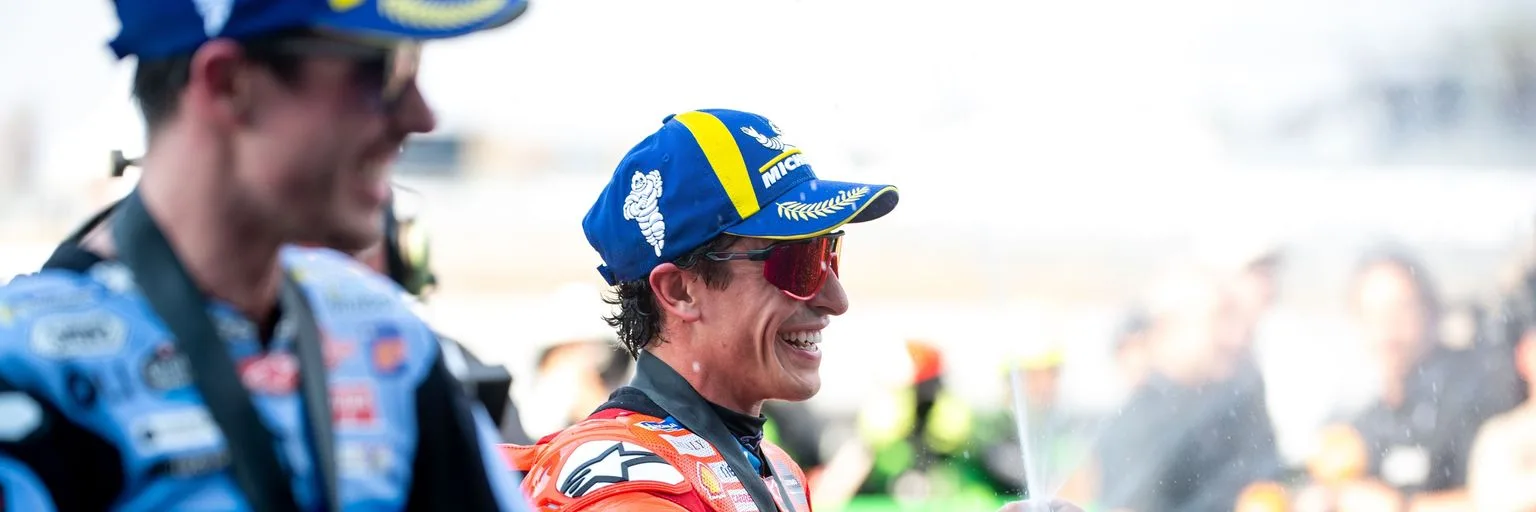
MotoGP's title fight now hangs on bones, not just bikes
Marc Márquez took the points lead at Phillip Island as Jorge Martín broke his arm. The Ducati era looks less like a machine story than a fitness-list story.
AI-generated image
What decides a MotoGP championship in 2026: the fastest bike, or the rider who is still in one piece in November? Phillip Island, in its last year on the calendar, gave a fairly blunt answer.
Here is what happened. Marc Márquez came into the weekend two points behind Jorge Martín. He crashed in qualifying, recovered on his spare bike to take pole and then won the Sprint. Martín, who had been attacking him all race, lost the front at Turn 8 on lap 8 of 13. The Aprilia rider was declared unfit for Sunday with a fractured right radius and a suspected ulna fracture. According to Autoaction, the Ducati rider now leads 365 points to 355.
The Sprint was a duel, but the injury list is the real story
It's tempting to read this as Ducati beating Aprilia. We don't think that's the lesson. Márquez himself admitted that Martín was "a bit faster" on the day and that he looked like he was overriding. Aprilia had the pace; what it lacked, in our view, was a way to keep its rider upright and healthy for 13 laps against a rival who read the fight better and decided when to take the risk.
And the paddock around them is thin. Crash.net lists Toprak Razgatlioglu heading for shoulder surgery, Joan Mir absent with extreme fatigue issues, and Raul Fernandez ruled out of the Phillip Island race with his finger injury. Fermín Aldeguer's seat at Gresini was also filled by Iker Lecuona. That's a lot of empty seats for a grid that is supposed to be at its competitive peak.
Martín's season shows the cost of racing on a patched-up body
Martín's year has been a rehabilitation story as much as a racing one. Back in January, AS reported two new operations, on his left hand and right collarbone, with Sepang already in doubt. In September, Marca reported that his forearm had to be operated on. Now there's another arm fracture, and Crash.net's own view is that it would be a major surprise if he were back at Sepang next weekend.
Our opinion: this is the uncomfortable side of the sprint-format era. Every weekend offers two chances to crash at speed with a championship at stake, and a rider chasing a title has every incentive to push beyond the limit. Márquez noted it was very difficult for both of them to finish such a fight. When your body is already repaired in several places, the margin for error shrinks, and the 13-lap Sprint doesn't care.
The Ducati era is also an era of fragile stars
Ducati took the podium lockout in the Sprint, with Alex Márquez and Fabio di Giannantonio behind Marc. That's the machinery argument, and it's real. But Aprilia arrived at Phillip Island with its rider leading the standings, which tells us the bike gap is probably smaller than the narrative suggests.
What separates the two, we think, is the reigning champion's ability to turn a crash into pole in one session, and then keep a cool head in a duel. That's not a hardware advantage; it's a rider-management advantage. Interestingly, Alex Márquez said he wouldn't attack his brother if the risk was high, a reminder that Ducati's depth may give it options Aprilia, now leaning on Marco Bezzecchi, 50 points back according to Crash.net, simply doesn't have.
Our verdict
Don't write the title off for Martín on points alone; write it off on availability. If Márquez wins Sunday, Crash.net calculates the gap would grow to 35 points, and a missed Sepang could add more. A sport that sells itself on technical parity is, in practice, being decided by forearms and collarbones. Phillip Island leaves us with a simple view: the next big step for MotoGP isn't another aero tweak, it's a serious conversation about how many risks a Sprint format asks injured riders to take.
No topics yet: start the first one.
More stories
Honda’s CBR500R Four Makes Complexity Feel Like the Point
Honda’s new inline-four middleweight rejects the simplest path, betting that sound, response and character still matter more than an efficiency-first spec sheet.
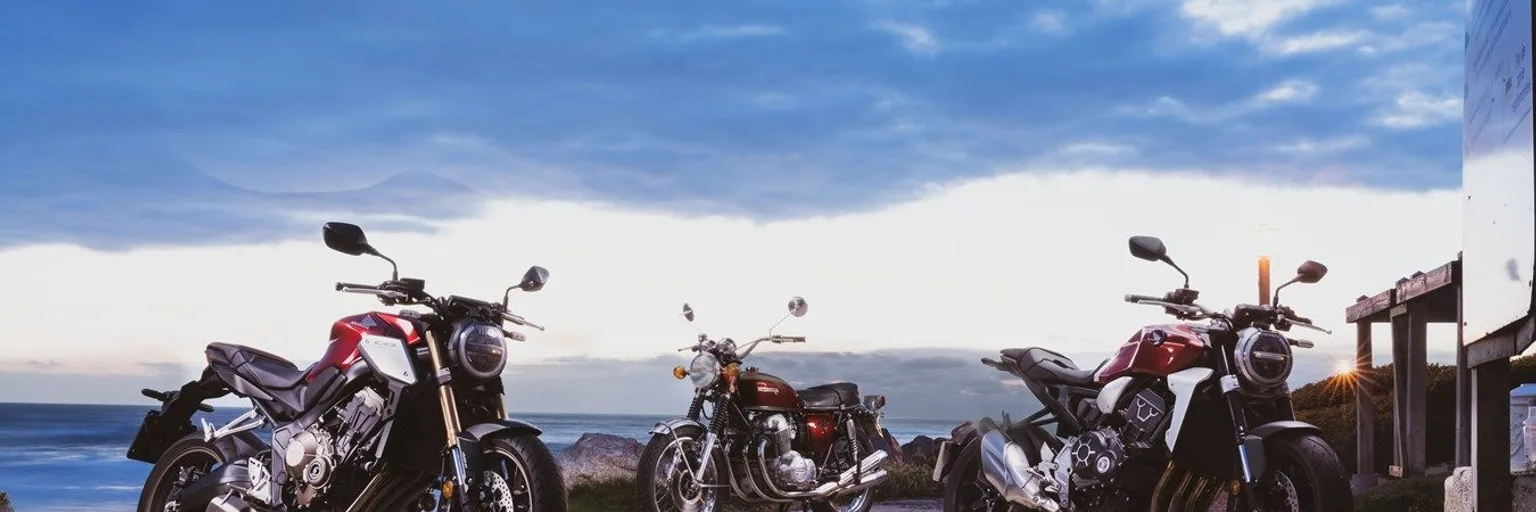
Yamaha's Exciter 155 Monster: A Bold Bet on Visuals, Not Power
Yamaha's new Monster Edition of the Exciter 155 VVA TCS in Vietnam underscores a calculated strategy: leveraging iconic racing aesthetics to captivate a distinct segment of performance enthusiasts, even without a mechanical overhaul.
MotoGP's 2027 Regulations: A Risky Gamble on Fairness and Rider Well-being
New engine rules, aero limits, and a revamped weekend format aim to level the playing field and boost spectacle, but rider concerns about workload and influence suggest a deeper tension that could undermine the sport's spirit.
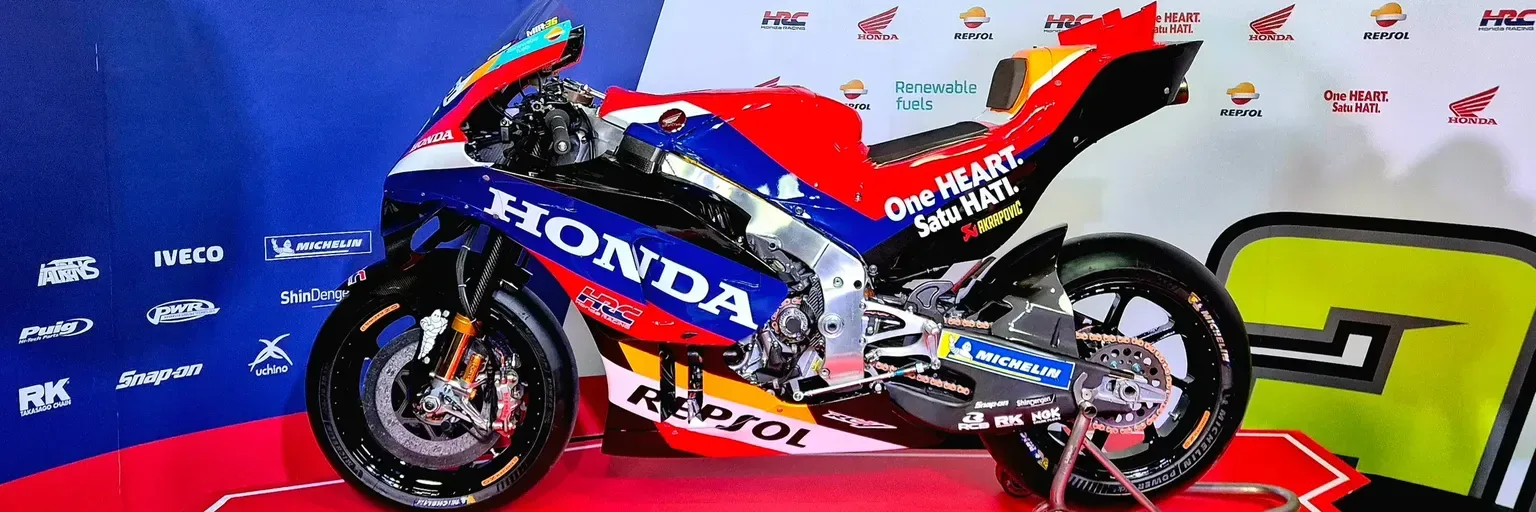
Phillip Island’s Farewell: A MotoGP Title Decider Under the Southern Cross
The 2026 Australian Motorcycle Grand Prix at Phillip Island isn't merely a race; it represents a pivotal moment where championship hopes could be forged or dashed, amplified by its swansong at an iconic circuit.