Chery’s Rhino Battery Has Big Numbers. The Road Decides Its Fate
Chery’s Rhino batteries promise extreme range and 12C charging, but durability, cost and real-world infrastructure will decide whether the technology matters.
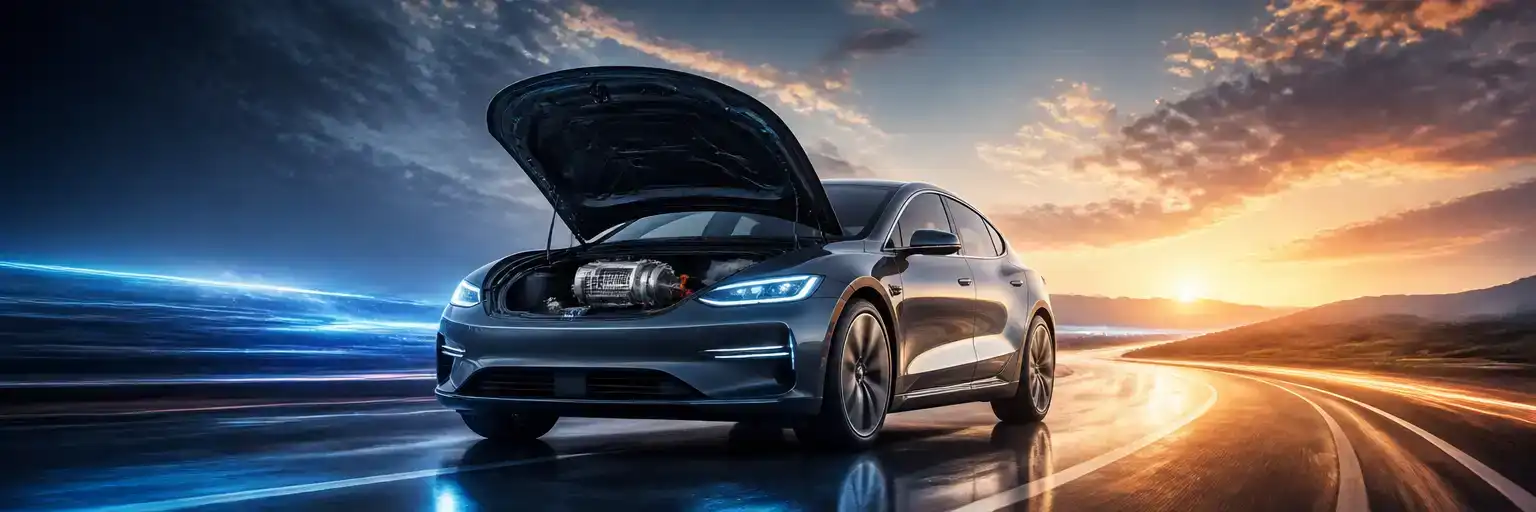
AI-generated image
What if the next battery breakthrough is less important than the charger, the warranty and the price of the car carrying it? That is the uncomfortable question behind Chery’s latest Rhino battery claims. A cell that can theoretically support 12C charging and contribute to as much as 1,500 km of range sounds like a technological reset. It does not, by itself, reset the electric-car market.
Chery’s roadmap combines several technologies rather than presenting one finished consumer product. Its liquid-cell program includes the 12C charging claim, while the Rhino S solid-state family is being developed around energy densities of 400 Wh/kg, with ambitions to reach 600 Wh/kg. The company is targeting a solid-state pilot line in 2027, according to CarNewsChina. Vehicle testing and staged deployment are the important qualifiers: the headline figures remain targets, and laboratory-to-road validation is still ahead.
The most impressive number is not necessarily the most useful one
A 1,500 km range figure is irresistible because it attacks the emotional core of EV skepticism: the fear of being stranded. But range is a system result, not a battery-cell trophy. It depends on vehicle size, aerodynamics, battery capacity, tires, speed, weather and the test cycle used. One report notes that Chery’s 1,500 km claim is tied to China’s CLTC cycle, a result that should not be treated as an equivalent real-world distance in other markets. MotorPasion’s analysis estimates that the practical figure could be closer to 900–1,000 km, though even that remains an approximation.
Our view is that Chery is selling the right dream but risking the wrong expectation. Most drivers do not need 1,500 km between charges. They need predictable range in winter, a battery that retains its performance after years of use and a charging stop that does not become a logistical project. A smaller, cheaper battery with dependable fast charging could improve ownership more than an enormous pack designed to make charging almost irrelevant.
That is why the 12C claim matters, but also why it needs context. Chery has separately described liquid batteries capable of adding 500 km in eight minutes, and the Rhino liquid battery has been reported with charging power of up to 1,200 kW by CNEVPost. Those numbers are potentially transformative only if vehicles, charging sites, grid connections and public payment systems can support them. A car cannot charge at 1,200 kW because its brochure says so.
Solid-state batteries still have to survive the boring years
Solid-state technology is often presented as a clean escape from the compromises of current lithium-ion batteries: greater energy density, improved thermal stability and potentially better safety. Chery says its solid-state cells have reached 400 Wh/kg and is pursuing 600 Wh/kg. It has also outlined a substantial research effort, with more than 1,200 specialists and 10 billion yuan committed to battery development over the next two years, according to Autonoción.
Those are meaningful industrial signals, but they are not proof of a finished product. The difficult questions are the ones that rarely fit into a launch presentation: How does the cell age after repeated fast charging? What happens after years of vibration, heat cycles and imperfect charging conditions? Can production maintain uniform quality at automotive volumes? And can the pack be repaired, recycled or replaced without destroying the economics of the vehicle?
This is where the solid-state narrative deserves less hype and more skepticism. A pilot line is progress, not mass production. A high-density cell is progress, not a durable battery warranty. Chery’s plan to validate the technology in vehicles before broader production is therefore the correct approach. The testing phase is not a delay to be apologized for; it is the part that determines whether the claims mean anything outside a presentation.
The real breakthrough would be a cheaper, smaller battery
The market does not reward the highest laboratory specification in isolation. It rewards a package that automakers can build consistently and customers can afford. A 1,500 km vehicle may be technically astonishing while remaining commercially irrelevant if the battery consumes too much material, adds too much weight or pushes the car into a luxury price bracket.
Chery’s more interesting opportunity may be the opposite: use higher energy density to shrink the battery rather than inflate range. A lighter pack could improve efficiency, handling and manufacturing costs. It could also let the company offer long-distance confidence without asking every buyer to pay for an extreme-range vehicle. In our view, that is the path with the best chance of making Rhino matter beyond Chery’s own marketing.
The same logic applies to charging. Faster cells could reduce the need for oversized packs, but only where infrastructure can deliver the power. Markets with uneven charging coverage will judge the technology by availability and reliability, not peak laboratory performance. If Rhino requires a specialized network, its benefits will arrive unevenly. If it works with existing high-power infrastructure while improving the charging curve, it has a much stronger case.
2027 should be treated as a test, not a finish line
Chery’s 2027 target for a solid-state pilot line gives the industry a useful deadline, but consumers should not read it as a guarantee that affordable, globally available cars will arrive on that date. The company still has to prove production yield, cost control, durability and compliance across different markets. It also has to show that the battery’s advantages remain after the full vehicle is engineered around them.
The verdict is straightforward: Rhino is promising, but the specifications are only the opening argument. Chery could genuinely move the EV market if it turns energy density and charging speed into lighter vehicles, stable ownership costs and fast charging that fits real infrastructure. Until then, buyers should judge the battery by warranty, verified range, charging performance and price—not by the biggest number on the slide.
No topics yet: start the first one.
More stories
Polestar’s U.S. Problem Is Bigger Than Falling EV Registrations
Polestar’s U.S. slide exposes a deeper weakness: a premium EV brand with too little product breadth, scale or insulation from political risk.
America’s EV problem is the cars it can’t buy
Gas prices are making electric driving more attractive, but high prices, shrinking supply and weak product access are steering buyers toward hybrids instead.
Li Auto’s EV strategy is selling confidence, not just batteries
Li Auto’s move into batteries, motors and chips suggests the next Chinese EV advantage is accountability: making the promise feel more credible than the specification.
Obrist’s Bankruptcy Is a Reality Check for Range Extenders
Obrist showed how methanol and clever hybrid hardware could address EV pain points. Bankruptcy shows that engineering elegance is only the first hurdle.