Land Rover won the Ti7 ruling, but a design ban won't stop BYD
A Dutch court shielded the Defender's look from BYD's Ti7. That protects JLR's brand, but it doesn't settle what makes a rugged SUV identity truly defensible.
AI-generated image
Can a silhouette be owned? A court in The Hague just said that, at least for the Land Rover Defender, it can. That is a bigger deal than one SUV that never made it to a European showroom.
According to 01net, the district court in The Hague sided with Jaguar Land Rover and banned the import, sale, production and storage of the BYD Ti7 in Europe. The Ti7 is a plug-in hybrid off-roader with BYD's Super DM-i powertrain. The judge pointed to the Defender's rounded shoulders and corners, the treatment of the C-pillar, the rounded wheel arches and the glasshouse and overall silhouette. The key reasoning, as reported, is that the combination of these elements gives the Defender its visual identity, and the Ti7 reproduces it too closely.
Some caveats matter. Several outlets describe the ban as provisional, and BYD says the Ti7 is the result of its own independent design work and that it will pursue every legal avenue. The Ti7 wasn't on sale in Europe yet, so no one is pulling cars off lots. And the court can't rule for the UK, so JLR still has work to do there.
The court judged the whole look, and that's the smart part
We think JLR deserved this one. Look at the similarities 01net lists: the spare wheel on the tailgate, flat hood and roof, roof rails and sill protection. Individually these are rugged-SUV clichés. Together, they are hard to miss. The judge's focus on the overall combination, rather than any single feature, is the smart part of the ruling. It protects a recognizable identity without monopolizing boxy shapes in general.
But let's not oversell it. A ruling like this stops one car, not a strategy. BYD can redraw the Ti7 with different shoulders, a different pillar and different arches, and it could still be a capable plug-in hybrid SUV. As for BYD's rivals, we suspect they will simply stay a few millimeters further from the line. The ban raises the cost of lazy homage. It doesn't raise the cost of competing.
There is also a consistency problem. 01net notes that the Denza Bao 5, which is already sold in Europe, also shows similarities with the Defender. If the logic of the ruling holds, that is a fight JLR can pick next. If it doesn't, the decision starts to look like a one-off. Either way, the precedent will be tested.
A look is only defensible if the brand has earned it
Here is our view of the real battle. A court can protect a shape only as long as the shape is distinctive and tied to one brand in buyers' minds. That tie comes from decades of use, not from lawyers. The Defender is defensible because it is the Defender: people read those proportions and think of one company.
Chinese brands are moving fast on the things law can't touch. BYD keeps flooding the market with new products. Frandroid reports a new seven-seat van, with an electric version claimed at 900 km on the CLTC cycle and charging from 10 to 70% in five minutes. Those are announced figures for a vehicle aimed at China first, but they show where the competitive energy is: technology and speed, not just sheet metal.
That is the uncomfortable point for JLR. Protecting a look buys time. It doesn't answer a rival who can iterate on powertrains and charging faster than a heritage brand can. The strongest defense of a rugged identity is to keep earning it, with capability and a credible electrified future, so that a lookalike is obviously a lookalike.
Good for design, but no barrier against Chinese carmakers
The ruling is good for design as a discipline: copying a recognizable icon shouldn't be a free shortcut, and in our view a European court has just made that point. But we wouldn't read it as a barrier against Chinese carmakers. It's a speed bump on one road. Expect BYD to appeal, expect a redesign or a different model for Europe, and expect the real contest to be fought over who builds the most compelling rugged SUV, not who looks most like one.
No topics yet: start the first one.
More stories
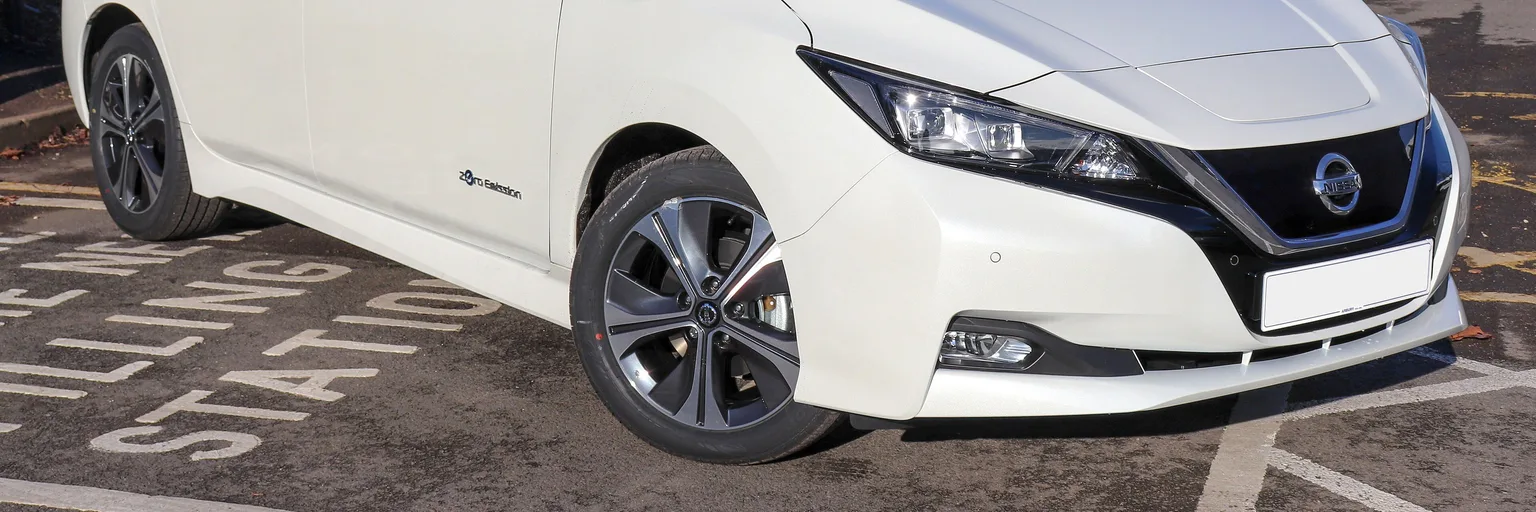
Letting the UK into "Made in Europe" saves the Leaf, and exposes the label
Brussels may stretch "Made in Europe" to cover Sunderland. That rescues the Nissan Leaf, but it shows the label is a negotiated deal, not a clean rule.
The EU's hybrid quota is a blunt tool that buyers will pay for
Brussels' 200-day cap on imported hybrids buys European carmakers time, but it sweeps up Japan and Korea too and does nothing about the price gap.

Renault and Geely's V8 isn't heresy: it's a hedge, and a smart one
A 4.0-liter hybrid V8 from Horse Powertrain looks like a rebuke to the EV era. We think it's a narrow, sensible hedge, and it should be judged by its buyers.
Harbinger proves the smart EV money is in boring trucks
While automakers back away from consumer EVs, Harbinger's $240M raise and FedEx order suggest the pragmatic electric growth story is in fleets, not showrooms.