The EU's hybrid quota is a blunt tool that buyers will pay for
Brussels' 200-day cap on imported hybrids buys European carmakers time, but it sweeps up Japan and Korea too and does nothing about the price gap.
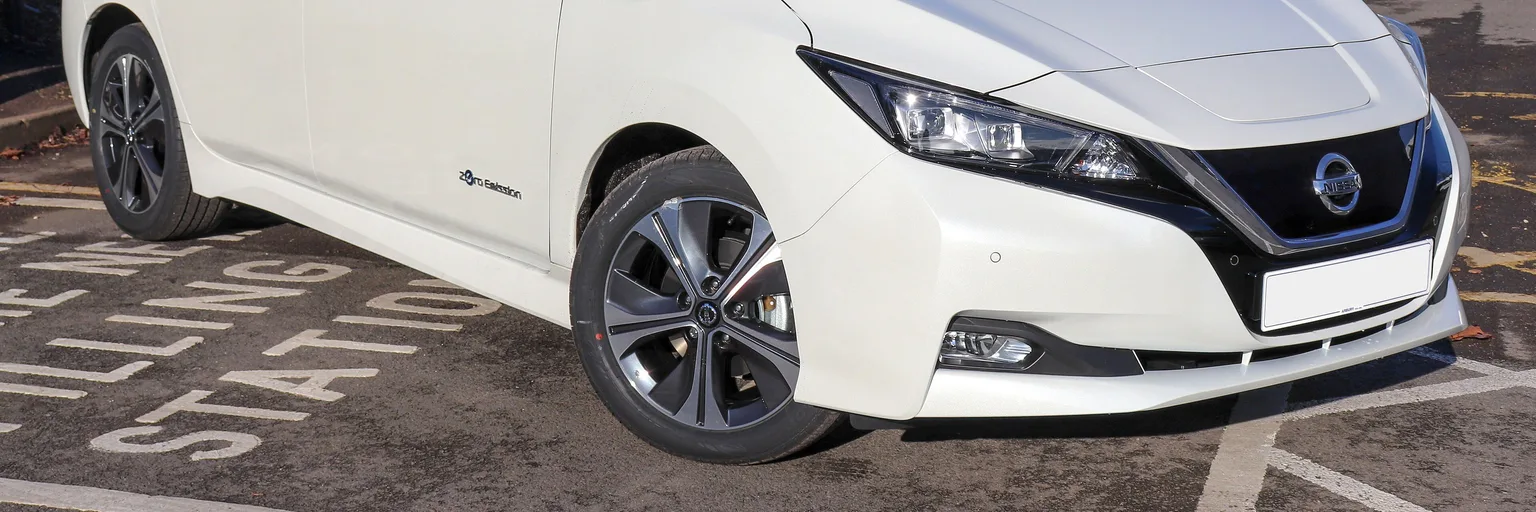
Photo: Farid mernissi / Wikimedia Commons (CC BY-SA 4.0)
If you wanted to protect European carmakers from cheap Chinese hybrids, would you write a rule that also caps Japan, South Korea, Turkey, Morocco and the United States? Brussels just did. It had little choice, and that's the problem.
The facts first. Per Frandroid, from December 1 the EU will cap hybrid imports by country of origin. China gets 191,780 vehicles through June 18, 2027, split into three windows. The first, through February 28, 2027, is 86,301 cars. Once a cap is hit, no more affected cars come in. The quota covers plug-in, conventional and mild hybrids. Japan gets 170,889, Turkey 126,320, the UK 105,402 and South Korea 67,924. Quotas follow the country of origin, not the brand.
A safeguard has to be broad, and that's its flaw
The reason is the legal route. Numerama notes that Brussels chose a World Trade Organization-compliant safeguard rather than a tariff, which obliges it to target everyone. Caps were built from 2025 volumes plus roughly 15%. That may be tolerable for steady exporters. Numerama warns, though, that the caps could quickly bind for groups ramping up output in Morocco, Serbia or Turkey, European ones included.
We think this is the weakest part of the design. The target is clear: Chinese hybrid imports went from 46,001 cars in 2023 to 302,403 in 2025, according to Eurostat figures cited by the Commission. But a tool that treats a Korean hatchback built in Korea like a Chinese plug-in is a hammer, not a scalpel. Beijing has already called on the EU to respect what was agreed in October, so the diplomatic bill isn't settled either.
Buyers, not Brussels, will cover the cost
The Commission itself says imported hybrids, from all origins, sell about 18% below equivalent EU-built models. A quota doesn't narrow that gap. It rations the cheaper supply. Our read is that when volume is capped and demand holds, the margin stays with whoever has the allocation, and shoppers see fewer discounts and longer waits. That's a forecast, not a measured result, but the logic is hard to dodge.
The internal allocation is murkier still. Chinese certificates are issued by the CCCME, and Numerama asks whether it will be first come, first served. In its reading, established players like BYD, Geely or MG are likely to grab the most. Newer entrants such as Chery, which was betting on hybrids to build a network, look most exposed. Dealers could face guesswork on stock and delivery dates.
There are also loopholes. Numerama points out that pure combustion models fall outside the cap, though CO2 rules still bite. Chinese makers can also build locally. BYD has a plant in Hungary and, per Frandroid, is in exclusive talks to buy Ineos Automotive's Hambach factory. Leapmotor is already building its B10 in Spain. Brussels wants exactly that kind of move. Moves like these suggest the quota works less as protection than as a nudge to relocate.
Time is what Europe gets, and it's not a strategy
The measure is provisional. The investigation continues, and Brussels decides by June 18, 2027 whether to make it permanent. That's 200 days of breathing room. The question is what European makers do with it.
There is one encouraging sign. Caradisiac reports that battery-electric cars took 23.4% of the European market over the first ten months of 2026, per ACEA. In October they reached 29.8%. No Chinese model appears in the October top 10 for electric sales. In our view, that suggests the real contest, a cheaper European electric car, is being fought where quotas don't reach.
Our verdict: the cap is defensible as a short-term brake and poor as a policy. If the 200 days go to cheaper European hybrids and electrics, it will have been worth the mess. If they go to waiting, buyers will pay more for the same cars and the price problem will still be there in June. Shoppers eyeing an imported hybrid should probably not wait for a discount.
No topics yet: start the first one.
More stories
Land Rover won the Ti7 ruling, but a design ban won't stop BYD
A Dutch court shielded the Defender's look from BYD's Ti7. That protects JLR's brand, but it doesn't settle what makes a rugged SUV identity truly defensible.

Letting the UK into "Made in Europe" saves the Leaf, and exposes the label
Brussels may stretch "Made in Europe" to cover Sunderland. That rescues the Nissan Leaf, but it shows the label is a negotiated deal, not a clean rule.
Renault and Geely's V8 isn't heresy: it's a hedge, and a smart one
A 4.0-liter hybrid V8 from Horse Powertrain looks like a rebuke to the EV era. We think it's a narrow, sensible hedge, and it should be judged by its buyers.

Harbinger proves the smart EV money is in boring trucks
While automakers back away from consumer EVs, Harbinger's $240M raise and FedEx order suggest the pragmatic electric growth story is in fleets, not showrooms.