GWM's Bulgarian ORA 5 plant is smart, but price is the real test
Building the ORA 5 in Europe from 2027 shows Chinese brands must localize to compete. The harder question is whether the car stays cheap once it leaves China.
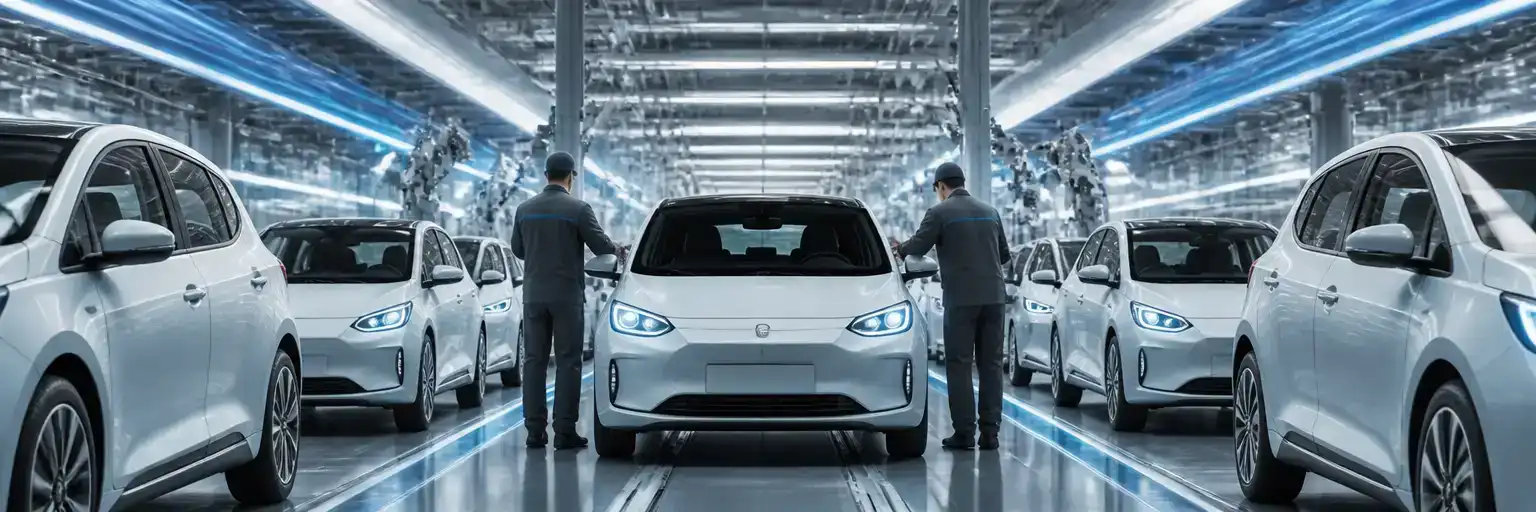
AI-generated image
Is a factory a strategy, or just a press release with a bigger budget? GWM's decision to build the ORA 5 in Bulgaria is a real step. But a plant doesn't sell cars, and it doesn't keep them cheap either.
Here is what we know. Reuters reports that Great Wall Motor will build the compact SUV in Bulgaria from early 2027 under a manufacturing agreement with a local partner. It will be the company's first manufacturing base in Europe. The partner is Bulgarian Automotive Industry (BAI), and the stated planned capacity is 50,000 units per year.
The ramp-up looks more modest. Faro de Vigo says the plant near Lovech has a first phase of around 150 jobs and 7,000 vehicles a year, with plans to widen the range and bring in local suppliers. In our view, that gap between 7,000 and 50,000 is the most honest number in the story.
Localization is no longer optional, it's the entry ticket
We think the thesis holds up. A Chinese brand that wants to be more than an exporter in Europe has to look like a European manufacturer. That means local assembly, local engineering and local suppliers. Shipping finished cars from China leaves you exposed to trade barriers, and the specialist press frames this move alongside them: Forococheselectricos describes a new Chinese offensive in Europe, after a start that was commercially discreet in some cases. To be clear, the documentation we have doesn't spell out which tariffs prompted the decision. We read the plant as a hedge against that kind of risk, not as a documented response to a specific duty.
GWM also seems to understand that a factory alone isn't localization. Its Munich R&D center has operated since 2021. The company says the European teams logged over 100,000 kilometers of road tests for the ORA 5 and H7. As reported by irishdentist.ie, EU Product General Manager Thomas Schemera put it this way: "A car that works well in China does not automatically meet every European expectation."
That is the right diagnosis. It is also, in our reading, an admission that cars tuned for China don't always fit Europe, and the brands that learn this fastest will probably win the next phase.
The Bulgarian plant solves logistics, not margins
Now the uncomfortable part. In our view, Chinese brands have leaned on price in their European pitch. Moving production to Bulgaria changes the cost structure in ways nobody outside the company can verify yet. Shipping and duty risk may go down. Local labor, local parts and a small first-phase volume may push per-car costs up. We don't know the net effect, and the documentation doesn't give an ORA 5 European price to test it against.
The only price anchor is the H7. In Italy it starts at 29,990 euros, with trade-in or scrapping, for the front-wheel-drive Hybrid Hi2 version, excluding road costs. That's a useful reference for how GWM wants to be positioned, but it is a different car from the ORA 5.
There is another gap worth flagging. Motor.es notes that the model has only just reached the Spanish market, and outlets such as Forococheselectricos and Faro de Vigo speak specifically of the electric ORA 5 being built in Bulgaria. Whether other versions will come off the Bulgarian line is not documented, and it matters a lot for pricing.
What to watch before 2027
Our verdict: the plant is the right move, and it would have been a mistake to skip it. But we'd treat it as the start of the test, not the answer. Three things will tell us whether it worked:
- The European sticker price of the ORA 5 once Bulgarian output begins, compared with what buyers pay today.
- Whether the 7,000-unit first phase grows toward 50,000. Volume is what makes local production pay off.
- Whether local suppliers actually show up, as the plan says they should.
The trade press has noted that GWM still needs buyers it hasn't found so far. A factory gives GWM a better story. It doesn't give the company customers. If the ORA 5 arrives from Lovech at a price that still undercuts its European rivals, the localization playbook works. If it doesn't, the Bulgarian plant will be the most expensive way to learn that "made in Europe" and "cheap" don't always travel together.
Note for our US readers: this is a European story. Nothing in the documentation ties the ORA 5 or the Bulgarian plant to the American market.
No topics yet: start the first one.
More stories
Audi's petrol-engine EV patents are a quiet range extender admission
Two Audi patents put a combustion engine inside an electric car. It's a pragmatic idea, but only if the industry stops pretending an EREV is just an EV with a long range.
VW's €5.8 billion loss is mostly a bill, but the EV margin is the real problem
Volkswagen's Q3 loss is inflated by one-off charges, yet the CFO's admission that EVs earn less than combustion cars is the line that matters most.
Ford's Model e loss is shrinking, but trucks still foot the bill
A 25% smaller EV loss suggests Ford's electric bet is fixable, but its truck and combustion profits are still paying for a transition with no cheap hit yet.

Renault's smarter answer to China: fix the EVs it already sells
Renault is reportedly trading a flood of launches for better existing EVs. It's a buyer-friendly bet on Chinese competition, but only if the updates are real and prices stay sharp.