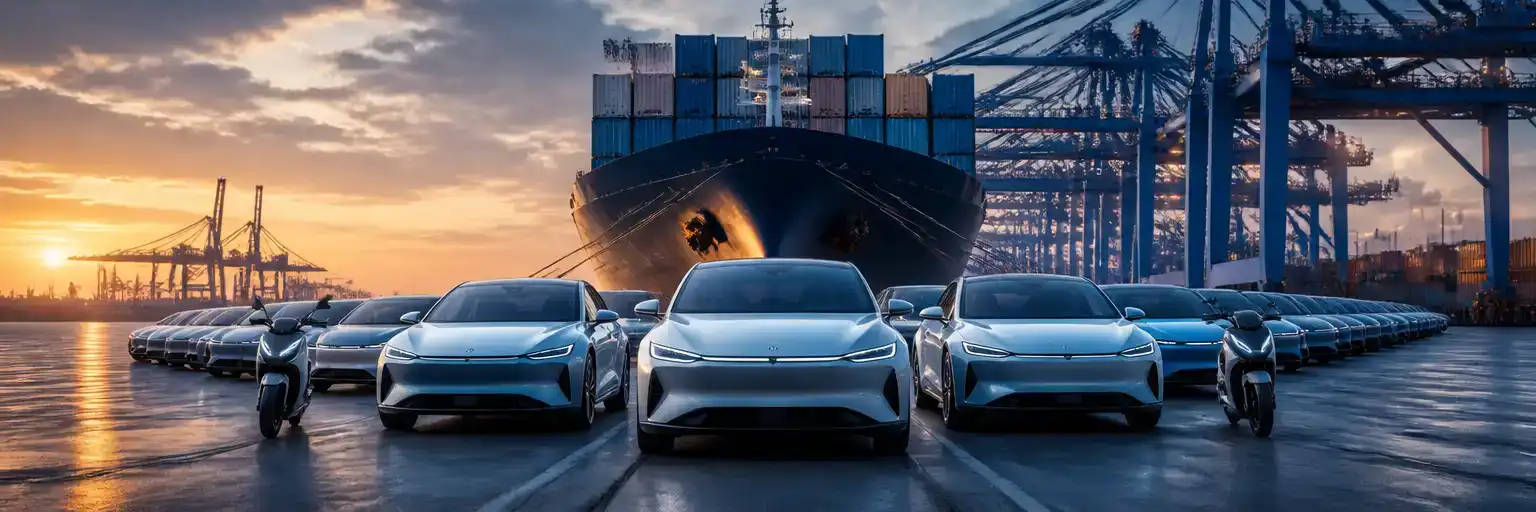
Chinese EVs don't need to be perfect, just much cheaper
A Chinese discount of about 40%, if it holds, exposes a Western defense built on tariffs and brand loyalty that is thinner than it looks.
Photo: BYD / sala de prensa (uso editorial)
What do you do when your customers are squeezed by expensive fuel and a rival shows up with a similar product at a far lower price? Western carmakers are about to find out, and we doubt that "but we have heritage" will work as an answer.
The trigger is Electrek's latest piece, which argues that Chinese EVs have found a back door into Western markets at 40% off MSRP. The excerpt we have shows a company claiming its prices are about 40% lower, plus a 45.3% figure for the EU whose context is not clear to us. That is a claim, not an audited average, and we'd treat the 40% as a headline figure rather than a universal discount.
Still, the direction is hard to dispute. The question is why Western defenses look so shaky.
Expensive oil sells EVs, and it sells the cheapest ones fastest
High fuel prices change the math for everyone. The European Commission, citing the IEA, says that with oil at $100 per barrel, EV drivers enjoy fuel cost savings 35% higher than a year earlier. ACEA data cited by Brussels show fully electric cars at 20.6% of EU registrations in April 2026, up from 15.7% a year earlier.
Here is our reading: when the running costs of gasoline climb, buyers don't only ask "should I go electric?" They ask "what is the least I can pay to get out of the pump line?" That second question favors whoever has the lowest sticker price. In our view, Western brands have spent years chasing the more profitable upper end of the market, and that leaves the entry level open to anyone who shows up with a cheaper car.
Tariffs buy time, not a business model
Tariffs do work, up to a point. But they are a delay tactic, and the evidence suggests the rivals are already routing around them. The Energy Institute at Haas describes a "tariff boomerang": Canada will let up to 49,000 Chinese EVs in at a 6.1% tariff, down from 100%, with half of the quota required to be priced under C$35,000. The same analysis notes that the US tariff on Chinese EVs is 100%, and suggests Canada could become a gateway, much as Hungary is for the EU, where BYD is building a factory and CATL a battery plant. That last part is the author's forecast, and we find it plausible rather than certain.
Meanwhile, Electrek reports that Canadian EV buyers are waiting for Chinese models to reach dealers rather than buying Western ones, according to a survey. If that holds, it is worse than losing a sale. It means demand is being parked, in someone else's favor.
Two things make this hard to wall off. First, Chinese makers have strong reasons to push abroad: the Energy Institute notes that EVs are already nearly 60% of new car sales in China and that subsidies were cut in half at the start of this year. Second, history cuts against the walls: the same piece recalls that Japanese import caps in 1981 led to factories in the US. Barriers can turn rivals into locals.
Loyalty is a weaker moat than it looks
The comforting story is that Western buyers are attached to their brands. The numbers we have are less comforting. According to the Energy Institute, BYD's registrations in Europe rose 225% in July 2025 while Tesla's fell 40%, and BYD outsold Tesla globally in 2025, at 2.26 million vehicles against 1.64 million (BYD's figure includes some hybrids). We think loyalty tends to be strongest when the alternative is unknown or unavailable, and neither condition holds for long.
To be fair, there is a counterpoint. The European Commission says only 20% of fully electric cars sold in the EU in 2025 were imported from China, including Chinese and non-Chinese brands, and that a strong majority of EVs sold there were produced in the EU. So this is not yet a rout. A Reddit thread claims a 9.2% European share for Chinese EVs, but that is a forum post, and we wouldn't build an argument on it.
What Western brands should do
Our verdict: the 40% number matters less than the pattern behind it. Chinese makers benefit from a deep EV ecosystem and widespread subsidies, as the Rhodium Group's analysis notes. Western companies can't copy that quickly, but they can stop pretending a €25,000 EV is a stretch goal. The Commission notes there is already a much wider range of EVs around that price in Europe.
For buyers, the advice is simple: don't buy on panic or on nostalgia. Wait for real local pricing, check warranty and service coverage, and compare total running costs. For carmakers, the message is blunter. Tariffs and loyalty are a grace period. Use it to get cheaper, or the back door will become the front door.
No topics yet: start the first one.
More stories
A CEO's apology can't weld a rear axle back on: Chery's real test
Chery's chief apologized after an Omoda 5 lost its rear axle in Malaysia, but a repeat failure shows Chinese brands abroad will be judged on durability and honest recalls.

Stellantis' record loss isn't an EV verdict. It's the bill for zigzagging
Stellantis' first annual operating loss is being read as proof EVs failed. We think it proves something else: years of whiplash cost far more than any single technology bet.

VW can't pass the EV bill on to workers or taxpayers
Reported plans for 12,000 more job cuts and a fight over a publicly funded transfer company show Volkswagen needs cars people want and a cost plan it can defend, not a bailout.
China's 67% EV share is real, but the story is messier than it looks
The headline says EVs have won China. The data says gasoline is collapsing faster than EVs are growing, and the West should read that difference carefully.