GM's EV Woes Reveal Market Challenges, Tesla Shows Resilience
General Motors' significant Q3 EV sales slump highlights a challenging market for legacy automakers, contrasting sharply with Tesla's ability to maintain stable deliveries, suggesting a bifurcated path for EV adoption.

AI-generated image
The narrative surrounding electric vehicle adoption often swings between unbridled optimism and cautious skepticism. The third quarter of 2026, however, has delivered a particularly jarring set of mixed signals. On one hand, key players like Tesla appear to be navigating a complex market with relative stability. Yet, beneath this, major manufacturers like General Motors are grappling with a significant slump, revealing an EV market far more complex and volatile than a simple growth curve might suggest.
General Motors, in particular, faced a tough quarter. The automaker reported an overall decline in new vehicle sales of 5.5% compared to the same period last year, reaching 670,974 units in the U.S. by October 1. However, the drop in its electric vehicle sales was even more precipitous, contributing heavily to the overall decline. Reports indicated a drastic fall in specific models, with the Equinox EV's sales plummeting 92.4% to just 1,905 vehicles, and the Blazer EV seeing an 84.4% reduction in sales.
In stark contrast, other segments of the EV market appeared to be more resilient. Tesla, while experiencing a slight 2.1% dip in deliveries compared to its record Q3 2025, still managed to deliver 486,532 vehicles, comfortably exceeding the consensus forecast of 461,974 units, as reported by Electrek and Ars Technica. This dichotomy raises a critical question: is the EV market truly slowing down, or are we witnessing a fundamental shift in its landscape?
GM's Struggle: More Than Just EV Demand?
General Motors attributes its Q3 sales dip to reduced EV demand, and discontinued models have also contributed to the overall sales decline. However, the sheer scale of the decline in electric vehicle sales for models like the Equinox EV and Blazer EV suggests deeper issues. Some analyses point to the loss of federal tax credits as a significant hurdle for GM, impacting the perceived value and accessibility of their electric offerings, as InsideEVs highlighted. Furthermore, the Cadillac brand, part of the GM family, saw its sales slide by 30% in Q3, with its electric SUVs specifically struggling, according to Car and Driver. This indicates that the challenge for GM isn't merely a generalized slowdown but potentially a more specific struggle to position its electric models competitively in a rapidly evolving market.
Tesla's Enduring Appeal
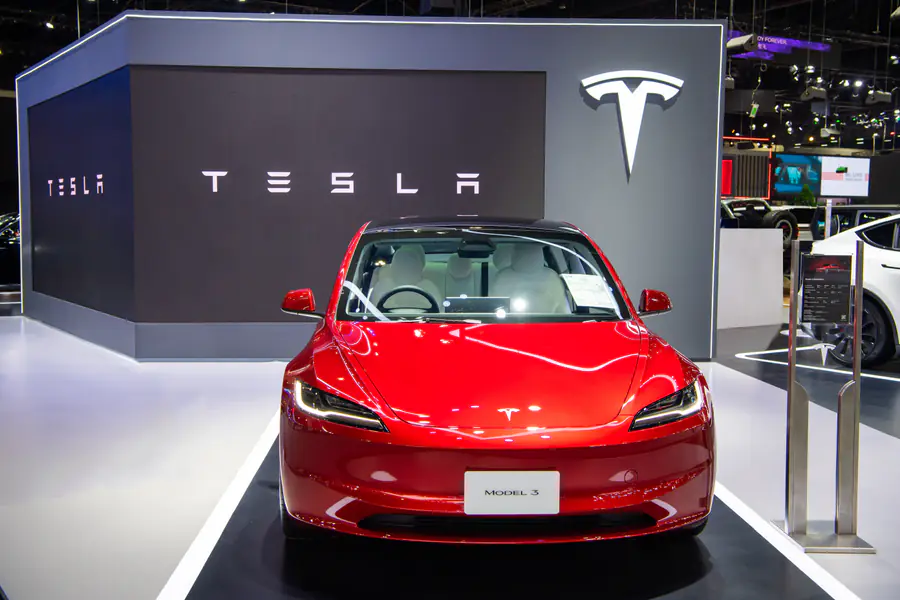
While GM grapples with falling EV sales, Tesla's ability to consistently meet or exceed delivery expectations paints a different picture. Tesla, despite a minor year-over-year decrease, still maintains its dominant position as the volume leader. This performance suggests that brand loyalty, established infrastructure, and potentially perceived technological advantages continue to insulate certain manufacturers from broader market fluctuations. Tesla's continued appeal may stem from a combination of strong brand identity and specialized offerings that resonate with their target demographics.
Navigating a Challenging Market
The third quarter of 2026 unequivocally demonstrates that the electric vehicle market is not a monolith. While global EV sales are projected to reach 23 million in 2026, representing 28% of total car sales, according to the IEA's Global EV Outlook, the path to that future is clearly uneven. We are witnessing a bifurcation: on one side, a resilient, perhaps even growing, demand for established EV brands; on the other, significant challenges for legacy automakers striving to transition their vast production lines and customer bases to electric. The market's complexity means that a rising tide isn't lifting all boats equally, and the nuances of product offerings, pricing strategies, and charging infrastructure are becoming increasingly critical differentiators.
Ultimately, the Q3 2026 sales figures are a potent reminder that the electric vehicle revolution is not a linear progression. While the long-term trend for global EV sales remains positive, the short-term reality is one of fierce competition and varying success. Manufacturers, particularly those newer to the EV space, must critically assess their strategies to avoid the significant downturns experienced by some legacy players. The market demands not just electric cars, but compelling electric cars that justify their price and overcome lingering concerns about charging, range, and initial cost. Those who can consistently deliver on these fronts will undoubtedly be the winners in this increasingly competitive landscape.
No topics yet: start the first one.
More stories
Beyond Range Anxiety: The Unseen Hurdles for Affordable EVs and Motion Sickness
The electric vehicle transition faces complex new challenges, from delivering truly affordable models like the Ford Fathom to overcoming overlooked passenger motion sickness, demanding innovative solutions beyond traditional range and charging concerns.